Management Systems World
All on Quality and other Standards in one place since 2010. Now Worldwide.
News Ecology / Energy / Chemistry
Please note that you have to be a registered member with paid membership in order to see full articles.
RegisterSelected News
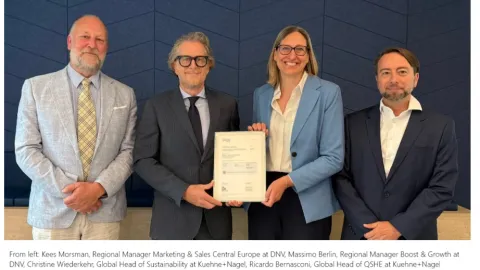
Kuehne+Nagel Earns ESG Recognition Backed by Four Certifications
Global logistics and supply chain company Kuehne+Nagel has received Environmental, Social and Governance (ESG) Recognition from DNV,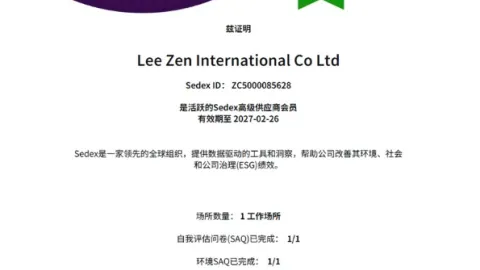
LeeZen International Achieves SEDEX and D&B ESG Certifications
LeeZen International Co., Ltd. has obtained both SEDEX Supplier Plus recognition and Dun & Bradstreet (D&B) ESG Registered certification,
São Paulo Event Highlights Progress in Brazil Green Seal Certification Program
The Brazilian Association of Technical Standards (ABNT) joined government, industry and certification representatives in São Paulo for an event highlighting progress in Brazil's Green Seal Program (Selo Verde), a national initiative aimed at certifying sustainable products and services.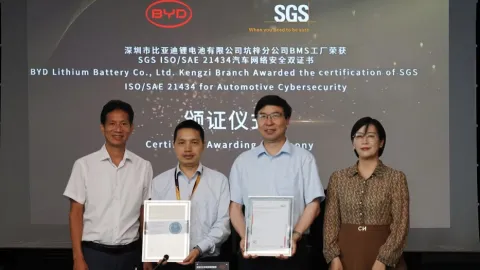
BYD Battery Achieves ISO/SAE 21434 Cybersecurity Certification
BYD Lithium Battery Co. Ltd. has achieved ISO/SAE 21434 certification for automotive cybersecurity engineering.
India Adopts ISO 14001:2026 as National Environmental Management Standard
The Bureau of Indian Standards (BIS) has published IS/ISO 14001:2026 as an identical adoption of ISO 14001:2026, updating India’s national framework for environmental management systems.
Dutch Initiative Prepares New Committee on Medical Device Environmental Impact
The Royal Netherlands Standardization Institute (NEN) is preparing a new committee focused on methods for assessing the environmental impact of medical devices, with the aim of helping shape Dutch input into future European and international standardization work.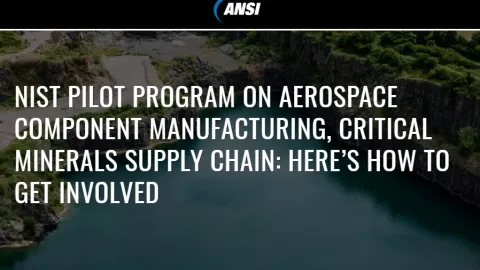
NIST Pilot Program Aims to Accelerate Aerospace Manufacturing and Critical Minerals Supply Chains
The National Institute of Standards and Technology (NIST) has announced a new pilot program aimed at accelerating advanced manufacturing technologies in aerospace component production and the domestic critical minerals supply chain.
Taiwan Techg Earns RBA Silver Status for Supply Chain Responsibility Standards
Taiwan Techg, part of Mitsui Mining & Smelting, has received Silver status under the Responsible Business Alliance (RBA) Validated Assessment Program (VAP).
Lamborghini Recognized for Environmental, Social and Governance Practices
Automobili Lamborghini has received ESG Recognition from DNV, for using certified management systems to support its environmental, social, and governance commitments.
SCC Guide Helps Municipalities Across the Country Apply ISO 14092 Climate Adaptation Standard
The Standards Council of Canada (SCC) has released a new application guide to help municipalities across the country apply ISO 14092:2026 to climate adaptation planning.
Polish Accreditation Centre Opens CBAM Verification Program
The Polish Accreditation Centre (PCA) has launched a new accreditation process for bodies that verify emissions data under the European Union’s Carbon Border Adjustment Mechanism (CBAM).
South Korea Revises Two Good Recycled Product (GR) Quality Certification Standards
The Korean Agency for Technology and Standards (KATS) has opened a public consultation on proposed revisions to two Good Recycled Product (GR) quality certification standards covering reinforcing steel bars and rubber fire-stop filling materials used in electrical installations.Global News
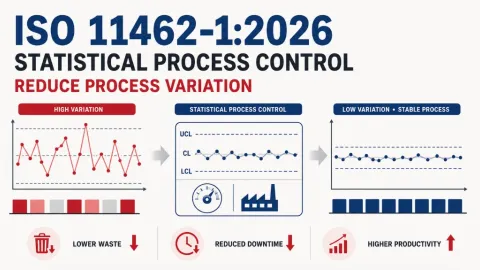
ISO 11462-1:2026 Updates Statistical Process Control to Reduce Process Variation
The International Organization for Standardization (ISO) has published ISO 11462-1:2026, updating guidance on statistical process control (SPC) to help organizations improve the stability and capability of their processes.
Codex Sets New Labelling Rules for Multipacks and Outer Packaging
The Codex Alimentarius Commission (CAC) has adopted new requirements for foods sold in multipacks or grouped together in one outer package, clarifying what information must appear on the packaging consumers see when buying the product.
SBTi Net-Zero Standard Version 2.0 Adds New Rules for Corporate Climate Targets, Reporting and Carbon Removals
The Science Based Targets initiative (SBTi) published Version 2.0 of its Corporate Net-Zero Standard on June 11, introducing new requirements for how companies set climate targets, plan their transition to net zero, report progress and deal with emissions that remain.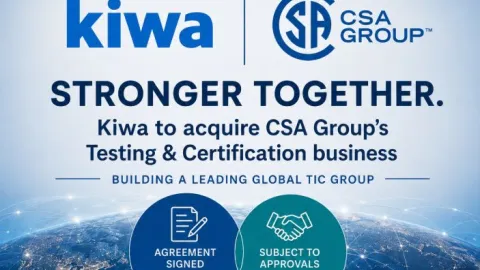
CSA Group to Sell Testing and Certification Business to Kiwa
Kiwa and CSA Group have agreed on a deal worth around $1.5 billion for Kiwa to acquire CSA Group’s testing, inspection and certification business, significantly expanding the Dutch company’s presence in North America.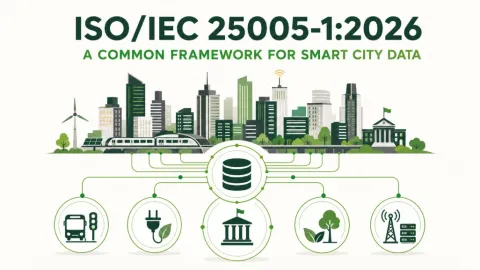
ISO/IEC 25005-1:2026 Creates Common Framework for How Smart Cities Use Data
ISO/IEC 25005-1:2026, published in July, provides a common international framework for how smart cities can make better use of data across urban governance and services.
Global ACI Delays Launch of New MRA Mark Pending Trademark Registration
Global Accreditation Cooperation Incorporated (Global ACI) has paused the launch of its new Multilateral Recognition Arrangement (MRA) Mark while trademark registrations are completed across member economies.
Major Changes Coming to ISO/IEC Standard-Development Rules
ISO and IEC will put a major rewrite of ISO/IEC Directives, Part 1 into effect on October 5, changing the common rules used to develop, maintain and manage international standards and other publications.
ISO 20001 Set for Publication as First Food Loss and Waste Management Standard
ISO 20001, the world’s first ISO management system standard dedicated to food loss and waste reduction, is scheduled for publication on September 29, 2026, marking the International Day of Awareness of Food Loss and Waste.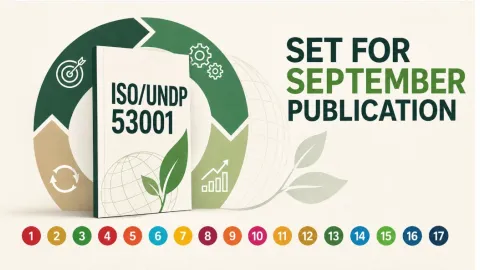
Upcoming ISO/UNDP 53001 Sets First Management System Requirements for the SDGs
ISO/UNDP 53001, set for publication in September 2026, will provide the first management system requirements specifically for organizations seeking to manage and improve their contribution to the Sustainable Development Goals (SDGs).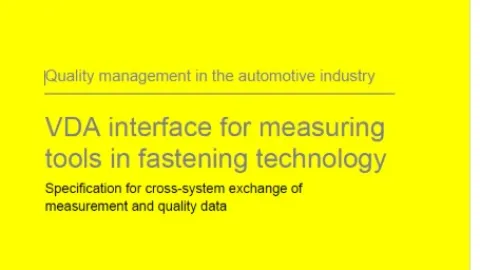
VDA Releases VDA 5.4 Draft for Fastening Measurement Tools
The Quality Management Center of the German Association of the Automotive Industry (VDA QMC) has released VDA 5.4, Interface for measuring tools in fastening technology, as a Yellow Volume for industry feedback.
ISO/CASCO Clarifies: ISO/IEC 17025 Does Not Require Labs to Treat Accreditation Bodies as Suppliers
The maintenance group of the International Organization for Standardization’s Committee on Conformity Assessment (ISO/CASCO) has clarified that ISO/IEC 17025:2017 does not require laboratories to treat their accreditation bodies as external service providers subject to the standard’s supplier controls.