Management Systems World
All on Quality and other Standards in one place since 2010. Now Worldwide.
News Spain
Please note that you have to be a registered member with paid membership in order to see full articles.
RegisterSelected News
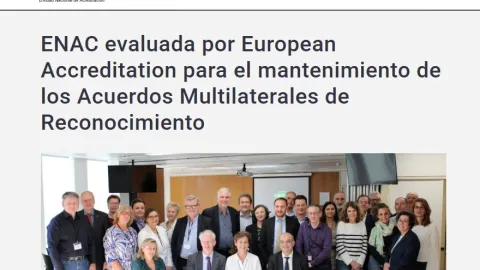
ENAC's European Accreditation Peer Review Ends With Positive Results
Spain's National Accreditation Body (ENAC) has completed a peer evaluation by the European co-operation for Accreditation (EA) with highly positive results.
Spain Leads Development of ISO 20525:2026 for Sharing Tourism Data
The Spanish Association for Standardization (UNE) and SEGITTUR, Spain's state-owned tourism innovation company, have led the development of ISO 20525:2026, a new international standard that establishes a common language for sharing digital information about tourism destinations.
UNE Group Celebrates 40 Years of Supporting Spanish Business
The Spanish Association for Standardization (UNE) and the companies that make up the UNE Group have marked 40 years of supporting industry through standards, certification and testing.
Bureau Veritas Iberia Becomes First ENAC-Accredited ISO 37301 Certification Body
Bureau Veritas Iberia has become the first certification body accredited by the Spanish National Accreditation Body (ENAC) to certify compliance management systems under UNE-EN ISO 37301.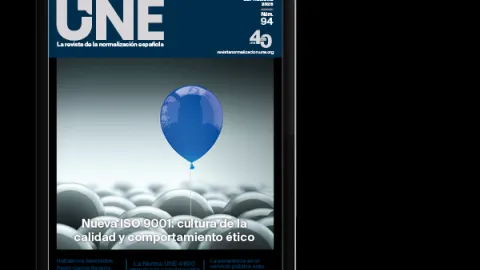
Revista UNE Puts New ISO 9001 at Center Stage With Detailed Look at 2026 Changes
The Spanish Association for Standardization (UNE) has published the September 2026 issue of Revista UNE, with ISO 9001:2026 as its main feature and a closer look at the changes organizations will need to understand.
UNE Outlines ISO 9001 Changes and Announces September 17 Meeting
With the release of ISO 9001:2026 just days away, the Spanish Association for Standardization (UNE) has released a video outlining the main changes in the new edition and announced a September 17 event focused on the standard.
FAST Components Europe Becomes Spain’s First Accredited Lab for Electronic Component Authenticity Testing
FAST Components Europe has become the first organization in Spain accredited by the Spanish National Accreditation Body (ENAC) to test the authenticity of electronic components in line with IDEA-STD-1010.
GFSI Food Safety Culture Paper Now Available in Three More Languages
The Global Food Safety Initiative (GFSI) has published Chinese, Japanese and Spanish translations of the second edition of its food safety culture position paper, making the updated framework more accessible to businesses and food safety professionals worldwide.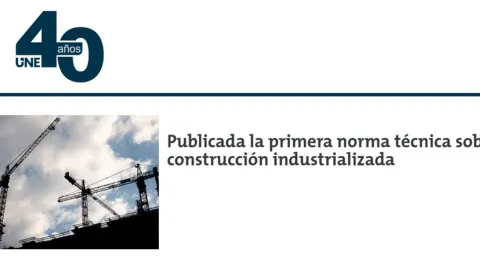
Spain Publishes UNE 41610, Europe's First Standard for Industrialized Construction
The Spanish Association for Standardization (UNE) has published UNE 41610, the first technical standard for industrialized construction in Europe.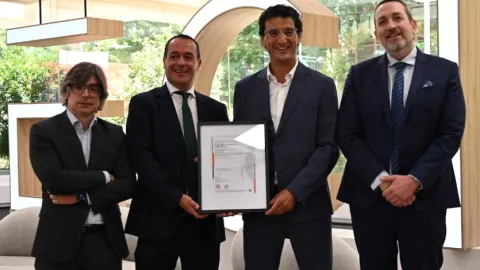
ECIJA Becomes First Spanish Law Firm Certified to ISO 42001
ECIJA Abogados has become the first law firm in Spain to achieve accredited certification to ISO/IEC 42001:2023, the international standard for artificial intelligence management systems.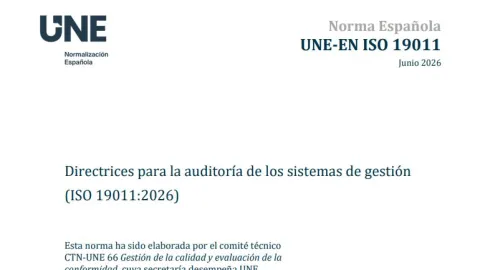
ISO 19011:2026 Translated and Adopted in Spain
The auditing standard ISO 19011:2026 has been translated into Spanish and adopted in Spain as UNE-EN ISO 19011:2026.
UNE Magazine Issue 92 Celebrates 40 Years of Spanish Standardization
The Spanish Association for Standardization (UNE) has published the latest edition of UNE Magazine.Global News

TNFD Releases LEAP 2.0 with Expanded Guidance on Nature-Related Assessment
The Taskforce on Nature-related Financial Disclosures (TNFD) released version 2.0 of its LEAP assessment guidance on October 13, 2026, introducing new and expanded methods for evaluating how organizations depend on and affect nature, and the resulting business risks and opportunities.
RBA Revises VAP Standard With Changes to Supplier Audits and Corrective Actions
The Responsible Business Alliance (RBA) has released version 8.1 of its Validated Assessment Program (VAP) Standard, revising procedures for supplier audits, corrective actions, and assessments of working conditions, environmental practices, and business ethics.
Legal Battle Halts Planned AS9100 Revision
A legal dispute between the International Aerospace Quality Group (IAQG) and SAE International has placed the planned revision of the aerospace quality management standard AS9100 on indefinite hold.
ISO Considering New Committee for Positioning, Navigation and Timing (PNT) Services
The Korean Agency for Technology and Standards (KATS) has proposed establishing a new technical committee within the International Organization for Standardization (ISO) to develop international standards for positioning, navigation and timing (PNT) services.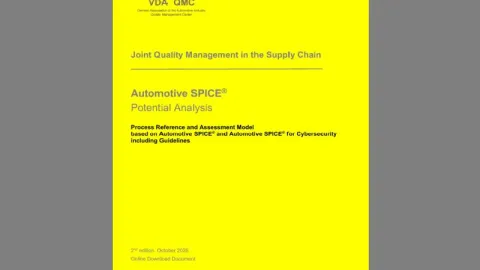
Second Edition of Automotive SPICE Potential Analysis Adds Machine Learning, Opens for Public Review
The Quality Management Center of the German Association of the Automotive Industry (VDA QMC) has released the second edition of Automotive SPICE Potential Analysis as a draft for public review.
How ISO/PAS 8800 Is Being Applied to Automotive AI Safety: Geely and Synopsys Examples
Two case studies published by SGS on October 16, 2026, show how ISO/PAS 8800:2024 is being applied to automotive AI safety.
BRCGS Releases Consumer Products Issue 5, Training Courses Coming Soon
BRCGS launched Issue 5 of its Consumer Products standard on October 13, 2026, at BRCGS Connect Americas in Nashville.
ISO 30439:2026 Sets Guidelines for Safe Handling of Workforce Data
The International Organization for Standardization (ISO) has published ISO 30439:2026, providing guidance on the safe handling of personal data used in human resource management (HRM).
FSC Addresses European Forest Certification Concerns as Romanian Harvesting Comes Under Review
The Forest Stewardship Council (FSC) has addressed concerns about forest management and certification in Europe, including a formal complaint over harvesting activities in Romania.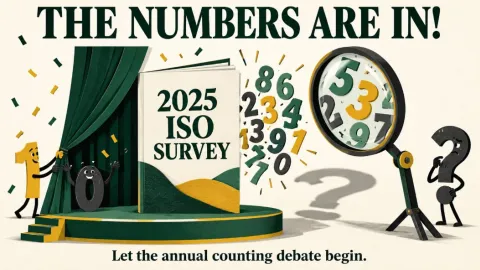
ISO Survey 2025 Shows Global Certification Growth, With Unusually Sharp Rise in India
The International Organization for Standardization (ISO) has released the 2025 ISO Survey, reporting more than 3.28 million valid management system certificates worldwide.
AIAG Updates Guidelines for Supplier Management and Electronic Assembly
The Automotive Industry Action Group (AIAG) has released updated editions of two Continuous Quality Improvement (CQI) guidelines covering supplier management and electronic assembly manufacturing.