
Management Systems World
All on Quality and other Standards in one place since 2010. Now Worldwide.
News Ecology / Energy / Chemistry
Please note that you have to be a registered member with paid membership in order to see full articles.
RegisterSelected News
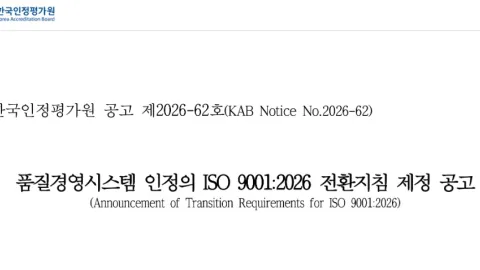
KAB Issues Transition Guidelines for Three Revised ISO Standards
The Korea Accreditation Board (KAB) has issued transition guidelines for the 2026 editions of ISO 9001, ISO 14001, and ISO/IEC 17024.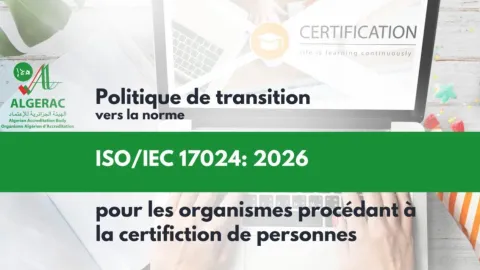
Algeria Details Deadlines for Adopting New ISO 14001 and ISO/IEC 17024 Editions
The Algerian Accreditation Body (ALGERAC) has published two transition policies setting deadlines for certification bodies to adopt the 2026 editions of ISO 14001 and ISO/IEC 17024.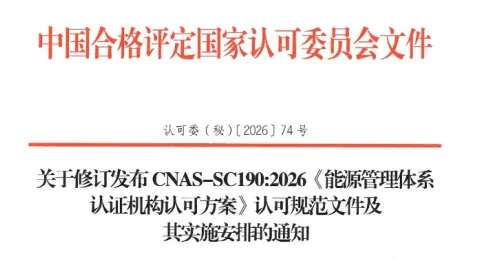
China Updates Accreditation Requirements for Energy Management System Certification Bodies
The China National Accreditation Service for Conformity Assessment (CNAS) has published CNAS-SC190:2026, a revised accreditation scheme for energy management system certification bodies.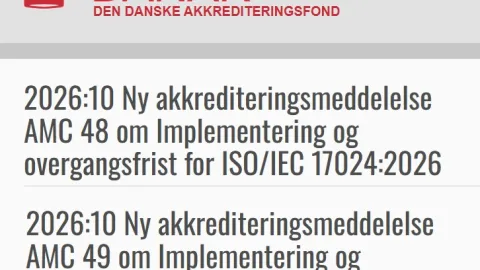
DANAK Sets Transition Deadlines for ISO 14001:2026 and ISO/IEC 17024:2026
The Danish Accreditation Fund (DANAK) has issued two accreditation notices setting transition requirements for ISO 14001:2026 and ISO/IEC 17024:2026.
Lavazza Becomes First Italian Coffee Roaster to Earn Rainforest Alliance Regenerative Agriculture Certification
Lavazza has become the first coffee roaster in Italy to earn certification under the Rainforest Alliance Regenerative Agriculture Standard, with independent verification carried out by Italian certification body CSQA.
Japan Begins Transition of ISO 14001 Auditor Qualifications, Sets April 2029 Deadline
The Japanese Registration of Certificated Auditors (JRCA) began accepting applications on October 1, 2026, to transition environmental management system (EMS) auditor qualifications to JIS Q 14001:2026.
ReMade Gains European Accreditation Recognition With Accredia in Coordinating Role
The European co-operation for Accreditation (EA) has recognized the ReMade certification scheme within the European accreditation system, with Accredia taking the lead in coordinating accreditation for the scheme across Europe.
How Denmark Is Implementing EmpCo Rules Against Greenwashing
Denmark tightened its green marketing rules on September 27 as the EU Empowering Consumers for the Green Transition (EmpCo) Directive began applying across member states.
TAF Seeks Comments on ISO 14001:2026 Certification Transition Rules
The Taiwan Accreditation Foundation (TAF) has opened public consultation on draft rules for moving accredited environmental management system certification to ISO 14001:2026.
EU Introduces Sustainability Rating Scheme for Data Centers
The European Commission (EC) has proposed a common EU rating scheme for data centers to make their energy and water use more transparent and encourage more sustainable integration with the electricity system.
Updated Green Textile Product Standard Takes Effect in China
China’s revised green product assessment standard for textiles has taken effect, introducing new criteria for product quality, environmental performance and carbon impact.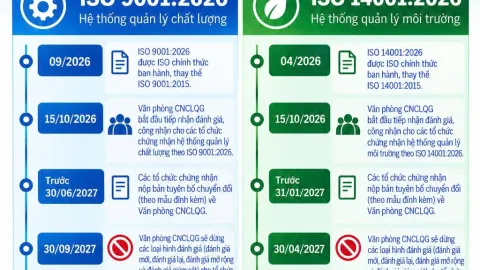
BoA Sets ISO 9001:2026 and ISO 14001:2026 Transition Deadlines for Certification Bodies
Vietnam’s National Accreditation Bureau (BoA) has set its transition timetable for certification bodies moving to ISO 9001:2026 and ISO 14001:2026, with assessments against both new editions beginning October 15, 2026.Global News
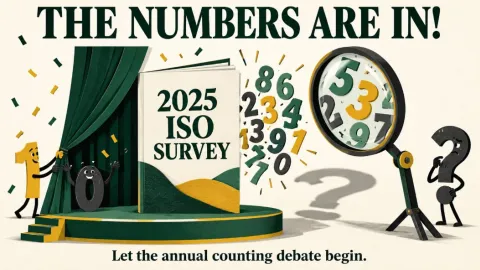
ISO Survey 2025 Shows Global Certification Growth, With Unusually Sharp Rise in India
The International Organization for Standardization (ISO) has released the 2025 ISO Survey, reporting more than 3.28 million valid management system certificates worldwide.
AIAG Updates Guidelines for Supplier Management and Electronic Assembly
The Automotive Industry Action Group (AIAG) has released updated editions of two Continuous Quality Improvement (CQI) guidelines covering supplier management and electronic assembly manufacturing.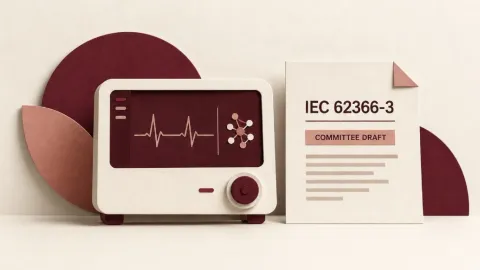
IEC 62366-3 for AI Medical Device Usability Reaches Committee Draft Stage
A proposed technical specification providing guidance on usability engineering for medical devices using artificial intelligence (AI) and machine learning (ML), IEC 62366-3, has reached the committee draft stage.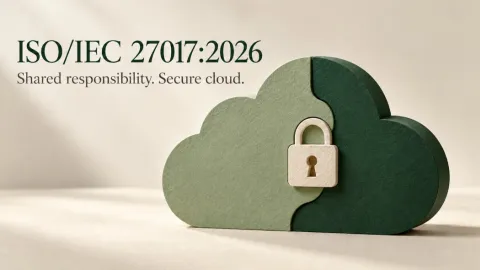
ISO/IEC 27017:2026 Updates Information Security Controls for Cloud Services
ISO and IEC have published ISO/IEC 27017:2026, an updated international standard providing guidance on information security controls for cloud services.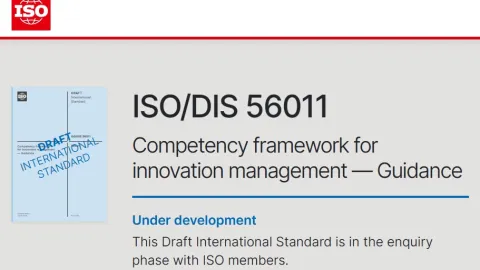
ISO Seeks Feedback on Draft ISO 56011 for Innovation Management Competencies
ISO/DIS 56011, a draft international standard outlining the knowledge, skills, and behaviors needed to manage innovation effectively, is now open for feedback.
ISO Publishes New Guide on Education About Standardization Around the World
The International Organization for Standardization (ISO) has published Education about Standardization: Perspectives and Practices (PUB100508), a new guide exploring how standards are being integrated into education systems worldwide.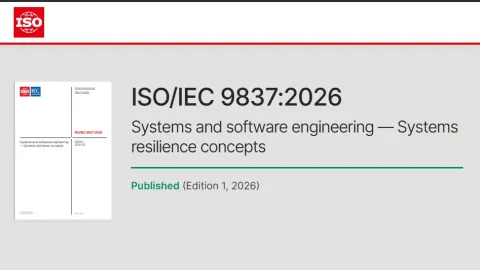
ISO/IEC 9837:2026 Establishes Common Concepts for Systems Resilience
ISO/IEC 9837:2026, a new international standard on systems resilience, provides a common basis for understanding how systems can withstand disruptions, adapt to adverse conditions, and recover from failures.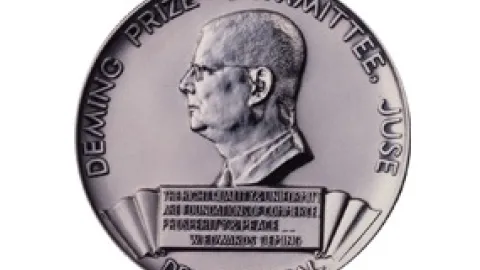
2026 Deming Prize Winners Announced
The Deming Prize Committee announced the 2026 winners on October 6, recognizing two individuals for their contributions to quality management and four organizations from Japan, India, and Indonesia.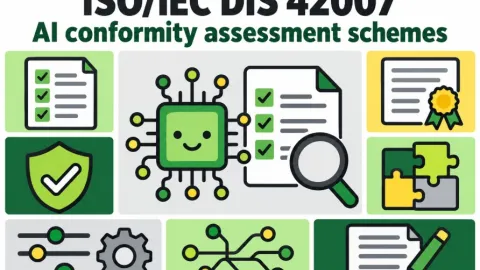
Draft ISO/IEC 42007 Sets Framework for AI Conformity Assessment Schemes
ISO and IEC are developing ISO/IEC DIS 42007, a framework for conformity assessment schemes for artificial intelligence (AI) systems.
ISO Approves Development of Innovation Management Guidance for Startups and SMEs
The International Organization for Standardization (ISO) has approved a new project to develop innovation management guidance for startups and small and medium-sized enterprises (SMEs).
BRCGS Consumer Products Issue 5 Set for Launch at Connect Americas
BRCGS will launch Consumer Products Issue 5 at BRCGS Connect Americas in Nashville on October 13, 2026, introducing a revised certification standard for consumer product manufacturers. Audits against the new edition will begin on June 1, 2027.