Management Systems World
All on Quality and other Standards in one place since 2010. Now Worldwide.
News Textiles
Please note that you have to be a registered member with paid membership in order to see full articles.
RegisterSelected News
Updated Green Textile Product Standard Takes Effect in China
China’s revised green product assessment standard for textiles has taken effect, introducing new criteria for product quality, environmental performance and carbon impact.
JB International Achieves BCI Good Cotton Certification
The Taiwan branch of JB International Co., Ltd. has achieved Better Cotton Initiative (BCI) certification, completing system setup and external verification to align its cotton sourcing with international sustainability requirements.
Italy Introduces Single Certification for Fashion To Boost Supply Chain Transparency
Italy’s annual bill for small and medium enterprises proposes a voluntary single certification of conformity for the fashion supply chain,
NATA Accreditation Can Help Australian Companies Meet France’s New Fast Fashion Law
France is introducing a new law to curb the environmental impact of fast fashion - low-cost, trend-driven clothing that is produced rapidly and often discarded after minimal use.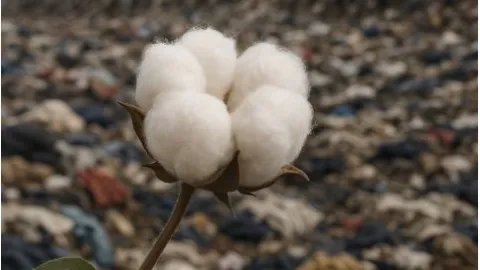
Australia Issues World-First Specification for Compostable Textiles
Standards Australia (SA) has published SA TS 5399:2025 – Compostable Natural Fibre Textiles, the first technical specification of its kind worldwide.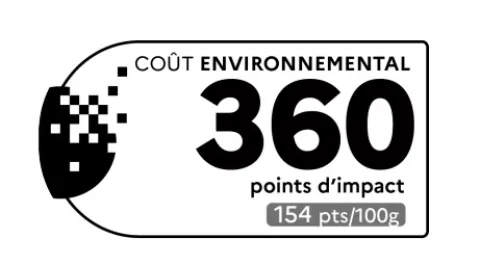
France Launches Voluntary Environmental Cost Label for Textile Products
France has introduced a new voluntary system for labeling the environmental cost of clothing, effective October 1, 2025.
APEC Workshop in Indonesia Strengthens SDoC Strategies for Textile Trade
The National Standardization Agency of Indonesia (BSN) hosted the APEC Workshop on Market Compliance Mechanism for Self-Declaration of Standard Compliance (SDoC) on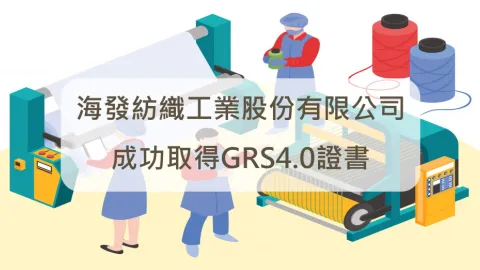
Hae Fa Textile Earns GRS 4.0 Certification for Sustainability
Hae Fa Textile has successfully obtained Global Recycled Standard (GRS) Version 4.0 certification, demonstrating its dedication to sustainable practices and responsible production.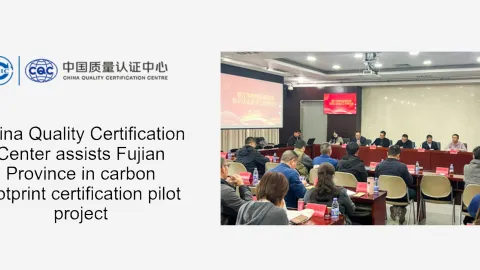
CQC Supports Fujian's Textile Carbon Footprint Certification Pilot
The China Quality Certification Center (CQC) was invited to participate in a seminar and conduct field inspections in Jinjiang, a city in Fujian Province, to support the region’s carbon footprint certification pilot for the textile industry.
Liqi Achieves Sustainability Milestone with ISCC PLUS Certification
Liqi Industrial Co., Ltd. has successfully obtained the ISCC PLUS certification, marking a significant advancement in its sustainability initiatives.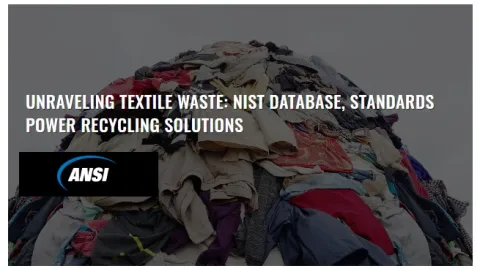
NIST Boosts Textile Recycling Efforts with Comprehensive NIR-SORT Database
The National Institute of Standards and Technology (NIST) has developed the Near-Infrared Spectra of Origin-defined and Real-world Textiles (NIR-SORT), a free and downloadable database designed to improve textile sorting efficiency at recycling centers.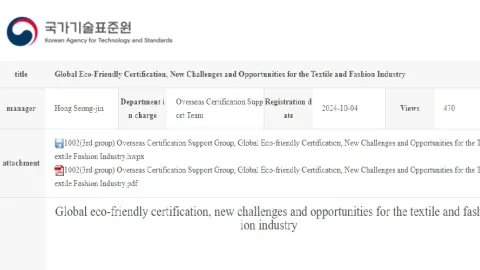
Korean Textile Industry Briefed on Global Eco-Friendly Certification Challenges
The Korea Agency for Technology and Standards (KATS) and the Korea Federation of Textile Industries held a briefing on October 2, 2024,Global News
Draft ISO/IEC 42007 Sets Framework for AI Conformity Assessment Schemes
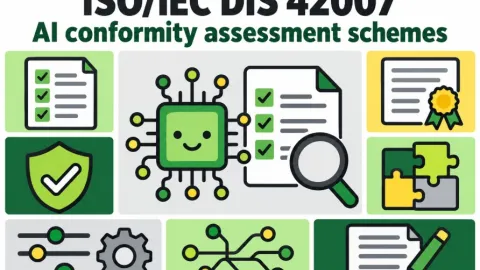
ISO and IEC are developing ISO/IEC DIS 42007, a framework for conformity assessment schemes for artificial intelligence (AI) systems.
ISO Approves Development of Innovation Management Guidance for Startups and SMEs
The International Organization for Standardization (ISO) has approved a new project to develop innovation management guidance for startups and small and medium-sized enterprises (SMEs).
BRCGS Consumer Products Issue 5 Set for Launch at Connect Americas
BRCGS will launch Consumer Products Issue 5 at BRCGS Connect Americas in Nashville on October 13, 2026, introducing a revised certification standard for consumer product manufacturers. Audits against the new edition will begin on June 1, 2027.
GRI Begins Developing Sustainability Reporting Standard for Food and Beverages
The Global Reporting Initiative (GRI) has begun developing a new Sector Standard for food and beverage companies, covering sustainability impacts across their own operations and value chains.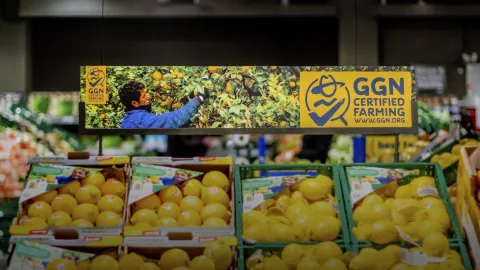
GGN Label Updates Sustainability Claims as EU Rules Begin to Apply
Agraya has updated the sustainability claims used with its GGN label as new European Union rules on environmental marketing began to apply on September 27.
GFSI Seeks Feedback on Freshcare and SQF Programs Under 2024 Requirements
The Global Food Safety Initiative (GFSI) has opened public consultations on Freshcare Food Safety & Quality Standard Edition 5 (2026) and SQF Code Edition 10 for recognition against the GFSI Benchmarking Requirements Version 2024.
ISO 20001:2026 Published as First Food Loss and Waste Management Standard
The International Organization for Standardization (ISO) has published ISO 20001:2026, its first management system standard dedicated to preventing and reducing food loss and waste across the food supply chain.
ISO 14060 Net-Zero Draft Fails to Secure Approval, Returns for Revision
The draft of ISO 14060, the proposed international standard for net-zero aligned organizations, has failed to secure the approval needed to advance.
Global ACI Aligns CORSIA MRA Sub-Scope With Fourth Edition of ICAO Manual
Global Accreditation Cooperation Incorporated (Global ACI) has updated the Carbon Offsetting and Reduction Scheme for International Aviation (CORSIA) sub-scope of its Multilateral Recognition Arrangement (MRA) to align it with the latest international guidance.
ISO/UNDP 53001 Debuts as First International Management System Standard for Sustainable Development Goals
ISO and UNDP released ISO/UNDP 53001 on September 28, 2026, the world's first International Standard for managing contributions to the United Nations Sustainable Development Goals (SDGs).
ISO Central Secretariat Explains Key Changes in ISO 9001:2026 in New Video
The International Organization for Standardization (ISO) has released a detailed video explaining the changes in ISO 9001:2026 directly from its Central Secretariat.