Management Systems World
All on Quality and other Standards in one place since 2010. Now Worldwide.
News Asia
Please note that you have to be a registered member with paid membership in order to see full articles.
RegisterSelected News
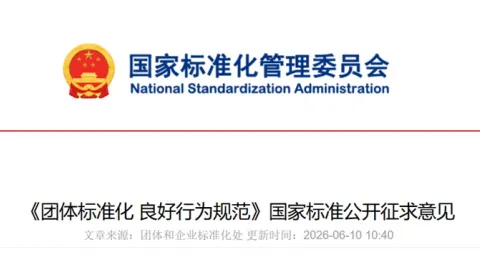
China Opens Consultation on New Group Standards Rules
The Standardization Administration of China (SAC) has opened a public consultation on draft national rules for group standards, which are developed by industry associations and other social organizations rather than government agencies.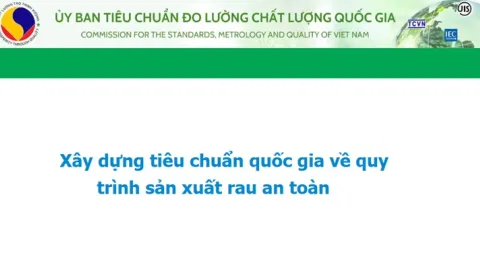
Vietnam Develops Draft National Standard for Safe Vegetable Production
Vietnam's Ministry of Agriculture and Environment (MAE) is developing a national standard (TCVN) for the production and primary processing of safe vegetables.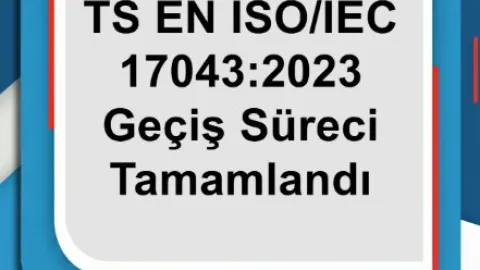
ISO/IEC 17043:2023 Transition Completed in Türkiye
Türkiye has completed the transition to TS EN ISO/IEC 17043:2023, with all 23 proficiency testing providers accredited to the previous edition of the standard successfully adopting the new requirements.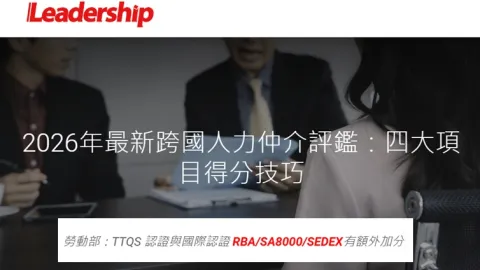
RBA, SA8000 and SMETA Linked to Higher Scores in Taiwan Labor Agency Evaluations
Agencies that recruit migrant workers for employment in Taiwan can earn additional points in Ministry of Labor evaluations through certifications and social responsibility schemes such as RBA, SA8000 and SMETA.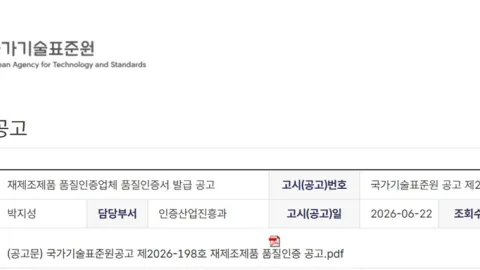
KATS Expands GRP Certification for Disability Association
The Korea Agency for Technology and Standards (KATS) has expanded the Good Remanufactured Product (GRP) Certification held by the Korea Association for Information Technology of Persons with Disabilities (KADI), adding 64 remanufactured toner cartridge models to its existing certification.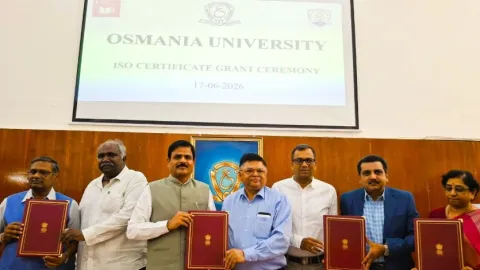
Osmania University Earns Four ISO Management System Certifications
Osmania University in Hyderabad, India, has earned four ISO management system certifications from the Bureau of Indian Standards (BIS), covering education, environmental management, energy management and food safety.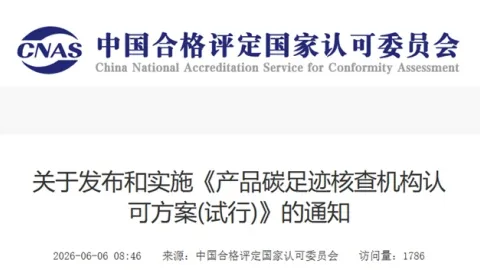
CNAS Starts Trial Accreditation of Product Carbon Footprint Verifiers
China National Accreditation Service for Conformity Assessment (CNAS) has started trial accreditation of organizations that verify product carbon footprint data under CNAS-SV03:2026, which took effect on June 15, 2026.
S&C 2035 Roadmap Charts Future of Standards and Conformance in Singapore
Enterprise Singapore has unveiled the Standards and Conformance (S&C) 2035 Roadmap,
Cambodia Adopts More Than 50 Eurocodes
The Institute of Standards of Cambodia (ISC) is adopting more than 50 Eurocodes, the European standards used for the design of buildings and civil engineering works, with the national adoption process expected to be completed by June 2027.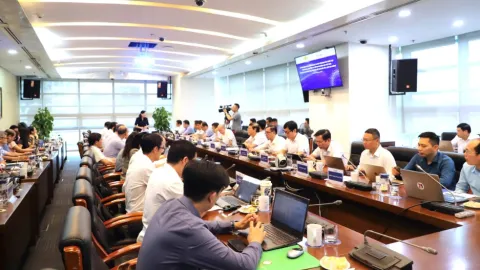
Measurement Law Revision in Vietnam Targets Digitization and Risk-Based Oversight
Vietnam is drafting amendments to its Measurement Law that would expand the use of digital systems and introduce more risk-based approaches to the regulation of measurement activities.
Singapore Launches Sustainability Maturity Standard for Businesses
Singapore has launched TR 149:2026, a sustainability maturity standard that helps organizations assess and improve their environmental performance.
National Standards Knowledge Competition Returns for Second Edition
The second National Standards Knowledge Competition is underway in China, with online qualifying rounds running from June 16 to June 30, 2026.Global News
CanadaGAP Version 11 Achieves GFSI Recognition Under 2024 Benchmark
The Global Food Safety Initiative (GFSI) has recognized CanadaGAP Food Safety Program Version 11.0 against its 2024 Benchmarking Requirements (BMRs), allowing
ISO 9001:2026 Receives Final Approval Ahead of September Publication
The International Organization for Standardization (ISO) has approved the final draft of ISO 9001:2026 with overwhelming support, clearing the way for publication of the revised quality management standard, which is expected in September 2026.
Codex Defines When 'May Contain' Allergen Labels Are Justified
New international guidance adopted by the Codex Alimentarius Commission aims to make 'may contain' allergen labels more consistent and trustworthy.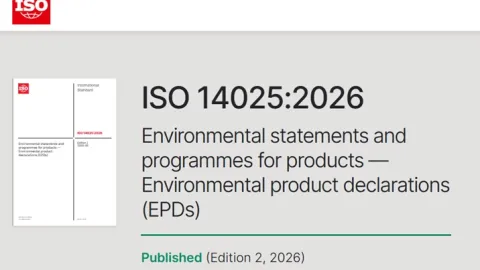
ISO 14025:2026 Brings First Major Update to Environmental Product Declarations in 20 Years
The International Organization for Standardization (ISO) has published ISO 14025:2026, the first major revision of the international standard for Environmental Product Declarations (EPDs) since 2006.
ISO/IEC 27000 Updated With Clearer Guidance for Information Security Standards
ISO and IEC have updated ISO/IEC 27000, the guide to the ISO/IEC 27000 family of information security standards.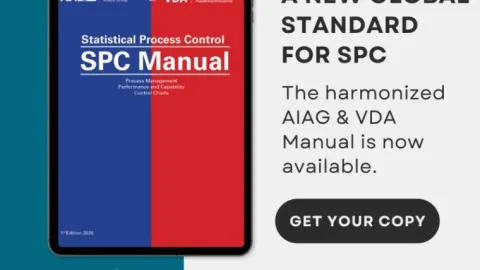
AIAG and VDA Publish Global Guide for Better Manufacturing Process Control
A new joint manual from the Automotive Industry Action Group (AIAG) and the German Association of the Automotive Industry (VDA) establishes a single international approach to monitoring and improving manufacturing processes.
ISO 14001:2026 Transition Deadlines Confirmed
The International Organization for Standardization (ISO) has confirmed the transition timeline for ISO 14001:2026,
BIPM Releases First Stable Digital Reference for SI Units
The International Bureau of Weights and Measures (BIPM) has released the first stable version of the SI Reference Point, a digital reference for the International System of Units (SI).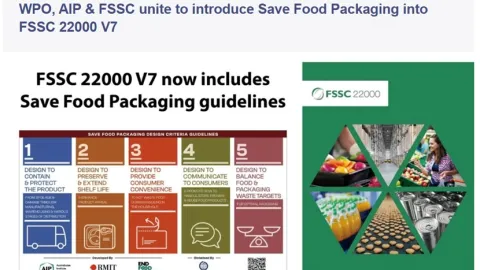
FSSC 22000 Version 7 Incorporates Save Food Packaging Principles
The Foundation FSSC has incorporated aspects of the Save Food Packaging (SFP) Design Principles into FSSC 22000 Version 7 through a partnership with the World Packaging Organisation (WPO) and the Australasian Institute of Packaging (AIP).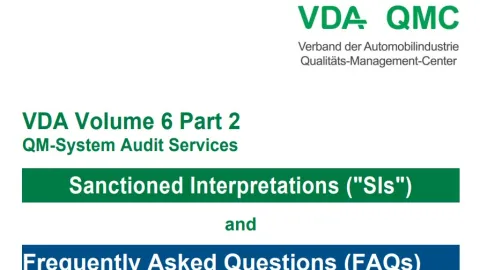
VDA Publishes Updated Interpretations for VDA 6.2 Service Audit Standard
The German Association of the Automotive Industry Quality Management Center (VDA QMC) has published Version 2 of the Sanctioned Interpretations (SIs) and Frequently Asked Questions (FAQs) for VDA 6.2, updating how service organizations in the automotive industry should apply the quality management audit standard.
ISO and IEC Update AI Rules for Standards Development
ISO and IEC have published updated guidance on the use of artificial intelligence in technical committees, defining how AI may be used during the development of international standards.