
Management Systems World
All on Quality and other Standards in one place since 2010. Now Worldwide.
News Turkey
Please note that you have to be a registered member with paid membership in order to see full articles.
RegisterSelected News
TÜRKAK Seeks Technical Experts in Food, Feed and Agricultural Product Testing
The Turkish Accreditation Agency (TÜRKAK) is recruiting technical experts to support the accreditation of testing laboratories in two areas: food and feed products, and agricultural products.
TÜRKAK Updates Website With Improved Search and Mobile Access
The Turkish Accreditation Agency (TÜRKAK) launched its redesigned website on October 4, with a simpler structure intended to make services, technical resources and information easier to find.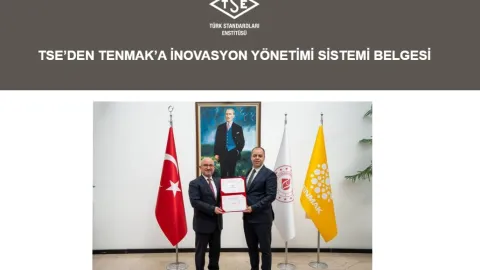
Turkish Energy and Nuclear Research Agency Renews ISO 56001 Certification
The Turkish Standards Institution (TSE) has renewed the TS EN ISO 56001 Innovation Management System certificate of the Turkish Energy, Nuclear and Mineral Research Agency (TENMAK) after the agency successfully completed TSE audits.
Türkiye Sets Coordinated Transition Timeline for ISO/IEC 27701 and ISO/IEC 27706
The Turkish Accreditation Agency (TÜRKAK) has outlined how accredited certification bodies and their clients must transition to the updated standards for privacy information management certification.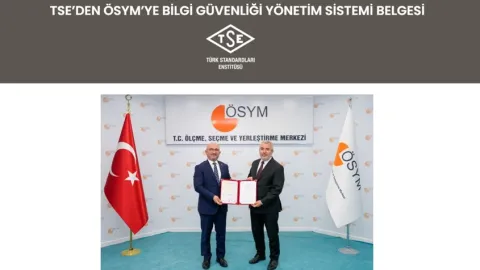
TSE Renews ISO 27001 Certification for Türkiye's National Examination Agency
The Turkish Standards Institution (TSE) has renewed the TS EN ISO/IEC 27001 Information Security Management System certificate of the Measurement, Selection and Placement Center (ÖSYM),
ISO/IEC 17043:2023 Transition Completed in Türkiye
Türkiye has completed the transition to TS EN ISO/IEC 17043:2023, with all 23 proficiency testing providers accredited to the previous edition of the standard successfully adopting the new requirements.
ISO/IEC 17020:2026 Transition Timeline Set for Turkish Inspection Bodies
The Turkish Accreditation Agency (TÜRKAK) has published its transition policy for ISO/IEC 17020:2026, giving inspection bodies until March 27, 2029, to complete the move from the 2012 version of the standard.
USB Certification Becomes First Body Accredited by TÜRKAK for IFS and BRCGS
The Turkish Accreditation Agency (TÜRKAK) has granted its first accreditation under the International Featured Standards (IFS) and BRCGS food safety programs to USB Certification, making it the first certification body accredited by TÜRKAK for the schemes.
TÜRKAK Joins International AIQI Consortium
The Turkish Accreditation Agency (TÜRKAK) has joined the AIQI Consortium, an international initiative focused on strengthening quality infrastructure and governance for artificial intelligence (AI).
TÜRKAK Revises Proficiency Testing Procedure, Issues New Subfield List
Turkish Accreditation Agency (TÜRKAK) has revised its P704 laboratory proficiency testing procedure and published a new L704-001 subfield list.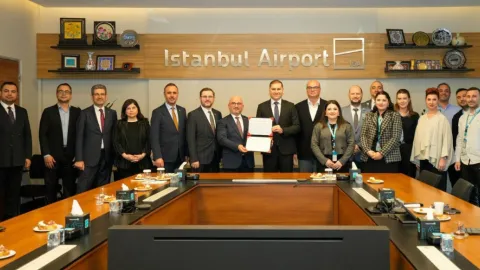
Istanbul Airport Earns ISO 46001 Water Efficiency Certification
Istanbul Airport operator İGA has earned TS ISO 46001 certification for its water efficiency management system, following an audit conducted by the Turkish Standards Institution (TSE).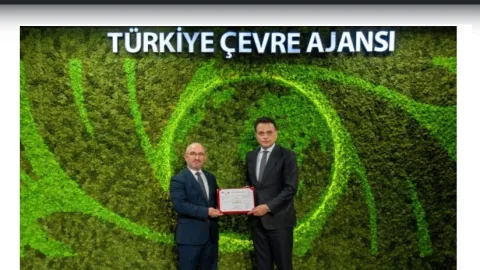
Türkiye Environmental Agency Secures Three Certifications From TSE
The Türkiye Environmental Agency has been certified to three internationally recognized management system standards by the Turkish Standards Institution (TSE) after successfully completing audits.Global News
TNFD Releases LEAP 2.0 with Expanded Guidance on Nature-Related Assessment
The Taskforce on Nature-related Financial Disclosures (TNFD) released version 2.0 of its LEAP assessment guidance on October 13, 2026, introducing new and expanded methods for evaluating how organizations depend on and affect nature, and the resulting business risks and opportunities.
RBA Revises VAP Standard With Changes to Supplier Audits and Corrective Actions
The Responsible Business Alliance (RBA) has released version 8.1 of its Validated Assessment Program (VAP) Standard, revising procedures for supplier audits, corrective actions, and assessments of working conditions, environmental practices, and business ethics.
Legal Battle Halts Planned AS9100 Revision
A legal dispute between the International Aerospace Quality Group (IAQG) and SAE International has placed the planned revision of the aerospace quality management standard AS9100 on indefinite hold.
ISO Considering New Committee for Positioning, Navigation and Timing (PNT) Services
The Korean Agency for Technology and Standards (KATS) has proposed establishing a new technical committee within the International Organization for Standardization (ISO) to develop international standards for positioning, navigation and timing (PNT) services.
Second Edition of Automotive SPICE Potential Analysis Adds Machine Learning, Opens for Public Review
The Quality Management Center of the German Association of the Automotive Industry (VDA QMC) has released the second edition of Automotive SPICE Potential Analysis as a draft for public review.
How ISO/PAS 8800 Is Being Applied to Automotive AI Safety: Geely and Synopsys Examples
Two case studies published by SGS on October 16, 2026, show how ISO/PAS 8800:2024 is being applied to automotive AI safety.
BRCGS Releases Consumer Products Issue 5, Training Courses Coming Soon
BRCGS launched Issue 5 of its Consumer Products standard on October 13, 2026, at BRCGS Connect Americas in Nashville.
FSC Addresses European Forest Certification Concerns as Romanian Harvesting Comes Under Review
The Forest Stewardship Council (FSC) has addressed concerns about forest management and certification in Europe, including a formal complaint over harvesting activities in Romania.
ISO Survey 2025 Shows Global Certification Growth, With Unusually Sharp Rise in India
The International Organization for Standardization (ISO) has released the 2025 ISO Survey, reporting more than 3.28 million valid management system certificates worldwide.
AIAG Updates Guidelines for Supplier Management and Electronic Assembly
The Automotive Industry Action Group (AIAG) has released updated editions of two Continuous Quality Improvement (CQI) guidelines covering supplier management and electronic assembly manufacturing.
IEC 62366-3 for AI Medical Device Usability Reaches Committee Draft Stage
A proposed technical specification providing guidance on usability engineering for medical devices using artificial intelligence (AI) and machine learning (ML), IEC 62366-3, has reached the committee draft stage.