Management Systems World
All on Quality and other Standards in one place since 2010. Now Worldwide.
News Korea, Republic of
Please note that you have to be a registered member with paid membership in order to see full articles.
RegisterSelected News
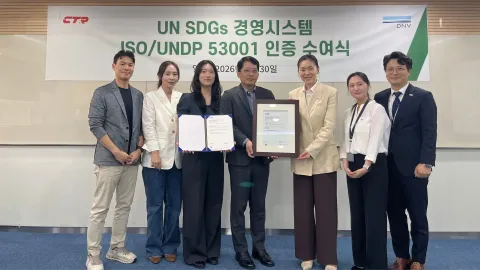
CTR Among First Organizations Certified to ISO/UNDP 53001
South Korean automotive components manufacturer CTR Co., Ltd. has become one of the first organizations worldwide to achieve certification ISO/UNDP 53001:2026,
Korea Developing New Rules for Certifying Products and Services to Industry Group Standards
The Korean Agency for Technology and Standards (KATS) is preparing new assessment and oversight rules for bodies that certify products and services to standards developed by industry groups.
FSSC 22000 V7 Transition Applications Due by Year-End in South Korea
The Korea Accreditation Board (KAB) has set a December 31, 2026 deadline for existing KAB-accredited FSSC 22000 certification bodies to submit their applications to transition accreditation from Version 6 to Version 7.
South Korea to Lead New ISO Drone Cybersecurity Working Group
South Korea will lead a newly established International Organization for Standardization (ISO) working group on drone cybersecurity, which will oversee the development of international standards in the field.
KATS Reveals Candidates for Two 2026 Standards and Quality Award Programs
Korean Agency for Technology and Standards (KATS) has revealed candidates for two 2026 award programs recognizing contributions to standards, quality management and ISO management system certification.
Kookmin University Wins Korea's 2026 Advanced Industry Standardization Competition
A team from Kookmin University has won Korea's 2026 Advanced Industry Standardization Competition after developing a proposed quality evaluation standard for a vehicle-integrated solar energy system for future mobility.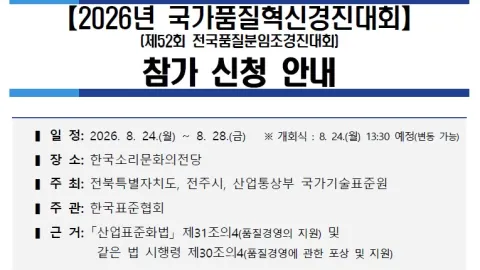
KSA Opens Entries and Publishes Rules for 2026 National Quality Innovation Competition
The Korean Standards Association (KSA) has opened entries and published the participation guide and competition rules for the 2026 National Quality Innovation Competition, which will take place Aug. 24-28 in Jeonju.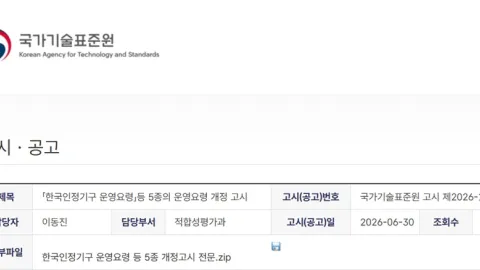
Korea Revises Five Operating Rules for Its Laboratory Accreditation Scheme
The Korean Agency for Technology and Standards (KATS) has revised five operating rules governing the Korea Laboratory Accreditation Scheme (KOLAS) to improve the operation of the national accreditation system and clarify existing requirements.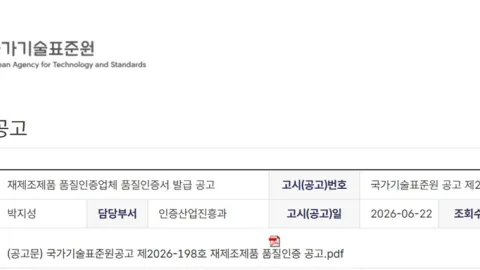
KATS Expands GRP Certification for Disability Association
The Korea Agency for Technology and Standards (KATS) has expanded the Good Remanufactured Product (GRP) Certification held by the Korea Association for Information Technology of Persons with Disabilities (KADI), adding 64 remanufactured toner cartridge models to its existing certification.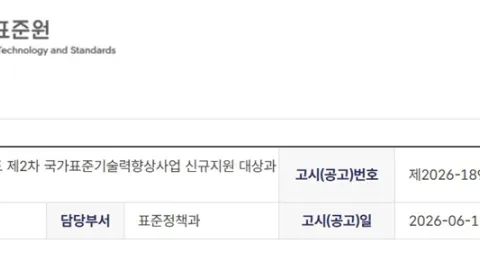
KATS Opens Applications for 11 Standards Development Projects
The Korean Agency for Technology and Standards (KATS) has opened applications for 11 government-funded projects aimed at strengthening South Korea's role in international standards development across a range of emerging technology sectors.
South Korea Opens Public Vote on Six Everyday Standards Proposals
The Korean Agency for Technology and Standards (KATS) has opened a nationwide online vote to help decide which everyday issues should be developed into future Korean Standards (KS).
South Korea Extends Deadline for 2026 World Standards Day Government Awards
South Korea’s Korean Agency for Technology and Standards (KATS) has extended the application deadline for the 2026 World Standards Day government awards program to May 29.Global News
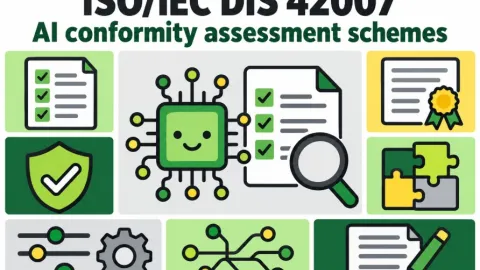
Draft ISO/IEC 42007 Sets Framework for AI Conformity Assessment Schemes
ISO and IEC are developing ISO/IEC DIS 42007, a framework for conformity assessment schemes for artificial intelligence (AI) systems.
ISO Approves Development of Innovation Management Guidance for Startups and SMEs
The International Organization for Standardization (ISO) has approved a new project to develop innovation management guidance for startups and small and medium-sized enterprises (SMEs).
BRCGS Consumer Products Issue 5 Set for Launch at Connect Americas
BRCGS will launch Consumer Products Issue 5 at BRCGS Connect Americas in Nashville on October 13, 2026, introducing a revised certification standard for consumer product manufacturers. Audits against the new edition will begin on June 1, 2027.
GRI Begins Developing Sustainability Reporting Standard for Food and Beverages
The Global Reporting Initiative (GRI) has begun developing a new Sector Standard for food and beverage companies, covering sustainability impacts across their own operations and value chains.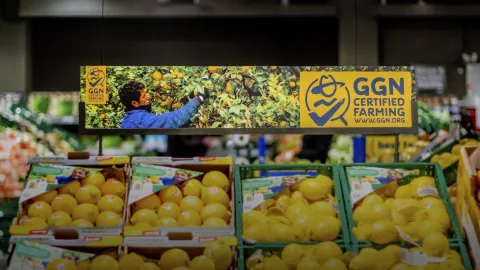
GGN Label Updates Sustainability Claims as EU Rules Begin to Apply
Agraya has updated the sustainability claims used with its GGN label as new European Union rules on environmental marketing began to apply on September 27.
GFSI Seeks Feedback on Freshcare and SQF Programs Under 2024 Requirements
The Global Food Safety Initiative (GFSI) has opened public consultations on Freshcare Food Safety & Quality Standard Edition 5 (2026) and SQF Code Edition 10 for recognition against the GFSI Benchmarking Requirements Version 2024.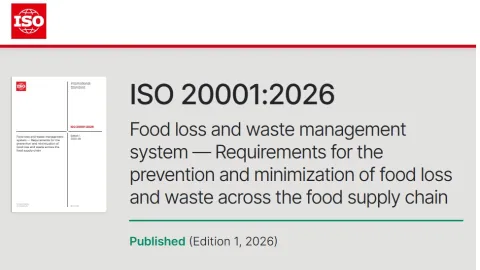
ISO 20001:2026 Published as First Food Loss and Waste Management Standard
The International Organization for Standardization (ISO) has published ISO 20001:2026, its first management system standard dedicated to preventing and reducing food loss and waste across the food supply chain.
ISO 14060 Net-Zero Draft Fails to Secure Approval, Returns for Revision
The draft of ISO 14060, the proposed international standard for net-zero aligned organizations, has failed to secure the approval needed to advance.
Global ACI Aligns CORSIA MRA Sub-Scope With Fourth Edition of ICAO Manual
Global Accreditation Cooperation Incorporated (Global ACI) has updated the Carbon Offsetting and Reduction Scheme for International Aviation (CORSIA) sub-scope of its Multilateral Recognition Arrangement (MRA) to align it with the latest international guidance.
ISO/UNDP 53001 Debuts as First International Management System Standard for Sustainable Development Goals
ISO and UNDP released ISO/UNDP 53001 on September 28, 2026, the world's first International Standard for managing contributions to the United Nations Sustainable Development Goals (SDGs).
ISO Central Secretariat Explains Key Changes in ISO 9001:2026 in New Video
The International Organization for Standardization (ISO) has released a detailed video explaining the changes in ISO 9001:2026 directly from its Central Secretariat.