
Management Systems World
All on Quality and other Standards in one place since 2010. Now Worldwide.
News India
Please note that you have to be a registered member with paid membership in order to see full articles.
RegisterSelected News
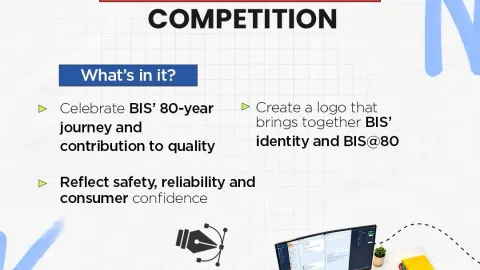
BIS Launches Logo Competition for 80th Foundation Day Celebration
The Bureau of Indian Standards (BIS) and MyGov, the Government of India’s public participation platform, have launched a competition to create a commemorative BIS@80 logo for the Indian national standards body’s 80th Foundation Day celebration on January 6, 2027.
India Seeks Public Comments on Draft Standard for Waste Management at Events
The Bureau of Indian Standards (BIS) is seeking public comments on a draft Indian Standard for managing solid waste generated during events and public gatherings.
BIS Held Stakeholder Consultation on Draft Greenbelt Standard for Industrial Projects
The Bureau of Indian Standards (BIS) held a national stakeholder consultation on September 9, 2026, on a draft Indian standard for greenbelts, or planted buffer areas around industrial sites. The draft remains open for stakeholder comments until September 22, 2026.
Young Professionals Invited to Help Shape India’s Future Environmental Standards
The Bureau of Indian Standards (BIS) is inviting young professionals and other experts to propose ideas for new environmental standards, guidelines and frameworks that could eventually form the basis of future Indian Standards.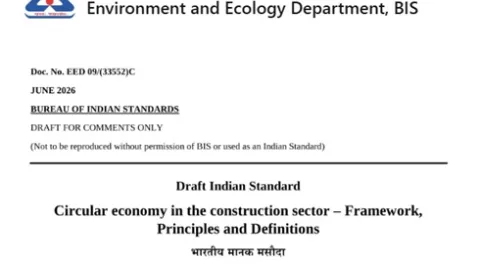
Circular Economy Draft Standard for Construction Opens for Public Comment in India
The Bureau of Indian Standards (BIS) has opened a public consultation on a draft Indian Standard that would establish a national framework for applying circular economy principles across India's construction sector.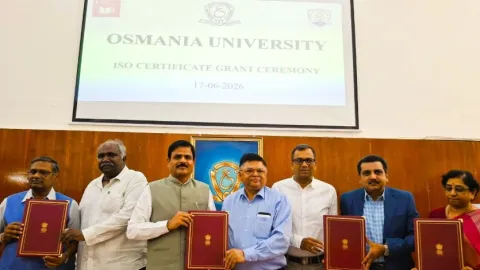
Osmania University Earns Four ISO Management System Certifications
Osmania University in Hyderabad, India, has earned four ISO management system certifications from the Bureau of Indian Standards (BIS), covering education, environmental management, energy management and food safety.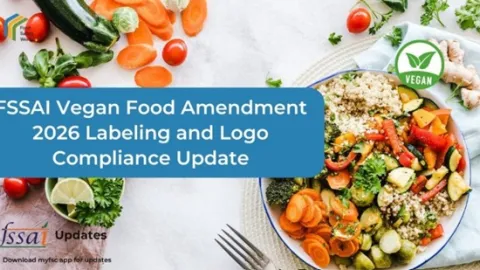
India Introduces New Vegan Food Logo Requirements
India has introduced a new official logo for vegan food products, with updated labeling requirements taking effect on July 1, 2027.
BIS Opens Consultation on Adoption of ISO 17298 and ISO 17620 Biodiversity Standards
The Bureau of Indian Standards (BIS) has opened a public consultation on the adoption of two International Organization for Standardization (ISO) biodiversity standards as Indian Standards: ISO 17298:2025 and ISO 17620:2025.
BIS Releases Standards Watch 35 and June 2026 Manak Samachar
The Bureau of Indian Standards (BIS) has released Standards Watch 35, focused on environmental protection and sustainability, alongside the June 2026 edition of Manak Samachar, which
Standards Watch 34 Looks at BIS Measures to Ease Certification Requirements
The Bureau of Indian Standards (BIS) has dedicated Standards Watch 34 to how certification and standards can support ease of doing business in India.
India Adopts ISO 14001:2026 as National Environmental Management Standard
The Bureau of Indian Standards (BIS) has published IS/ISO 14001:2026 as an identical adoption of ISO 14001:2026, updating India’s national framework for environmental management systems.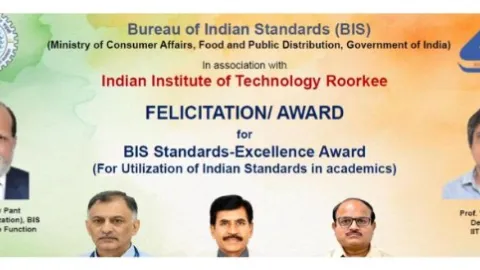
BIS Standards-Excellence Awards Presented to IIT Roorkee Students
The Bureau of Indian Standards (BIS) and the Indian Institute of Technology Roorkee (IIT Roorkee) presented the BIS Standards-Excellence Awards on May 13 to students and researchers at IIT Roorkee.Global News

TNFD Releases LEAP 2.0 with Expanded Guidance on Nature-Related Assessment
The Taskforce on Nature-related Financial Disclosures (TNFD) released version 2.0 of its LEAP assessment guidance on October 13, 2026, introducing new and expanded methods for evaluating how organizations depend on and affect nature, and the resulting business risks and opportunities.
RBA Revises VAP Standard With Changes to Supplier Audits and Corrective Actions
The Responsible Business Alliance (RBA) has released version 8.1 of its Validated Assessment Program (VAP) Standard, revising procedures for supplier audits, corrective actions, and assessments of working conditions, environmental practices, and business ethics.
Legal Battle Halts Planned AS9100 Revision
A legal dispute between the International Aerospace Quality Group (IAQG) and SAE International has placed the planned revision of the aerospace quality management standard AS9100 on indefinite hold.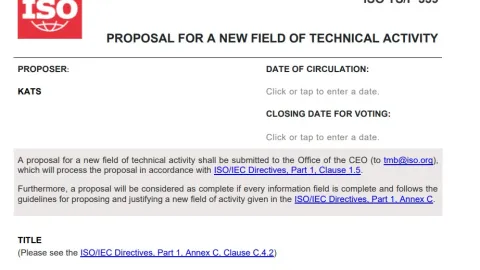
ISO Considering New Committee for Positioning, Navigation and Timing (PNT) Services
The Korean Agency for Technology and Standards (KATS) has proposed establishing a new technical committee within the International Organization for Standardization (ISO) to develop international standards for positioning, navigation and timing (PNT) services.
Second Edition of Automotive SPICE Potential Analysis Adds Machine Learning, Opens for Public Review
The Quality Management Center of the German Association of the Automotive Industry (VDA QMC) has released the second edition of Automotive SPICE Potential Analysis as a draft for public review.
How ISO/PAS 8800 Is Being Applied to Automotive AI Safety: Geely and Synopsys Examples
Two case studies published by SGS on October 16, 2026, show how ISO/PAS 8800:2024 is being applied to automotive AI safety.
BRCGS Releases Consumer Products Issue 5, Training Courses Coming Soon
BRCGS launched Issue 5 of its Consumer Products standard on October 13, 2026, at BRCGS Connect Americas in Nashville.
ISO 30439:2026 Sets Guidelines for Safe Handling of Workforce Data
The International Organization for Standardization (ISO) has published ISO 30439:2026, providing guidance on the safe handling of personal data used in human resource management (HRM).
FSC Addresses European Forest Certification Concerns as Romanian Harvesting Comes Under Review
The Forest Stewardship Council (FSC) has addressed concerns about forest management and certification in Europe, including a formal complaint over harvesting activities in Romania.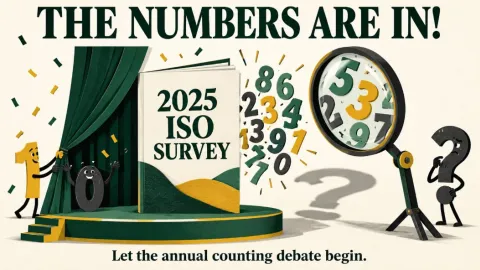
ISO Survey 2025 Shows Global Certification Growth, With Unusually Sharp Rise in India
The International Organization for Standardization (ISO) has released the 2025 ISO Survey, reporting more than 3.28 million valid management system certificates worldwide.
AIAG Updates Guidelines for Supplier Management and Electronic Assembly
The Automotive Industry Action Group (AIAG) has released updated editions of two Continuous Quality Improvement (CQI) guidelines covering supplier management and electronic assembly manufacturing.