
Management Systems World
All on Quality and other Standards in one place since 2010. Now Worldwide.
News
Please note that you have to be a registered member with paid membership in order to see full articles.
RegisterSelected News
NEN Seeks Members for Flexible, Demountable Infrastructure Standards
The Netherlands Standardization Institute (NEN) is seeking members for new working groups that will further develop three Dutch Technical Agreements (NTAs) related to industrial, flexible, and demountable (IFD) infrastructure construction methods.
South Korea Extends Deadline for 2026 World Standards Day Government Awards
South Korea’s Korean Agency for Technology and Standards (KATS) has extended the application deadline for the 2026 World Standards Day government awards program to May 29.
Rhum Bologne First Distillery in Guadeloupe to Earn ISO 22000 Certification
Rhum Bologne, a rum distillery in the French Caribbean territory of Guadeloupe, has received ISO 22000 certification for its food safety management system, becoming the first distillery on the island to achieve the certification.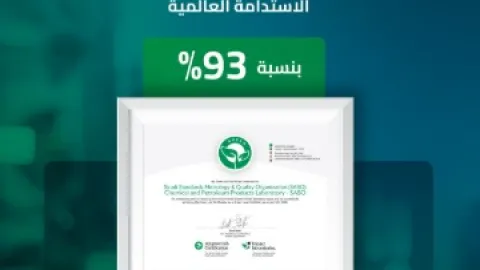
SASO Makkah Laboratory Earns Top-Level 'My Green Lab' Certification
The Saudi Standards, Metrology and Quality Organization (SASO) announced that its chemical and petroleum products laboratory branch in the Makkah region earned ‘My Green Lab’ Certification, with the laboratory achieving a score of 93%.
ANSI Honors Walter Zoller With Ronald H. Brown Standards Leadership Award
The American National Standards Institute (ANSI) has selected Walter Zoller, senior manager of technology standards and regulations at Rockwell Automation, as the 2026 recipient of the Ronald H. Brown Standards Leadership Award.
ISO 14001:2026 and Autonomous Transport Lead May Issue of PKN News
The Polish Committee for Standardization (PKN) has released the May 2026 issue of PKN News, focusing on how standards are helping organizations and public systems respond to fast-changing technological and environmental challenges.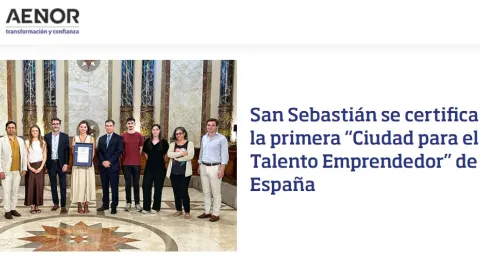
San Sebastián Becomes First Spanish City Certified for Entrepreneurial Talent
AENOR, a Spanish standards and conformity assessment organization, has certified San Sebastián as the first “City for Entrepreneurial Talent” in the country,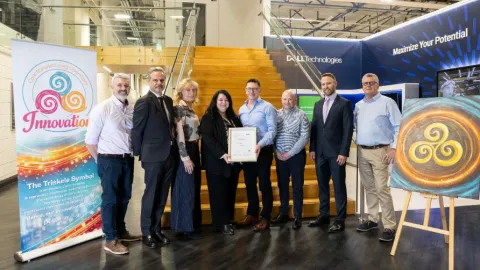
Dell Technologies First in Ireland to Earn ISO 56001 Certification
The National Standards Authority of Ireland (NSAI) announced that Dell Technologies has become the first organization in the country to earn ISO 56001 certification for innovation management systems.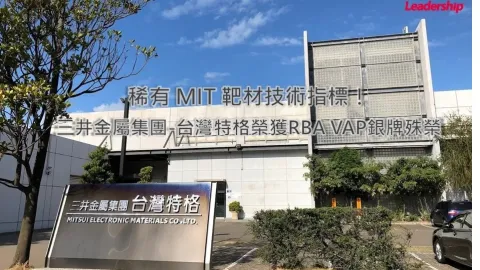
Taiwan Techg Earns RBA Silver Status for Supply Chain Responsibility Standards
Taiwan Techg, part of Mitsui Mining & Smelting, has received Silver status under the Responsible Business Alliance (RBA) Validated Assessment Program (VAP).
Lamborghini Recognized for Environmental, Social and Governance Practices
Automobili Lamborghini has received ESG Recognition from DNV, for using certified management systems to support its environmental, social, and governance commitments.
Serbian Editions of Revised ISO 17020 and ISO 17024 Released
The Institute for Standardization of Serbia (ISS) has published Serbian-language editions of ISO/IEC 17020 and ISO/IEC 17024 following the recent release of the new third editions of both conformity assessment standards.
Sorsix Becomes First in Europe’s Public Health Sector to Earn ISO 42001 Certification
Sorsix has become the first organization in Europe to have governance for a live national healthcare system certified under ISO/IEC 42001, the international standard for AI management systems.Global News

IAQG Preparing Major Changes to Aerospace Certification Processes and Quality Standards
The International Aerospace Quality Group (IAQG) is preparing major updates to its global certification scheme.
Ford Updates CSRs, Scorecard Guide and Audit Screens With Stricter Rules
Ford has issued updates to its Customer-Specific Requirements (CSRs), scorecard guide, and audit visuals under the IATF 16949 quality management standard.
IAF Joins AIQI Consortium to Strengthen Quality Infrastructure for AI
The International Accreditation Forum (IAF) has joined the Artificial Intelligence Quality Infrastructure (AIQI) Consortium to help develop safe and trustworthy AI technologies.
SGS Launches The PLEDGE program on Food Waste Certification Across Food Service Sector
SGS has launched The PLEDGE on Food Waste Certification, a third-party program aimed at helping food service businesses reduce food waste and improve operational efficiency.
ISO/DIS 9001 Timeline Confirmed Following Seventeenth Working Group Meeting
ISO/TC 176/SC 2/WG 29, the group revising ISO 9001, held its seventeenth meeting virtually on May 20, 2025, with 48 participants from 27 national standards bodies and 8 liaison organizations.
Long-Awaited ISO 27031 Revision Brings ICT Business Continuity Planning Into the Digital Era
The International Organization for Standardization (ISO) has released the long-awaited second edition of ISO/IEC 27031,
Tackling Sophisticated Threats: New ISO 37003 Provides Practical Anti-Fraud Guidance
A new international standard, ISO 37003:2025, has been published to help organizations strengthen their defenses against increasingly sophisticated fraud.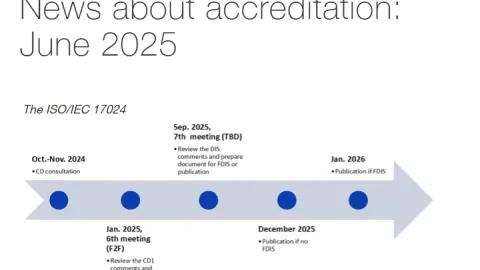
June 2025 Accreditation Roundup: ILAC-IAF Merger Advances, New IAF Documents and More
International accreditation organizations ILAC (International Laboratory Accreditation Cooperation) and IAF (International Accreditation Forum) have accelerated merger plans into a common global organization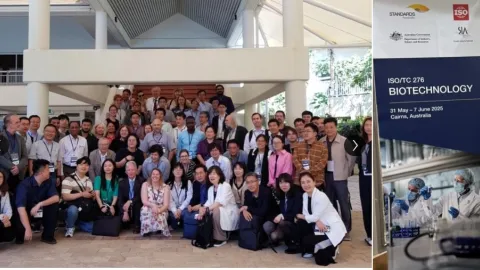
Global Experts Gather in Australia to Advance Revision of ISO 20387 Biobanking Standard
ISO/TC 276 Biotechnology technical committee held its annual plenary in Cairns, Australia, bringing together experts from 41 countries to focus on revising ISO 20387, the international standard for biobanking.
IAF PL 3 Issue 5 Refines Process for Adding New Areas to Global Accreditation System
The International Accreditation Forum (IAF) has published Issue 5 of IAF PL 3, its policy on the structure of the Multilateral Recognition Arrangement (MLA) and how new areas can be added.
How IEEE’s Cybersecurity Certification Supports Connected Medical Devices
The IEEE Standards Association is advancing efforts to safeguard connected medical devices through its IEEE Medical Device Cybersecurity Certification Program.
