
Management Systems World
All on Quality and other Standards in one place since 2010. Now Worldwide.
News Ecology / Energy / Chemistry
Please note that you have to be a registered member with paid membership in order to see full articles.
RegisterSelected News

Free Danish Standards Webinar Explains EU Rules Backing Greener Construction
A free webinar hosted by Danish Standards explains how new EU laws and standards support greener building practices.
Environmental Sustainability in Construction: Italian Guide UNI/PdR 13 Opens for Public Review
A new update to UNI/PdR 13, the guideline for environmental sustainability in construction, is now open for public consultation until March 28, 2025.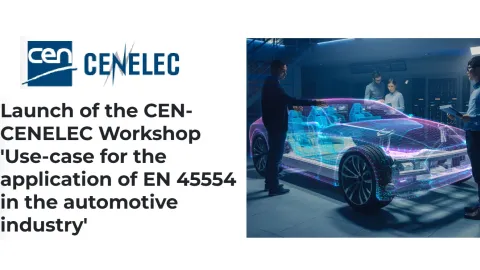
New CEN-CENELEC Workshop Aims to Improve Repairability in the Automotive Industry
CEN and CENELEC have launched a new workshop to explore how EN 45554 can be applied in the automotive sector, focusing on the repairability of electronic components.
UNE Leads Spanish Translation of IWA 48 Framework for Implementing ESG Principles
The Spanish Association for Standardization (UNE) has led the translation of IWA 48, the global ESG (environmental, social, and governance) standard into Spanish, making it freely accessible for application across all Spanish-speaking countries.
Sweden Makes Natural Value Inventory Standards Freely Available
The Swedish Environmental Protection Agency (Naturvårdsverket) has purchased free access to standards developed by the Swedish Institute for Standards (SIS) for natural value inventories, aiming to improve quality and enhance biodiversity protection.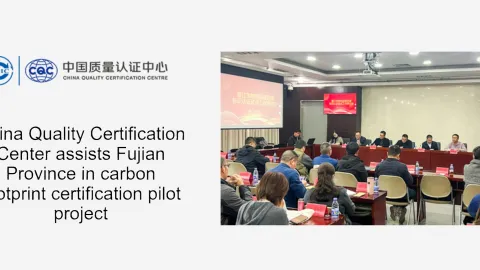
CQC Supports Fujian's Textile Carbon Footprint Certification Pilot
The China Quality Certification Center (CQC) was invited to participate in a seminar and conduct field inspections in Jinjiang, a city in Fujian Province, to support the region’s carbon footprint certification pilot for the textile industry.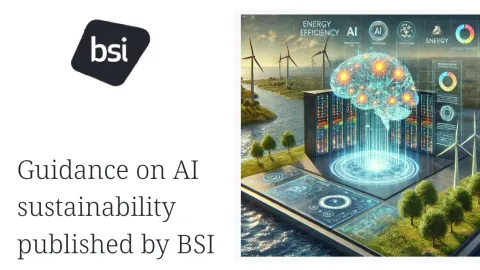
European Report Sets Framework for Sustainable AI Implementation
CEN and CENELEC have published CEN/CLC/TR 18145:2025, a technical report outlining best practices for environmentally sustainable artificial intelligence (AI).
Italy Adopts ISO 14072 and ISO 14075 Life Cycle Assessment Standards
Italy has officially adopted the life cycle assessment (LCA) standards UNI ISO 14072:2025 and UNI ISO 14075:2025, reinforcing its commitment to sustainability.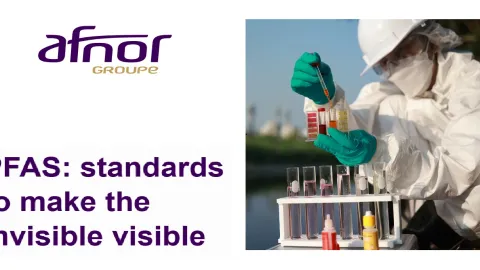
Addressing the Threat of 'Forever Chemicals' Through Standards and Regulations
PFAS, or "forever chemicals" pose a significant environmental and health risk due to their persistence in water, air, and soil.
How Sweden Leverages Standards to Advance Sustainable Construction
Sweden is strengthening its efforts to cut greenhouse gas emissions in the construction sector by half within five years, with standardization playing a key role.
CQC Issues First Certifications for Solid Waste Treatment and Water Efficiency Under Dual Carbon Policy
In line with China’s dual carbon policy, the China Quality Certification Center (CQC) has issued its first certifications for Solid Waste Treatment Management and Water Efficiency Management.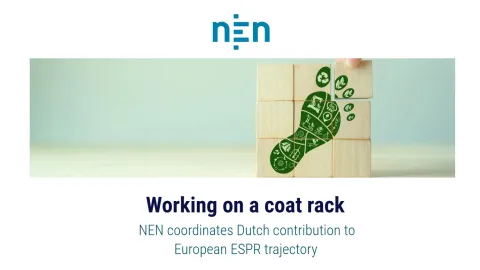
Dutch Involvement in European Sustainability Standards: Strong Foundation, But More Industry Support Essential
In a recent interview, Emiel Janssen, consultant at NEN, discussed the Netherlands’ role in shaping European sustainability standards.Global News
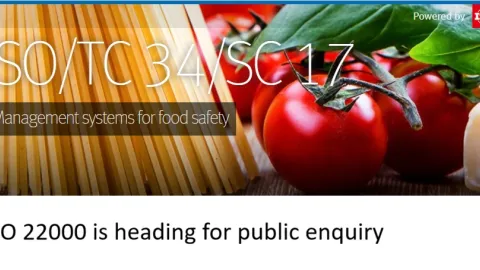
ISO 22000 Revision Enters Public Enquiry Stage
The International Organization for Standardization (ISO) has moved the revision of ISO 22000 to the public enquiry stage.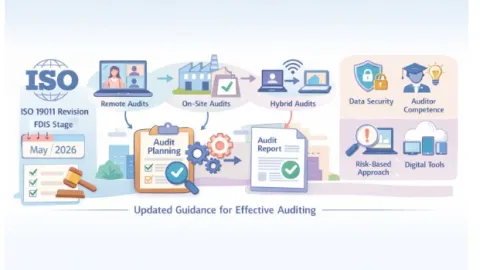
ISO 19011 Auditing Standard Enters Final Stage With Hybrid And Digital Shift
The International Organization for Standardization (ISO) has advanced the revision of ISO 19011 to the Final Draft International Standard (FDIS) stage.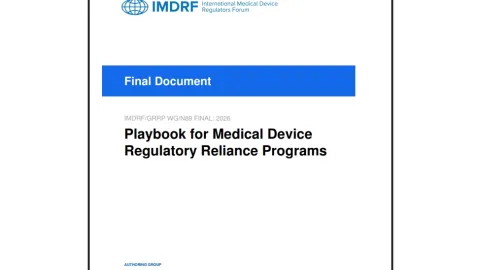
IMDRF Playbook Guides Global Use Of Shared Medical Device Regulatory Reviews
The International Medical Device Regulators Forum (IMDRF) has published a playbook to help regulators use shared approaches when reviewing medical devices, known as regulatory reliance.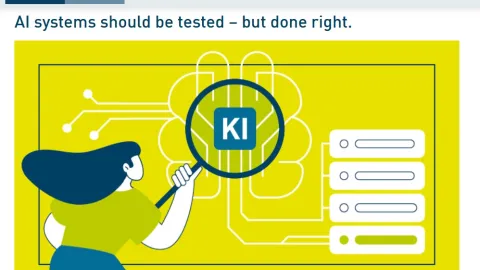
DIN Introduces First Framework For AI Testing Tools
The German Institute for Standardization (DIN) has published DIN SPEC 92006, introducing the first unified framework for artificial intelligence (AI) testing tools and setting clear requirements for how these tools should be designed and used.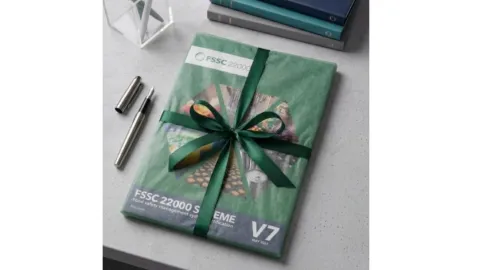
FSSC 22000 Version 7 Release Moved To May 2026
The Foundation for Food Safety Certification (FSSC) has delayed the launch of FSSC 22000 Version 7, with publication now expected in early May 2026.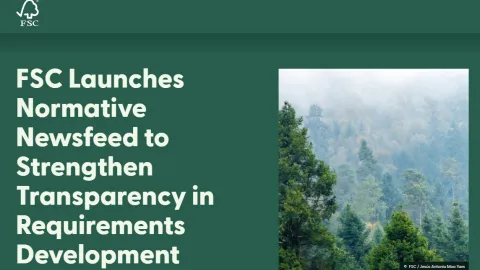
FSC Launches Normative Newsfeed For Clearer Requirements Updates
The Forest Stewardship Council (FSC) has introduced a new Normative Newsfeed to make updates to its requirements easier to track and understand.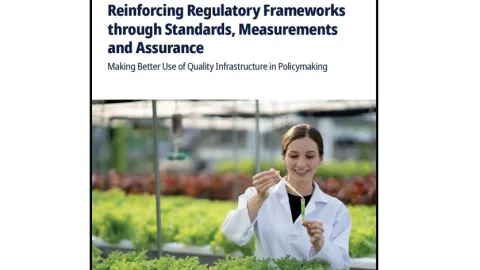
OECD Report Links Standards To More Effective Regulation
The Organisation for Economic Co-operation and Development (OECD) has released a report examining how governments can improve regulation by making better use of standards, measurement, and assurance systems, known as quality infrastructure (QI).
ISO 9000 Revision Reaches Final Draft Stage, Publication Expected In May 2026
The revision of ISO 9000, the international standard that defines the basic concepts and vocabulary of quality management, has reached the Final Draft International Standard (FDIS) stage, the final step before publication.
ISO and IEC Form JTC 5 Committee on Digital Product Passport Standards
A new international standards committee has been created to develop standards for digital product passports (DPPs), systems designed to share key product information across the entire lifecycle and improve transparency and circular economy practices.
Third Edition of ISO 22301 Business Continuity Standard Enters Development
The next revision of ISO 22301, the international standard for business continuity management systems (BCMS), has moved into development.
Global Accreditation Cooperation Incorporated Launches Website
Global Accreditation Cooperation Incorporated has launched its new official website, providing a central online platform for the organization that became the single global body for international accreditation cooperation.
