Management Systems World
All on Quality and other Standards in one place since 2010. Now Worldwide.
News Ecology / Energy / Chemistry
Please note that you have to be a registered member with paid membership in order to see full articles.
RegisterSelected News
Dutch Experts Sought for New European Circular Construction Standards
The European standards committee CEN/TC 350/SC 1 has established five new working groups to develop standards for circular design, material efficiency, and reuse in the construction sector.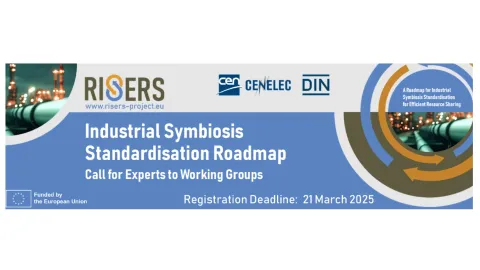
CEN and CENELEC Seek Experts for Industrial Symbiosis Working Groups
CEN and CENELEC, in partnership with DIN, are inviting experts to join Working Groups (WGs) for the development of the Industrial Symbiosis (IS) Standardization Roadmap under the Horizon Europe RISERS project.
CEN and CENELEC Release Brochure on Trusted Standards to Prevent Greenwashing in Environmental Claims
Consumers often struggle to interpret sustainability labels, making it difficult to differentiate genuine environmental efforts from marketing claims.
Dutch Energy Sector Pushes for Circular Infrastructure as NEN Supports Transition
The Dutch energy sector is taking significant steps toward a circular economy to reduce the use of raw materials like aluminum, copper, and steel.
Inmetro Offers Exclusive License for Nanocarbon Technology to Drive Decarbonization
The National Institute of Metrology, Quality and Technology (Inmetro) and the Federal University of Rio de Janeiro (UFRJ) have announced an exclusive licensing opportunity for a new technology that converts lignin, a common waste product in paper and biofuel production, into nanocarbon.
Upcoming Guidance to Pave the Way for Emission-Free Construction Sites in Denmark
A new guidance, DS/INF, is being developed to promote emission-free construction sites in Denmark, creating a shared understanding and framework for the industry.
Hydrogen Codes and Standards Roadmap Positions Canada for Clean Energy Growth
The Standards Council of Canada (SCC) has published the Canadian Hydrogen Codes and Standards Roadmap to support the deployment of hydrogen technologies.
BSI Updates PAS 402 to Improve Waste Management and Boost Circular Economy
The British Standards Institution (BSI) has revised its waste resource management specification, PAS 402:2025, to help businesses enhance recycling quality, reduce compliance costs, and simplify data reporting.
Public Consultation Opens for European Standard on Factory Sustainability
A draft European standard for assessing factory sustainability is now open for public consultation until March 10.
Canada’s Communities Integrating Natural Assets into Financial Reporting with New Guide
A new guide titled Getting Nature into Financial Reporting has been released to help Canadian local governments include natural assets - such as wetlands, rivers, forests, and coastal dunes - in their financial reports.
China Releases New Standard for Assessing Greenhouse Gas Emission Reductions
China has introduced GB/T 44915-2024, a national standard for assessing greenhouse gas emission reductions in waste gas, wastewater treatment, and waste residue recovery.
BNQ Unveils New Certification for Recycled Plastic Products
The Bureau de normalisation du Québec (BNQ) now offers certification for companies in the plastics sector under the Canadian standard CAN/BNQ 3840-100.Global News

IEC 63372 Establishes Method For Measuring Carbon Footprint And Avoided Emissions In Electronics
The International Electrotechnical Commission (IEC) has published IEC 63372,
IFAN Launches Podcast Highlighting Perspectives Of Standards Users
The International Federation of Standards Users (IFAN), a global organization representing the interests of standards users, has launched a podcast aimed at sharing the experiences of organizations and professionals who use standards in their work.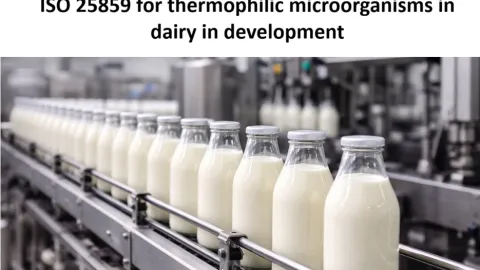
ISO 25859 for Thermophilic Microorganisms in Dairy Under Development
The International Organization for Standardization (ISO) is developing ISO 25859, a new international standard that will define how microorganisms that grow at high temperatures are counted in milk and dairy products.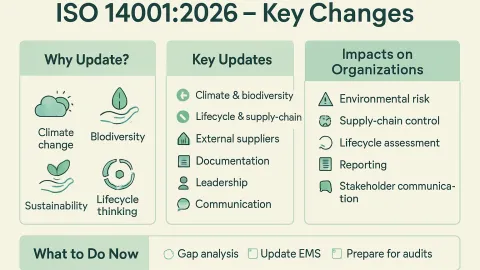
ISO 14001 Final Draft Approved For Publication
The Final Draft International Standard (FDIS) of ISO 14001 has been approved, paving the way for publication in mid April.
IATF Establishes Legal Entity, Ending Ad Hoc Structure
The International Automotive Task Force (IATF) has established a new legal entity, IATF AISBL, marking a shift from its previous structure as an ad hoc group of automotive manufacturers and their national industry associations.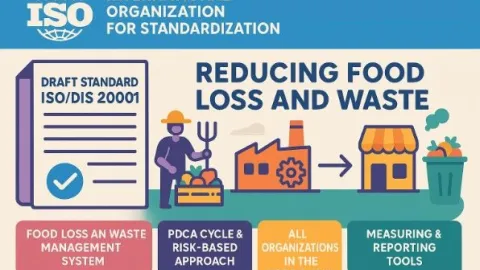
Have Your Say On Food Waste Management: ISO 20001 Survey
Harper Adams University is inviting professionals across the food chain to take part in a survey on ISO 20001, a proposed international management system standard designed to help organisations systematically reduce food loss and waste.
GOTS Version 8.0 Released With Expanded Due Diligence And Environmental Controls
Global Standard has released Version 8.0 of the Global Organic Textile Standard (GOTS),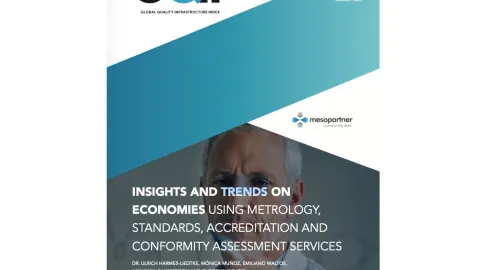
Global Quality Infrastructure Index 2025 Report Ranks Germany First as Certification and Accreditation Expand
The 2025 edition of the Global Quality Infrastructure Index (GQII) has been released, presenting updated rankings and new data on the development of national quality infrastructure systems.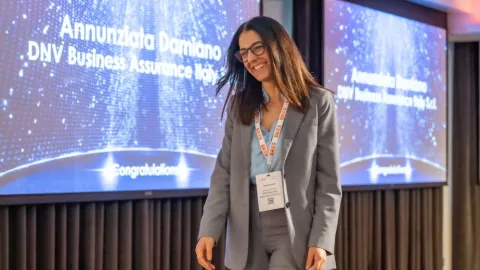
BRCGS Announces 2026 EMEA Award Winners At Connect Europe
BRCGS has announced its 2026 award winners during BRCGS Connect Europe in London, recognizing individuals and organizations serving the Europe, Middle East and Africa (EMEA) region and adjacent markets.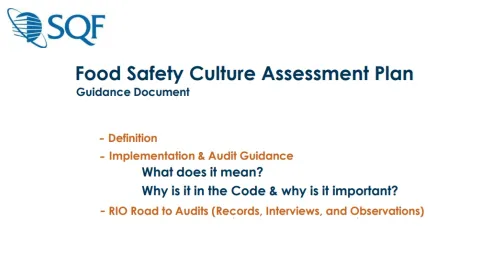
Food Safety Culture Becomes a Formal Certification Requirement Under SQF Edition 10
When SQF Edition 10 launches in March, food safety culture will be required and auditable as part of certification.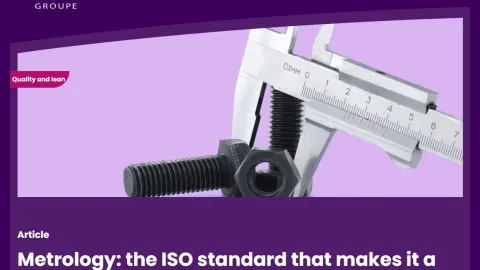
Revised ISO 10012 Reframes Metrology As A Management System
The revised ISO 10012 standard has been published, positioning metrology as an integral part of quality management systems rather than a standalone technical activity.