Management Systems World
All on Quality and other Standards in one place since 2010. Now Worldwide.
News
Please note that you have to be a registered member with paid membership in order to see full articles.
RegisterSelected News
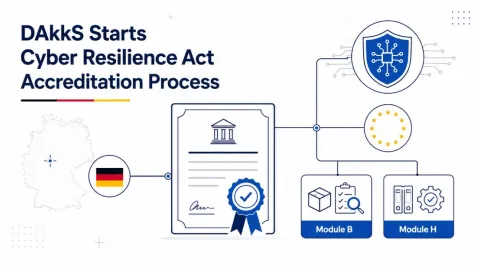
DAkkS Starts Cyber Resilience Act Accreditation Process
Germany’s national accreditation body, Deutsche Akkreditierungsstelle (DAkkS), has opened accreditation applications for conformity assessment bodies that want to work under the EU Cyber Resilience Act (CRA).
Vietnam Expands NQI Database for Standards Searches and Online Procedures
Vietnam is expanding its national database for standards, metrology and quality (NQI) with online tools for businesses and the public, while local authorities are already using the platform to manage data.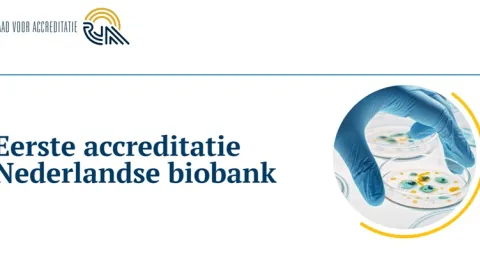
Erasmus MC Receives Netherlands’ First Biobank Accreditation
The Dutch Accreditation Council (RvA) has granted the Netherlands’ first biobank accreditation to Erasmus MC Central Biobank & Trialsupport.
NIST Opens AI Documentation Draft for Public Comment
The National Institute of Standards and Technology (NIST) is seeking public comment through September 16 on proposed guidance and templates for documenting AI datasets and models, which it plans to put forward for possible development as an international standard.
South Korea to Lead New ISO Drone Cybersecurity Working Group
South Korea will lead a newly established International Organization for Standardization (ISO) working group on drone cybersecurity, which will oversee the development of international standards in the field.
Czech Republic Adds Construction-Stage Requirements to BIM Data Standard
The Czech Standardization Agency (ČAS) has added construction-stage requirements to the country’s Construction Data Standard (DSS), specifying what information digital building models used in Building Information Modeling (BIM) must contain while a project is being built.
TÜV AUSTRIA Expands Railway Safety and Quality Services with Berlin Company
TÜV AUSTRIA has established TÜV AUSTRIA RAIL GMBH in Berlin, expanding its safety, testing and quality services for railway vehicles and infrastructure.
OECD Confirms Slovakia’s Good Laboratory Practice System Meets Requirements
The Organisation for Economic Co-operation and Development (OECD) has confirmed that Slovakia’s Good Laboratory Practice (GLP) monitoring system continues to meet its requirements, allowing qualifying study data from Slovak test facilities to remain internationally accepted.
Portugal Opens Nominations for 2026 Standardization Merit Award
The Portuguese Institute for Quality (IPQ) has opened nominations for its 2026 Standardization Merit Award, recognizing individuals who have made significant contributions to Portuguese standardization. Nominations close September 30.
ASQ Puerto Rico 2026 Quality Conference Invites Speaker Proposals
The American Society for Quality Puerto Rico Section (ASQ Puerto Rico) is inviting speaker proposals for its 2026 Quality Conference, scheduled for November 20.
Guizhou Redstar Becomes First in China’s Chemical Industry With Greenhouse Gas Management Certification
The China Quality Certification Centre (CQC) has awarded the first greenhouse gas management system certificate in China’s chemical industry to Guizhou Redstar Developing Co. Ltd., part of Qingdao Redstar Chemical Group.
FSC Responds to Concerns Over Romania’s Forest Certification
The Forest Stewardship Council (FSC) has published an FAQ following reports that raised concerns about Romania’s forests, addressing questions about protected forests, FSC certification and oversight in the country.Global News
Development Begins on ISO 59001 Circular Economy Management Standard
The International Organization for Standardization (ISO) has begun development of ISO 59001, a future certifiable management system standard for the circular economy.
ISO 32212 Introduces Net Zero Transition Planning Framework for Finance
The International Organization for Standardization (ISO) has published ISO 32212:2026,
ISO 45010 Workplace Menstruation and Menopause Guidance Advances to Final Approval Stage
The International Organization for Standardization (ISO) has advanced ISO 45010, which provides guidance on menstruation and menopause in the workplace, has advanced to the Final Draft International Standard - FDIS stage.
ISO Considers New Committee for Tunnel Design
A proposal to create a dedicated ISO technical committee for tunnel design is under consideration.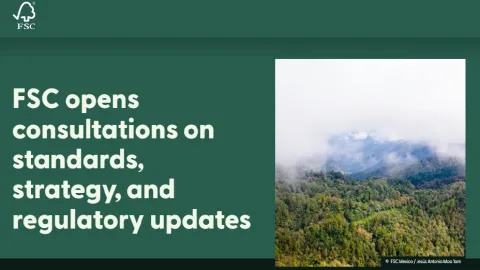
FSC Invites Feedback on Four Active Consultations
The Forest Stewardship Council (FSC) is inviting feedback on four active consultations.
CQI Launches Knowledge Hub for Quality Professionals
The Chartered Quality Institute (CQI) has launched a new Knowledge Hub that brings together quality information, learning resources and industry insights in one place.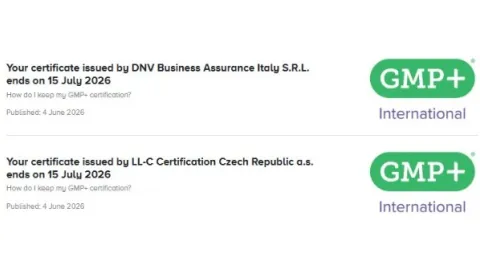
July 15 Deadline Nears for GMP+ Certificates Issued by DNV Italy and LL-C
GMP+ International has warned companies GMP+ Feed certificates issued by DNV Business Assurance Italy S.R.L. or LL-C Certification Czech Republic a.s. that
ISO 9000 and ISO 19011 Revised: New Guidance for Quality and Auditing
Two cornerstone standards for quality management and auditing have been revised, with the International Organization for Standardization (ISO) publishing new editions of ISO 9000 and ISO 19011.
ISO 9002 Revision Reaches Public Comment Stage
The International Organization for Standardization (ISO) has advanced the revision of ISO 9002 to the Draft International Standard (DIS) stage, opening the project for wider review and feedback.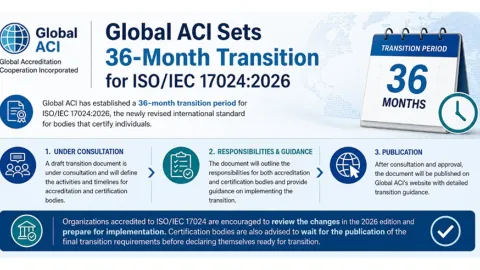
Global ACI Sets 36-Month Transition for ISO/IEC 17024:2026
The Global Accreditation Cooperation Incorporated (Global ACI) has established a 36-month transition period for ISO/IEC 17024:2026, the newly revised international standard for bodies that certify individuals.
PAS 96:2026 Updates Food Defence Guidance for Emerging Threats
The British Standards Institution (BSI) has published PAS 96:2026, a fully revised edition of its food defence guide.