Management Systems World
All on Quality and other Standards in one place since 2010. Now Worldwide.
News
Please note that you have to be a registered member with paid membership in order to see full articles.
RegisterSelected News

Kwik Trip Wins IAFP Black Pearl Award for Food Safety Excellence
The International Association for Food Protection (IAFP) has named Kwik Trip the recipient of its 2026 Black Pearl Award, recognizing the company's efforts to advance food safety and quality across its operations.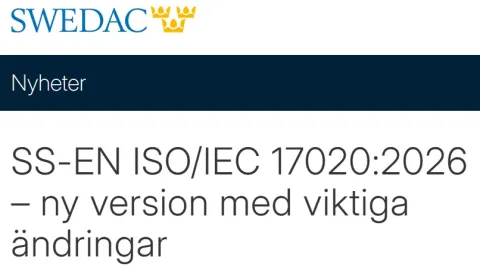
Swedac Announces Transition to Third Edition of ISO/IEC 17020
The Swedish Board for Accreditation and Conformity Assessment (Swedac) has announced the transition to the third edition of ISO/IEC 17020, published in Sweden as SS-EN ISO/IEC 17020:2026.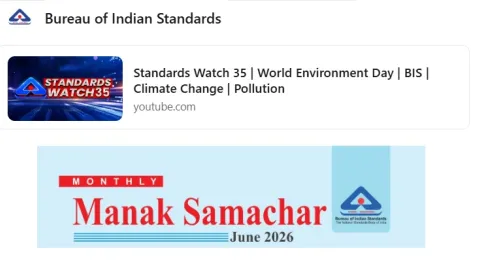
BIS Releases Standards Watch 35 and June 2026 Manak Samachar
The Bureau of Indian Standards (BIS) has released Standards Watch 35, focused on environmental protection and sustainability, alongside the June 2026 edition of Manak Samachar, which
ČAS Updates Procedures for Approving Electronic Records Management Software
The Czech Standardization Agency (ČAS) has updated the procedures and testing documents used to assess electronic records management systems (eSSL).
SNAS Broadens Role of Emissions Technical Committee
The Slovak National Accreditation Service (SNAS) has issued a new edition of ST-06, its statute governing technical committees, effective June 2026.
SAC Designates Organizations for ISO and IEC Committee Roles
The National Standardization Administration of China (SAC) has designated four organizations to serve as secretariats for International Organization for Standardization (ISO) committees and subcommittees covering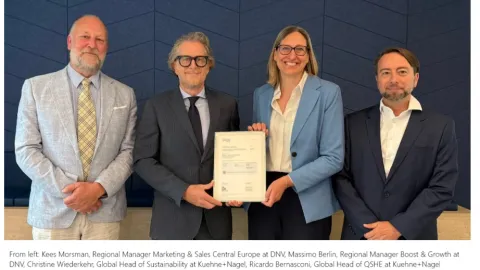
Kuehne+Nagel Earns ESG Recognition Backed by Four Certifications
Global logistics and supply chain company Kuehne+Nagel has received Environmental, Social and Governance (ESG) Recognition from DNV,
UNE and CRED Publish New Specifications for Food and Mobility Data Spaces
The Spanish Association for Standardization (UNE) and the Data Spaces Reference Center (CRED) have published two new specifications designed to support data interoperability in the food and mobility sectors.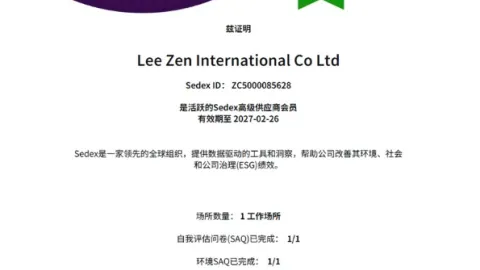
LeeZen International Achieves SEDEX and D&B ESG Certifications
LeeZen International Co., Ltd. has obtained both SEDEX Supplier Plus recognition and Dun & Bradstreet (D&B) ESG Registered certification,
ISBIH Glasnik 1/2026: From Autonomous Vehicles to Bosnian Standardization News
The Institute for Standardization of Bosnia and Herzegovina (ISBIH) has published Glasnik 1/2026 and a separate Official Notices bulletin covering standards updates and other standardization announcements.
Croatia Adopts New Edition of ISO/IEC 17020
The Croatian Accreditation Agency (HAA) has informed accredited inspection bodies that the new edition of HRN EN ISO/IEC 17020:2026 has been published in Croatia.
Slovenia Launches ESG Voucher for Voluntary Sustainability Reporting
The Slovenian Enterprise Fund (SPS) has launched a new Environmental, Social and Governance (ESG) Voucher to help micro, small and medium-sized enterprises prepare voluntary sustainability reports.Global News
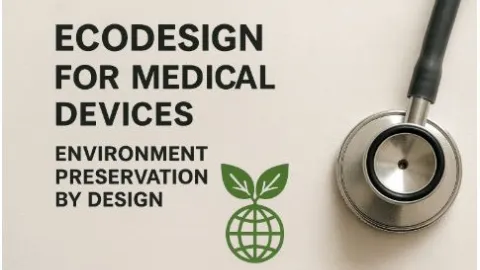
ISO and IEC Develop Global Standard to Embed Ecodesign in Medical Devices
The International Organization for Standardization (ISO) and the International Electrotechnical Commission (IEC) are developing a new global standard to formally integrate ecodesign into the development of medical devices.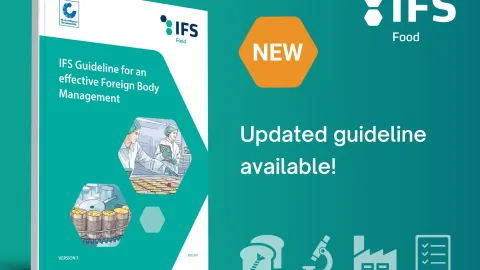
IFS Releases Updated Guideline for Effective Foreign Body Management
International Featured Standards (IFS) has issued an updated Guideline for an Effective Foreign Body Management,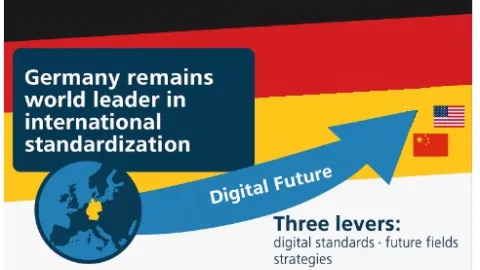
Germany Heads Most ISO Secretariats But China Rapidly Gains Ground
Germany remains the world’s top country in international standardization, holding 17.1% of all ISO secretariats, according to the 2025 International Standardization Barometer published by the German Institute for Standardization (DIN).
Europe Now Conditionally Accepts FDA Inspections Conducted Abroad
The European Medicines Agency (EMA) and the U.S. Food and Drug Administration (FDA) have entered a new stage of cooperation under their Mutual Recognition Agreement (MRA) for Good Manufacturing Practice (GMP) inspections.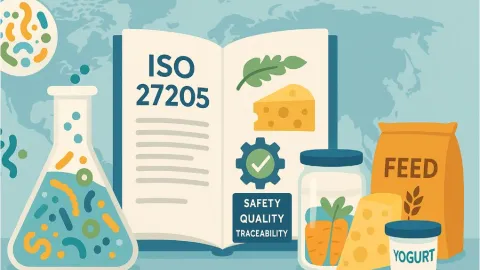
New International Standard in Development for Microbial Cultures and Probiotics
Work has begun within ISO to create a global standard that defines how microorganisms used in food and feed, such as bacteria, yeasts, and fungi, should be characterized and quality assured.
BS 30480 Launched as the World’s First Standard on Suicide Awareness in the Workplace
The world’s first standard dedicated to suicide awareness and prevention in the workplace, BS 30480, has been released by the British Standards Institution (BSI).
IATF Updates GM Quick Reference Guide on How Auditors Review Scorecard Data.
The International Automotive Task Force (IATF) has issued an updated GM Scorecard Quick Reference Guide and Screen Images package to align with the latest Rules for Achieving and Maintaining IATF Recognition (6th edition).
GLOBALG.A.P. Gets New IT Platform for Certification and Transparency
GLOBALG.A.P. now operates on a new IT platform developed by Agraya GmbH together with its technology partner osapiens.
Standards Pavilion Expands at COP30 with Broader Coalition on Climate Policy and Finance
The Standards Pavilion has opened at COP30 in Belém, Brazil, where 21 international organizations are discussing how standards can support measurable climate action.
ISO 13485 Stays Unchanged as Revision Committee Rejects Annex SL Alignment
The medical device quality management standard ISO 13485 will remain unchanged, as ISO’s Technical Committee in charge, ISO/TC 210, decided not to align it with Annex SL, ISO’s harmonized structure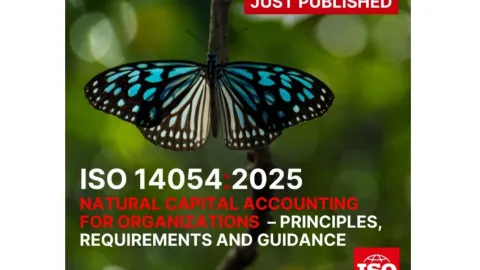
ISO 14054 Introduces First Global Framework for Natural Capital Accounting
The International Organization for Standardization (ISO) has published a new global standard, ISO 14054:2025, to help organizations measure, value, and account for their interactions with nature.