Management Systems World
All on Quality and other Standards in one place since 2010. Now Worldwide.
News
Please note that you have to be a registered member with paid membership in order to see full articles.
RegisterSelected News
BRCGS Seeks Nominations for 2026 Americas Awards
Nominations are now open for the BRCGS Awards 2026 Americas, which recognize individuals and organizations that support BRCGS certification and contribute to food and product safety across the region.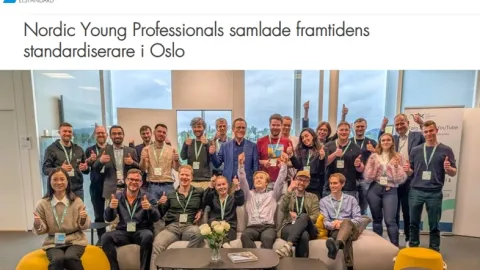
Oslo Event Connects Future Experts in Electrotechnical Standardization From Across the Nordics
The Nordic Electrotechnical Standardization Bodies (NOREK) brought together young professionals from Norway, Sweden, Denmark and Finland in Oslo on June 3–4 for Nordic Young Professionals 2026.
UKAS Begins Development of ISO 14067 Product Carbon Footprint Accreditation
The United Kingdom Accreditation Service (UKAS) has begun work toward a new accreditation program for organizations that validate and verify product carbon footprints under ISO 14067:2018.
Digital Identification and Product Passports Lecture Opens 'Standards Made Easy' Series
The Croatian Standards Institute (HZN) and the Croatian Engineering Association (HIS) have launched the 'Standards Made Easy' lecture series, opening with an online session on digital identification and digital product passports.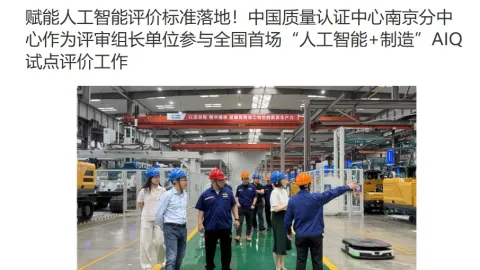
First Pilot Completed Under China's New AI Manufacturing Evaluation Framework
The first pilot evaluation under China's newly implemented Artificial Intelligence + Manufacturing (AIQ) assessment scheme has been completed,
GET-UNE 29 Launched to Develop Strategic Industrial Autonomy Standard
The Spanish Association for Standardization (UNE) and Spain’s Ministry of Industry and Tourism (MINTUR) have launched GET-UNE 29,
Singapore Proposes ISO/IEC 42119-8 Standard for Generative AI Testing
The Infocomm Media Development Authority (IMDA) and Enterprise Singapore (EnterpriseSG) have proposed ISO/IEC 42119-8, a new international standard for testing generative artificial intelligence (AI) systems.
SIS Launches Digital Quality Seal for Standards Subscribers
The Swedish Institute for Standards (SIS) has introduced a free digital quality seal for organizations that subscribe to SIS Abonnemang, its standards subscription service that provides access to standards and updates.
CEN, CENELEC and ETSI Start Work on Pan-European Certificate on Standardization
CEN, CENELEC and ETSI have launched a tender seeking experts to create a new Pan-European Certificate on Standardization.
USB Certification Becomes First Body Accredited by TÜRKAK for IFS and BRCGS
The Turkish Accreditation Agency (TÜRKAK) has granted its first accreditation under the International Featured Standards (IFS) and BRCGS food safety programs to USB Certification, making it the first certification body accredited by TÜRKAK for the schemes.
BIS Opens Consultation on Adoption of ISO 17298 and ISO 17620 Biodiversity Standards
The Bureau of Indian Standards (BIS) has opened a public consultation on the adoption of two International Organization for Standardization (ISO) biodiversity standards as Indian Standards: ISO 17298:2025 and ISO 17620:2025.
UKAS Probes Interest in Accreditation for ISO 14019-1 Sustainability Information Verification
The United Kingdom Accreditation Service (UKAS) is assessing demand for a new accreditation program covering the validation and verification of sustainability information under ISO 14019-1:2026.Global News
IFS Releases Updated Food 8 and PACsecure 3 Doctrines with New Audit Clarifications
IFS has released two updated normative documents: version 4 of the IFS Food 8 Doctrine and version 2 of the IFS PACsecure 3 Doctrine.
Draft of ISO 11135 for Medical Device Sterilization Under Review
A revision of ISO 11135, the global standard for ethylene oxide sterilization of medical devices, is now in the Draft International Standard (DIS) stage and under review by ISO member bodies.
Promoting Safer Bicycle Tourism Worldwide With New ISO 11956
A new international standard, ISO 11956:2025, has been published to support safe and responsible bicycle tourism across the globe.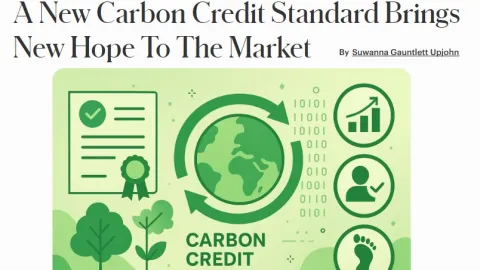
Equitable Earth Forest Carbon Credit Standard Aims to Restore Market Trust
A new forest carbon credit standard and accreditation system are expected to launch by 2026 under the leadership of Equitable Earth.
ISO 18295 Revision: Modern Communication Trends Reshape Customer Contact Standards
The International Organization for Standardization (ISO) has launched a revision of its two customer contact standards, ISO 18295-1 and ISO 18295-2, to reflect current communication practices and the growing role of artificial intelligence in customer interactions.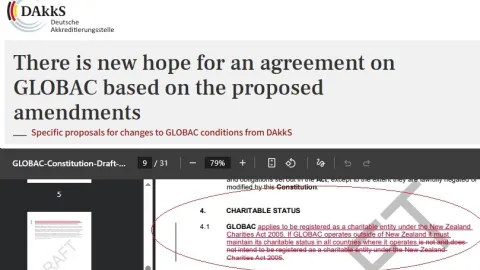
DAkkS Proposes GLOBAC Fix: No Conflicts of Interest, No Profit Motive
The German Accreditation Body (DAkkS) has proposed legal changes to GLOBAC that would allow EU national accreditation bodies to join without violating European law.
France and Norway to Lead Committee in Charge of ISO 9000 Family of Standards
The French Standardization Association (AFNOR) and Standard Norway (SN) will jointly lead ISO/TC 176, Quality management and quality assurance, the ISO technical committee responsible for the ISO 9000 family of quality management standards.
Second Consultation Round Begins for Global Organic Textile Standard Version 8.0
The second public consultation for Version 8.0 of the Global Organic Textile Standard (GOTS) is now open and will run until August 15, 2025.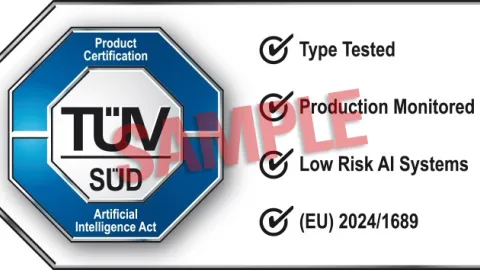
TÜV Süd Launches Voluntary Test Mark for Low-Risk AI Systems
TÜV Süd has launched a voluntary certification mark for low-risk AI (artificial intelligence) systems, allowing manufacturers to prove the quality of their AI solutions even when no legal requirements apply.
Draft of ISO 17024 for Certification of Persons Wins Overwhelming Approval
The draft of ISO/IEC 17024, a conformity assessment standard for certifying persons, has been approved by ISO, IEC, and CEN.
New ISO Agreement Proposed to Align Global Greenhouse Gas Accounting Rules
A new ISO International Workshop Agreement (IWA) has been proposed to harmonize greenhouse gas (GHG) accounting standards for industrial products and improve the comparability of emissions data across global supply chains.