Management Systems World
All on Quality and other Standards in one place since 2010. Now Worldwide.
News Norway
Please note that you have to be a registered member with paid membership in order to see full articles.
RegisterSelected News
Norway Moves to Establish National Biotechnology Standards Committee
Standard Norway and Tekna, a Norwegian professional association for scientists and technologists, are taking steps to establish a national biotechnology standards committee.
Revised NS 9431 Improves Waste Classification and Data Quality
Standard Norway (SN) has published a revised version of NS 9431 to improve how waste is classified, recorded, and reported across Norway.
Norway Takes the Helm of European Feed Analysis Standards Secretariat
Standard Norway (SN) has taken over the secretariat of a European Committee for Standardization (CEN) committee responsible for feed sampling and analysis,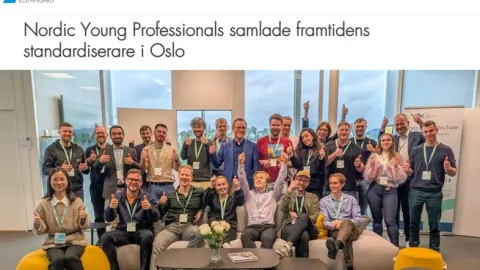
Oslo Event Connects Future Experts in Electrotechnical Standardization From Across the Nordics
The Nordic Electrotechnical Standardization Bodies (NOREK) brought together young professionals from Norway, Sweden, Denmark and Finland in Oslo on June 3–4 for Nordic Young Professionals 2026.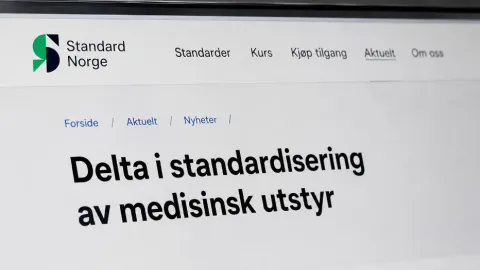
Norway Reestablishes Medical Device Standards Committee, Invites New Members
Standard Norway (SN) has reestablished its national committee for medical device management systems and is now inviting more professional communities to participate in work on international and European standards for quality and risk management in medical devices.
'The Nordic Region Sets the Standard' Initiative Targets Green and Digital Transition
The national standards bodies of Denmark, Finland, Iceland, Norway and Sweden have launched a joint initiative called The Nordic Region Sets the Standard to strengthen cooperation on the green and digital transition.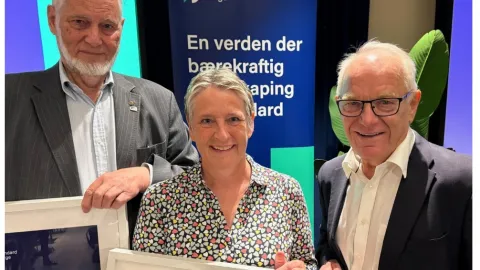
Norway Honors Three Leaders in Standardization With 2026 Awards
The Standard Norway (SN) has presented its 2026 standardization awards to Steinar Helland, Tore Andreas Torp and Åse Høisæter,
Standard Norway Seeks Expert to Adapt Oil and Gas Materials Standard for Shorter Projects
The Standard Norway (SN) is looking for an external expert to help adjust the NORSOK M-001 materials standard so it better fits today’s shorter oil and gas projects.
Norway Seeks Members for Proposed Biotechnology Standards Committee
Standard Norway (SN) is seeking experts to join a new national mirror committee for ISO/TC 276 on biotechnology, which will be set up if enough stakeholders express interest.
Public Consultation Opens For Four Parts Of NS 3420
Standard Norway (SN) has launched a public consultation on four updated parts of the NS 3420 standard,
Standard Norway Adopts New Corporate Strategy Through 2030
Standard Norway (SN) has adopted a new corporate strategy to guide its work through 2030 and strengthen its ability to deliver standards that support safety, quality, efficiency and sustainability.
Standard Norway Hosts Consultation On ISO 29501 And ISO 29502 Draft Standards
Standard Norway (SN) will hold an open consultation meeting on March 4 to present and gather feedback on two draft international standards that define requirements and conformity assessment rules for operating management systems.Global News
Draft ISO/IEC 42007 Sets Framework for AI Conformity Assessment Schemes
ISO and IEC are developing ISO/IEC DIS 42007, a framework for conformity assessment schemes for artificial intelligence (AI) systems.
ISO Approves Development of Innovation Management Guidance for Startups and SMEs
The International Organization for Standardization (ISO) has approved a new project to develop innovation management guidance for startups and small and medium-sized enterprises (SMEs).
BRCGS Consumer Products Issue 5 Set for Launch at Connect Americas
BRCGS will launch Consumer Products Issue 5 at BRCGS Connect Americas in Nashville on October 13, 2026, introducing a revised certification standard for consumer product manufacturers. Audits against the new edition will begin on June 1, 2027.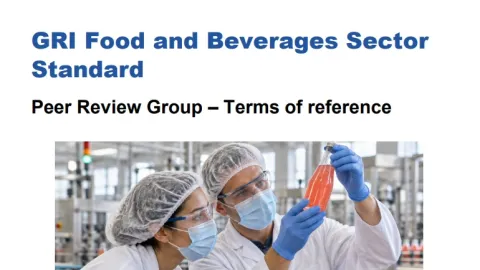
GRI Begins Developing Sustainability Reporting Standard for Food and Beverages
The Global Reporting Initiative (GRI) has begun developing a new Sector Standard for food and beverage companies, covering sustainability impacts across their own operations and value chains.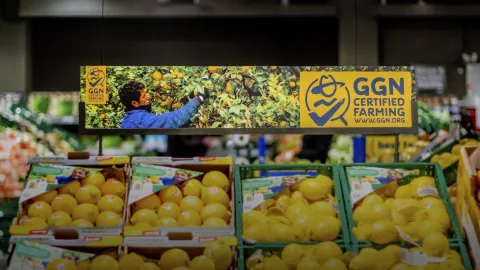
GGN Label Updates Sustainability Claims as EU Rules Begin to Apply
Agraya has updated the sustainability claims used with its GGN label as new European Union rules on environmental marketing began to apply on September 27.
GFSI Seeks Feedback on Freshcare and SQF Programs Under 2024 Requirements
The Global Food Safety Initiative (GFSI) has opened public consultations on Freshcare Food Safety & Quality Standard Edition 5 (2026) and SQF Code Edition 10 for recognition against the GFSI Benchmarking Requirements Version 2024.
ISO 20001:2026 Published as First Food Loss and Waste Management Standard
The International Organization for Standardization (ISO) has published ISO 20001:2026, its first management system standard dedicated to preventing and reducing food loss and waste across the food supply chain.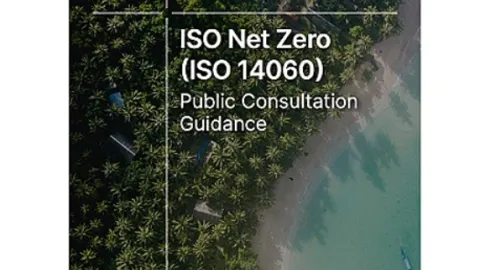
ISO 14060 Net-Zero Draft Fails to Secure Approval, Returns for Revision
The draft of ISO 14060, the proposed international standard for net-zero aligned organizations, has failed to secure the approval needed to advance.
Global ACI Aligns CORSIA MRA Sub-Scope With Fourth Edition of ICAO Manual
Global Accreditation Cooperation Incorporated (Global ACI) has updated the Carbon Offsetting and Reduction Scheme for International Aviation (CORSIA) sub-scope of its Multilateral Recognition Arrangement (MRA) to align it with the latest international guidance.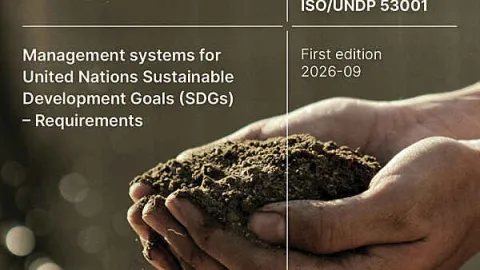
ISO/UNDP 53001 Debuts as First International Management System Standard for Sustainable Development Goals
ISO and UNDP released ISO/UNDP 53001 on September 28, 2026, the world's first International Standard for managing contributions to the United Nations Sustainable Development Goals (SDGs).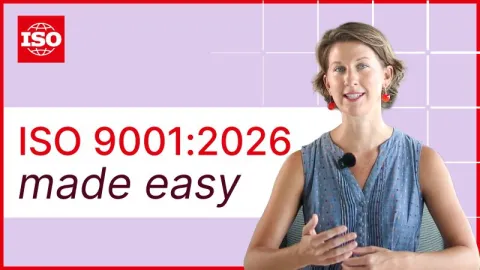
ISO Central Secretariat Explains Key Changes in ISO 9001:2026 in New Video
The International Organization for Standardization (ISO) has released a detailed video explaining the changes in ISO 9001:2026 directly from its Central Secretariat.