Management Systems World
All on Quality and other Standards in one place since 2010. Now Worldwide.
News
Please note that you have to be a registered member with paid membership in order to see full articles.
RegisterSelected News
Taiwan Updates Accreditation Document for Certification Bodies Operating in Multiple Countries
The Taiwan Accreditation Foundation (TAF) has updated its mandatory document for assessing certification bodies operating in multiple countries to reflect the transition from the International Accreditation Forum (IAF) to Global Accreditation Cooperation Incorporated (Global ACI).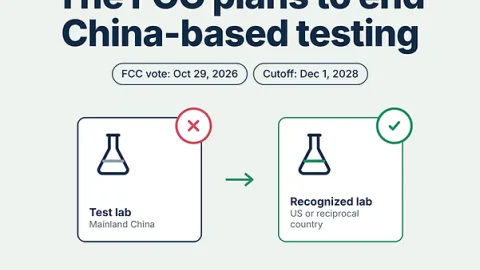
FCC Set to End Recognizing Product Tests Conducted in China by 2028
The U.S. Federal Communications Commission (FCC) is proposing to stop recognizing product testing conducted in mainland China and other economies without reciprocal testing agreements with the United States.
DIN Warns Against Departing from International Standards in EU Reform
The German Institute for Standardization (DIN) has warned against weakening the role of international standards in the European Commission's proposed reform of standardization rules.
NSAI Sets Out ISO 14001:2026 Transition Timeline and Audit Requirements
The National Standards Authority of Ireland (NSAI) has published its transition policy for organizations certified to I.S. EN ISO 14001:2015, setting out deadlines and audit arrangements for moving to the 2026 edition.
Latest Issue of SNI Valuasi Magazine Examines Disaster Resilience
The National Standardization Agency of Indonesia (BSN) has released the 43rd issue of its SNI Valuasi (Value of Indonesian National Standards) magazine, covering July to September 2026.
AI and the Human Factor at the Heart of France's Quality Month 2026
The French quality professionals' network France Qualité will organize Quality Month 2026 from November 2 to December 2,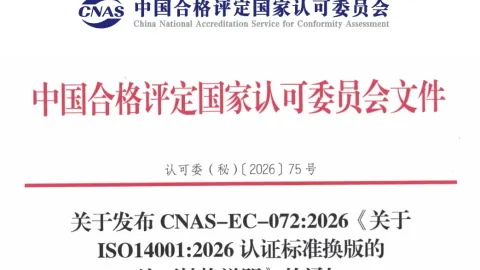
CNAS Sets Deadlines for Certification Bodies to Adopt ISO 14001:2026
The China National Accreditation Service for Conformity Assessment (CNAS) has published CNAS-EC-072:2026, setting out the requirements and deadlines for certification bodies transitioning to ISO 14001:2026.
EN 18286 Becomes First Harmonized Standard Cited Under EU AI Act
EN 18286:2026, which sets quality management system requirements for AI providers, has become the first harmonized European standard cited in the Official Journal of the European Union (OJEU) in support of the EU Artificial Intelligence (AI) Act.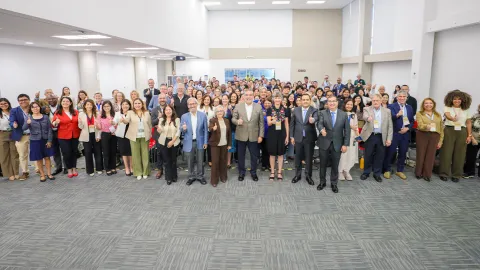
Peru Hosts International Event on Circular Economy Standards
The National Institute of Quality (Inacal) of Peru organized an international event titled "The Role of Standardization in the Transition to a Circular Economy" in Lima.
BIS Publishes Practical Laboratory Safety Guide
The Bureau of Indian Standards (BIS) has published a new booklet, "Good Practices for Safety in Laboratory", bringing together safety recommendations for chemical, radiochemical, and microbiological laboratories.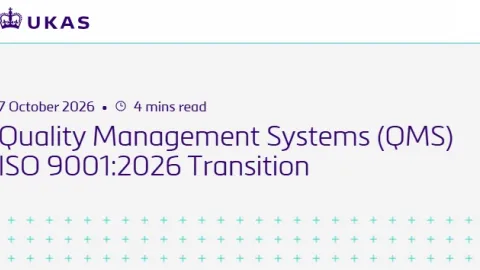
UKAS Publishes ISO 9001:2026 Transition Arrangements
The United Kingdom Accreditation Service (UKAS) has published its transition arrangements for ISO 9001:2026, setting out the requirements and deadlines for accredited certification bodies.
Chile Approves National Adoption of ISO 9001:2026
Chile has approved NCh-ISO 9001:2026, the identical national adoption of the new ISO 9001 edition.Global News
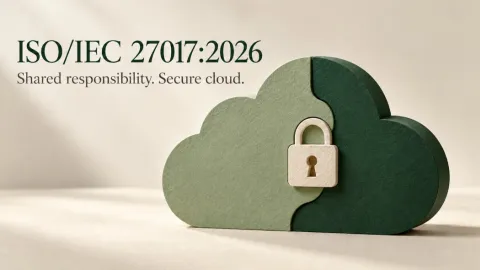
ISO/IEC 27017:2026 Updates Information Security Controls for Cloud Services
ISO and IEC have published ISO/IEC 27017:2026, an updated international standard providing guidance on information security controls for cloud services.
ISO Seeks Feedback on Draft ISO 56011 for Innovation Management Competencies
ISO/DIS 56011, a draft international standard outlining the knowledge, skills, and behaviors needed to manage innovation effectively, is now open for feedback.
ISO Publishes New Guide on Education About Standardization Around the World
The International Organization for Standardization (ISO) has published Education about Standardization: Perspectives and Practices (PUB100508), a new guide exploring how standards are being integrated into education systems worldwide.
ISO/IEC 9837:2026 Establishes Common Concepts for Systems Resilience
ISO/IEC 9837:2026, a new international standard on systems resilience, provides a common basis for understanding how systems can withstand disruptions, adapt to adverse conditions, and recover from failures.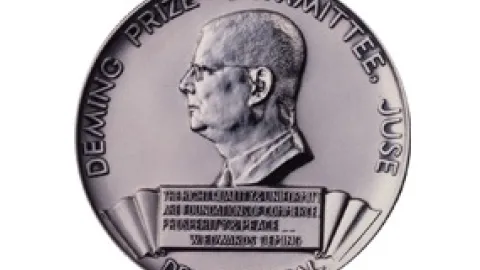
2026 Deming Prize Winners Announced
The Deming Prize Committee announced the 2026 winners on October 6, recognizing two individuals for their contributions to quality management and four organizations from Japan, India, and Indonesia.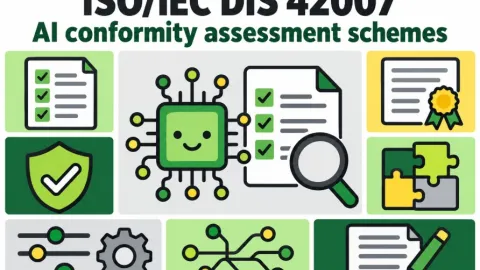
Draft ISO/IEC 42007 Sets Framework for AI Conformity Assessment Schemes
ISO and IEC are developing ISO/IEC DIS 42007, a framework for conformity assessment schemes for artificial intelligence (AI) systems.
ISO Approves Development of Innovation Management Guidance for Startups and SMEs
The International Organization for Standardization (ISO) has approved a new project to develop innovation management guidance for startups and small and medium-sized enterprises (SMEs).
BRCGS Consumer Products Issue 5 Set for Launch at Connect Americas
BRCGS will launch Consumer Products Issue 5 at BRCGS Connect Americas in Nashville on October 13, 2026, introducing a revised certification standard for consumer product manufacturers. Audits against the new edition will begin on June 1, 2027.
GRI Begins Developing Sustainability Reporting Standard for Food and Beverages
The Global Reporting Initiative (GRI) has begun developing a new Sector Standard for food and beverage companies, covering sustainability impacts across their own operations and value chains.
GGN Label Updates Sustainability Claims as EU Rules Begin to Apply
Agraya has updated the sustainability claims used with its GGN label as new European Union rules on environmental marketing began to apply on September 27.
GFSI Seeks Feedback on Freshcare and SQF Programs Under 2024 Requirements
The Global Food Safety Initiative (GFSI) has opened public consultations on Freshcare Food Safety & Quality Standard Edition 5 (2026) and SQF Code Edition 10 for recognition against the GFSI Benchmarking Requirements Version 2024.