Management Systems World
All on Quality and other Standards in one place since 2010. Now Worldwide.
News Australia
Please note that you have to be a registered member with paid membership in order to see full articles.
RegisterSelected News
NATA Completes First Full Multi-Site Accreditation Assessment Cycle
The National Association of Testing Authorities, Australia (NATA) has completed the first full cycle of its Multi-Site Accreditation (MSA) model, which allows organizations with several locations to be assessed under one coordinated accreditation program.
Australia Plans Free Access to Selected Legally Referenced Standards
Standards Australia (SA) is preparing government-sponsored online access to selected Australian Standards referenced in federal, state and territory laws and regulations, following funding announced in Australia’s 2026-27 Budget.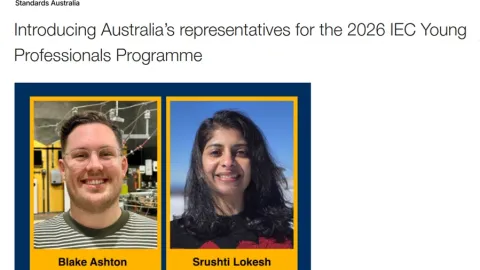
Blake Ashton and Srushti Lokesh Selected as Australia’s 2026 IEC Young Professionals
Standards Australia (SA) will send Blake Ashton and Srushti Lokesh to represent Australia in the International Electrotechnical Commission (IEC) Young Professionals Programme, giving both early-career specialists a role in international discussions on standards for energy and electrotechnology.
Standards Australia Names 2026 Award Winners
Standards Australia has named the nine recipients of its 2026 Standards Awards, recognizing individuals, technical committees and organizations for contributions to standards development, innovation and industry safety.
Australian Students Win Gold and Bronze on International Standards Olympiad Debut
Australia made a successful International Standards Olympiad debut, with students winning Gold and Bronze against a field of 105 competitors from around the world.
NATA Honors Professor John Wheatley and PathWest at Accreditation Matters 2026
The National Association of Testing Authorities, Australia (NATA) presented its 2026 Alastair Ross Award to Professor John Wheatley and its 2026 Excellence Award to PathWest Forensic Biology, Laboratory Medicine WA during the Accreditation Matters 2026 conference in Melbourne.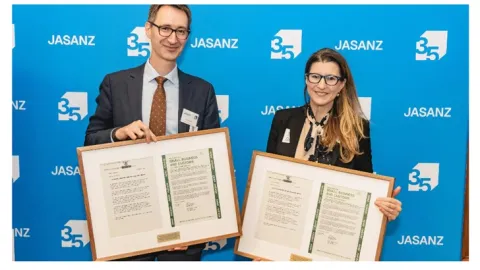
JASANZ Marks 35 Years at Wellington Anniversary Event
The Joint Accreditation System of Australia and New Zealand (JASANZ) celebrated its 35th anniversary with an event at New Zealand's Parliament in Wellington, bringing together partners, government representatives, and members of its accreditation network to mark the milestone.
TGA Proposes Publishing Therapeutic Goods GMP Inspection Outcomes
The Therapeutic Goods Administration (TGA) has opened a consultation on plans to publish Good Manufacturing Practice (GMP) inspection outcomes and GMP certificates for therapeutic goods manufacturers, seeking feedback on how the information should be published and accessed.
Australia Expands Public Access to Mandatory Standards
The Australian Government has committed Federal Budget support for sponsored public access to mandatory Australian Standards, a move expected to improve access to safety and building requirements for businesses, apprentices, and tradespeople across the country.
Standards Australia Opens Applications for 2027 NEXTgen Program
Standards Australia has opened expressions of interest for its 2027 NEXTgen Program, which gives emerging professionals hands-on experience in standards development through committee participation, training, and industry collaboration.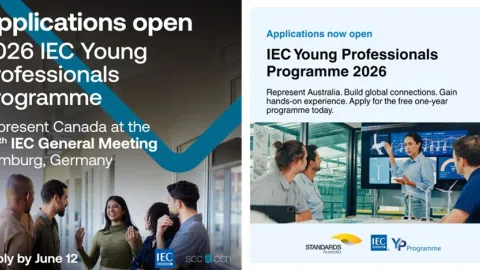
Australia and Canada Open Applications for IEC Young Professionals Programme 2026
Standards Australia (SA) and the Standards Council of Canada (SCC) have opened applications for the International Electrotechnical Commission (IEC) Young Professionals Programme 2026,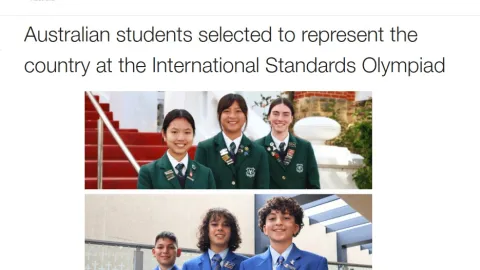
Australia Selects First Teams for International Standards Olympiad
The Standards Australia (SA) has selected two school teams to represent the country at the 21st International Standards Olympiad, marking Australia’s first participation in the event.Global News
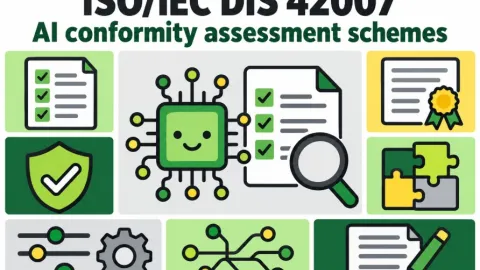
Draft ISO/IEC 42007 Sets Framework for AI Conformity Assessment Schemes
ISO and IEC are developing ISO/IEC DIS 42007, a framework for conformity assessment schemes for artificial intelligence (AI) systems.
ISO Approves Development of Innovation Management Guidance for Startups and SMEs
The International Organization for Standardization (ISO) has approved a new project to develop innovation management guidance for startups and small and medium-sized enterprises (SMEs).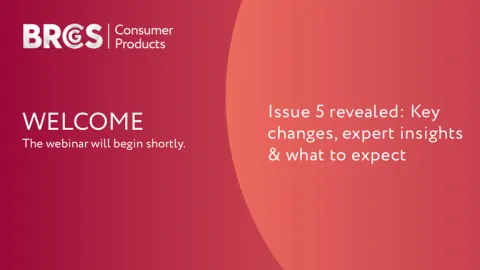
BRCGS Consumer Products Issue 5 Set for Launch at Connect Americas
BRCGS will launch Consumer Products Issue 5 at BRCGS Connect Americas in Nashville on October 13, 2026, introducing a revised certification standard for consumer product manufacturers. Audits against the new edition will begin on June 1, 2027.
GRI Begins Developing Sustainability Reporting Standard for Food and Beverages
The Global Reporting Initiative (GRI) has begun developing a new Sector Standard for food and beverage companies, covering sustainability impacts across their own operations and value chains.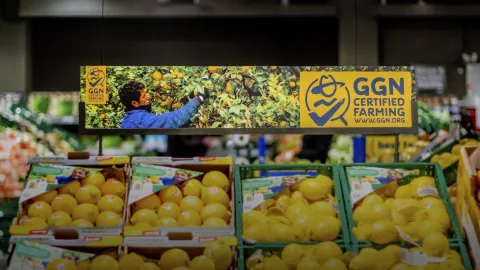
GGN Label Updates Sustainability Claims as EU Rules Begin to Apply
Agraya has updated the sustainability claims used with its GGN label as new European Union rules on environmental marketing began to apply on September 27.
GFSI Seeks Feedback on Freshcare and SQF Programs Under 2024 Requirements
The Global Food Safety Initiative (GFSI) has opened public consultations on Freshcare Food Safety & Quality Standard Edition 5 (2026) and SQF Code Edition 10 for recognition against the GFSI Benchmarking Requirements Version 2024.
ISO 20001:2026 Published as First Food Loss and Waste Management Standard
The International Organization for Standardization (ISO) has published ISO 20001:2026, its first management system standard dedicated to preventing and reducing food loss and waste across the food supply chain.
ISO 14060 Net-Zero Draft Fails to Secure Approval, Returns for Revision
The draft of ISO 14060, the proposed international standard for net-zero aligned organizations, has failed to secure the approval needed to advance.
Global ACI Aligns CORSIA MRA Sub-Scope With Fourth Edition of ICAO Manual
Global Accreditation Cooperation Incorporated (Global ACI) has updated the Carbon Offsetting and Reduction Scheme for International Aviation (CORSIA) sub-scope of its Multilateral Recognition Arrangement (MRA) to align it with the latest international guidance.
ISO/UNDP 53001 Debuts as First International Management System Standard for Sustainable Development Goals
ISO and UNDP released ISO/UNDP 53001 on September 28, 2026, the world's first International Standard for managing contributions to the United Nations Sustainable Development Goals (SDGs).
ISO Central Secretariat Explains Key Changes in ISO 9001:2026 in New Video
The International Organization for Standardization (ISO) has released a detailed video explaining the changes in ISO 9001:2026 directly from its Central Secretariat.