Management Systems World
All on Quality and other Standards in one place since 2010. Now Worldwide.
News Ecology / Energy / Chemistry
Please note that you have to be a registered member with paid membership in order to see full articles.
RegisterSelected News

Standards Council Of Canada Seeks New Chair To Guide Global Environmental Standards Work
The Standards Council of Canada (SCC) which holds the secretariat for ISO Technical Committee 207 (ISO/TC 207), is recruiting a new Chair for the body responsible for widely used environmental management standards such as the ISO 14000 family.
ENAC Opens Accreditation Scheme for CBAM Emissions Verifiers in Spain
The Entidad Nacional de Acreditación (ENAC) has launched a new accreditation scheme for organizations that will verify emissions data linked to imported goods under the European Union’s Carbon Border Adjustment Mechanism (CBAM).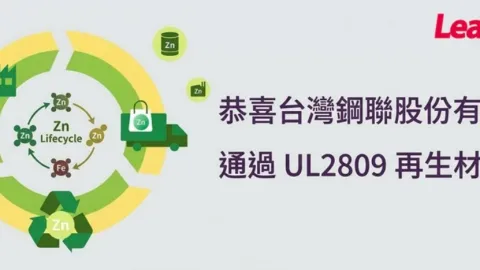
Taiwan Steel Union Achieves UL 2809 Certification For Recycled Content Validation
Taiwan Steel Union (TSU) has obtained certification to the UL 2809 standard, confirming the recycled content in its crude zinc oxide product through third-party validation.
EUDOM Achieves ISO 14001 Certification For Environmental Management
EUDOM, d.o.o., part of the EUTRIP group, has obtained certification to ISO 14001, the international standard for environmental management systems.
UNE Featured In CEOE Environmental Practices Catalog For Circular Economy Initiative
The Spanish Association for Standardization (UNE) has been featured in the 2025 Environmental Best Practices Catalog of Spanish Companies,
Korea Extends Pilot Accreditation Scheme For ESG Management Systems
The Korea Accreditation Board (KAB) has extended its pilot accreditation scheme for environmental, social and governance (ESG) management systems, continuing the pilot program until October 31, 2026.
European Accreditation Forms Task Force To Support Carbon Border Adjustment Mechanism Verification
European co-operation for Accreditation (EA) has established the EA Task Force Group on the EU Carbon Border Adjustment Mechanism (TFG EU CBAM) to support consistent accreditation of verifiers under the new carbon pricing system for certain imports into the European Union (EU).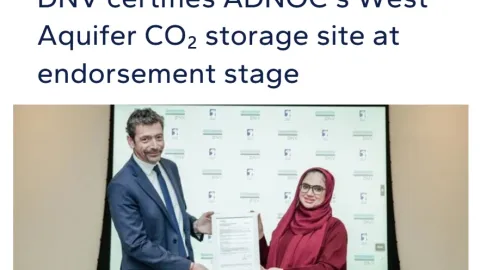
ADNOC West Aquifer Storage Site Certified At Endorsement Stage
Abu Dhabi National Oil Company (ADNOC), the United Arab Emirates’ state-owned energy producer, has received a CO₂ Storage Certificate at the Endorsement stage for its West Aquifer carbon dioxide storage sitefollowing assessment by DNV against ISO 27914:2017 for geological carbon dioxide storage.
ENAC Grants First Accreditations for EU ETS 2 Emissions Trading Regime
The Spanish National Accreditation Entity (ENAC) has granted the first accreditations for verifiers under the upcoming EU ETS 2 emissions trading regime, which will apply to buildings, road transport, and other sectors.
BIS Invites Indian Experts to Shape ISO Environmental Standards Review
The International Organization for Standardization (ISO) has launched the systematic review of 12 environmental standards, and the Bureau of Indian Standards (BIS) is inviting Indian experts to help shape the country’s position in this international process.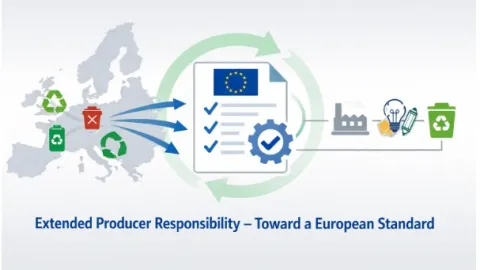
Europe Develops Standard on Extended Producer Responsibility (EPR)
The European Committee for Standardization (CEN) is developing a new standard on Extended Producer Responsibility (EPR) to align how producer responsibility systems are applied across EU countries and reduce barriers for companies operating in multiple markets.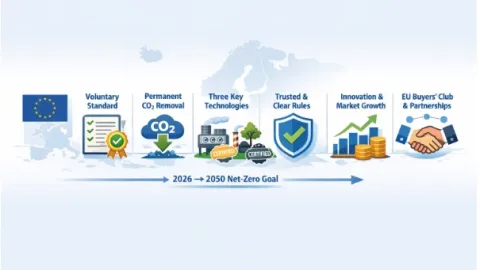
EU Creates First Voluntary Framework For Certifying Permanent Carbon Removals
The European Union (EU) has adopted its first voluntary framework for permanent carbon removals, setting EU-wide rules for how carbon dioxide removals are measured, verified, and certified.Global News
ISO 14001:2026 Transition Deadlines Confirmed
The International Organization for Standardization (ISO) has confirmed the transition timeline for ISO 14001:2026,
BIPM Releases First Stable Digital Reference for SI Units
The International Bureau of Weights and Measures (BIPM) has released the first stable version of the SI Reference Point, a digital reference for the International System of Units (SI).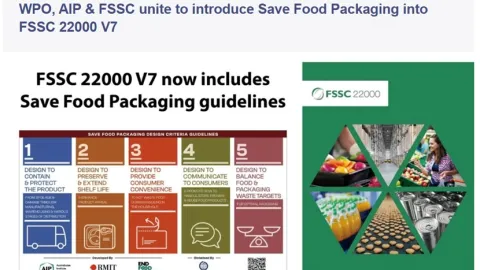
FSSC 22000 Version 7 Incorporates Save Food Packaging Principles
The Foundation FSSC has incorporated aspects of the Save Food Packaging (SFP) Design Principles into FSSC 22000 Version 7 through a partnership with the World Packaging Organisation (WPO) and the Australasian Institute of Packaging (AIP).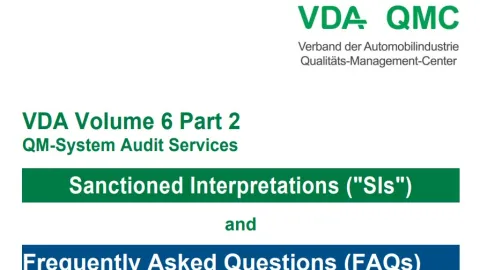
VDA Publishes Updated Interpretations for VDA 6.2 Service Audit Standard
The German Association of the Automotive Industry Quality Management Center (VDA QMC) has published Version 2 of the Sanctioned Interpretations (SIs) and Frequently Asked Questions (FAQs) for VDA 6.2, updating how service organizations in the automotive industry should apply the quality management audit standard.
ISO and IEC Update AI Rules for Standards Development
ISO and IEC have published updated guidance on the use of artificial intelligence in technical committees, defining how AI may be used during the development of international standards.
BRCGS Updates Packaging Materials Issue 7 Requirements for GFSI Benchmarking 2024
BRCGS has updated the requirements for its Packaging Materials Issue 7 certification scheme to meet the GFSI Benchmarking Requirements 2024.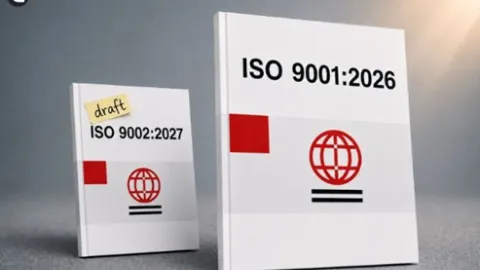
SIS Opens Draft ISO 9002 for Public Comment
The Swedish Institute for Standards (SIS) has opened public access to the draft version of ISO 9002, allowing organizations and quality professionals to read and comment on the official guidance for applying ISO 9001 before the document is finalized.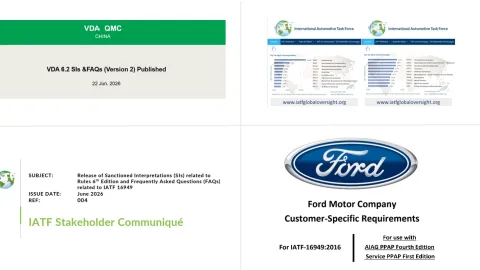
Busy Week Brings Four Automotive Quality Updates
It has been a busy week for automotive quality, with four significant updates released for the sector.
ISO 33400:2026 Sets International Vocabulary for Reference Materials
The International Organization for Standardization (ISO) has published ISO 33400:2026, updating the international vocabulary for reference materials (RM) and certified reference materials (CRM).
TIC Council Backs ISO 14019 as Framework for Sustainability Assurance
The International Association for Testing, Inspection and Certification (TIC Council) has published a paper urging policymakers to recognize the ISO 14019 series as the framework for sustainability assurance,
IFS Updates Progress Scoring Guide for Food and Logistics Programs
International Featured Standards (IFS) has updated its Progress Scoring System brochure following the recent launch of IFS Progress Logistics 2.