Management Systems World
All on Quality and other Standards in one place since 2010. Now Worldwide.
News Slovenia
Please note that you have to be a registered member with paid membership in order to see full articles.
RegisterSelected News
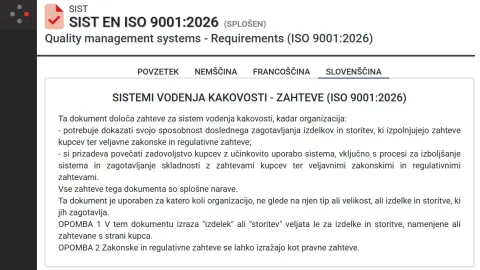
Slovenian Translation of ISO 9001:2026 Now Available
The Slovenian Institute for Standardization (SIST) has published ISO 9001:2026 in Slovenian as SIST EN ISO 9001:2026, Quality management systems – Requirements.
SIST e-Sporočila Covers AI, Quantum Technologies, Digital Product Passports and EU Packaging Rules
The Slovenian Institute for Standardization (SIST) has published the second 2026 issue of its e-Sporočila newsletter,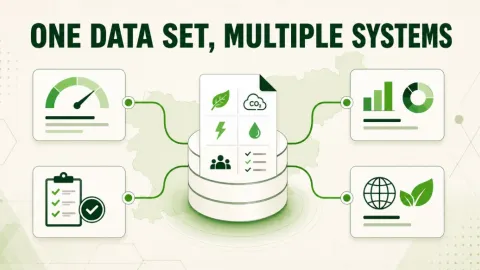
How Slovenian Suppliers Prove Sustainability Practices to Large Buyers
Slovenian companies supplying automotive, electrical engineering, chemical, food and retail groups are increasingly being asked by large customers to provide sustainability data.
SIST Seminar Targets Standards, Compliance, and Market Access for Innovative Companies
The Slovenian Institute for Standardization (SIST) will hold a free seminar on September 22 to help innovative companies use standards when developing products and preparing them for the Slovenian and EU markets.
Slovenia Seeks Members for New Quantum Technologies Committee
The Slovenian Institute for Standardization (SIST) is inviting experts to join a new national technical committee on quantum technologies, with applications due October 1, 2026.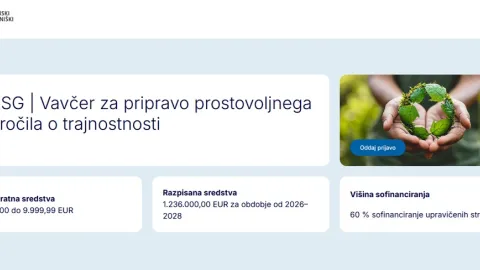
Slovenia Launches ESG Voucher for Voluntary Sustainability Reporting
The Slovenian Enterprise Fund (SPS) has launched a new Environmental, Social and Governance (ESG) Voucher to help micro, small and medium-sized enterprises prepare voluntary sustainability reports.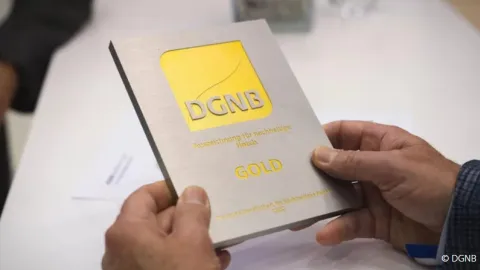
Kristalna palača Becomes First Building in Slovenia to Earn DGNB Gold Certificate
Kristalna palača in BTC City Ljubljana became the first building in Slovenia to receive a DGNB Gold certificate for sustainable buildings in use from the German Sustainable Building Council (DGNB).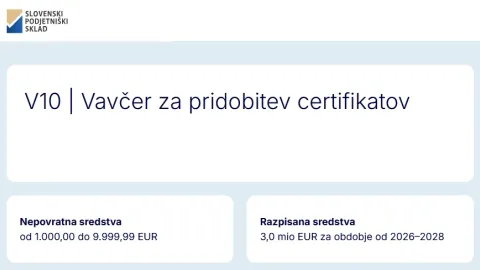
Slovenia Opens Voucher Scheme Covering Up to 60 Percent of Certification Costs
The Slovenian Enterprise Fund (SPS) has opened a new call offering co-financing for companies seeking certification under the “V10 – Voucher for Obtaining Certifications” scheme,
SIST Names Young Ambassadors of Standardization for 2026
The Slovenian Institute for Standardization (SIST) has selected four young engineers as its Young Ambassadors of Standardization for 2026, following its Autumn School held in November 2025 in Ljubljana.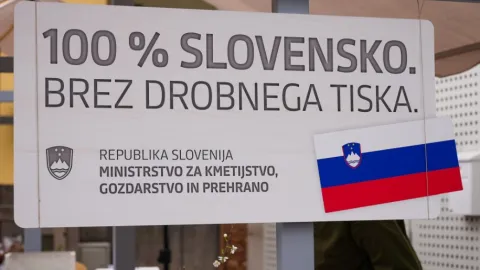
Slovenia Introduces Flag Label On Food To Guarantee Full Domestic Origin
The Ministry of Agriculture, Forestry and Food of Slovenia (MAFF) has introduced a new label featuring the national flag to guarantee that food products are entirely produced, processed, and packaged in Slovenia.
EUDOM Achieves ISO 14001 Certification For Environmental Management
EUDOM, d.o.o., part of the EUTRIP group, has obtained certification to ISO 14001, the international standard for environmental management systems.
SIST Invites Entrepreneurs to Free Seminar on Using Standards for Market Entry
The Slovenian Institute for Standardization (SIST) is hosting a free seminar to help entrepreneurs place products on the market with fewer risks and fewer barriers.Global News
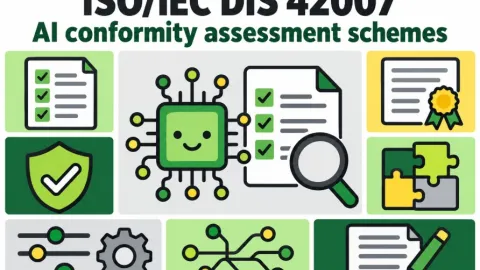
Draft ISO/IEC 42007 Sets Framework for AI Conformity Assessment Schemes
ISO and IEC are developing ISO/IEC DIS 42007, a framework for conformity assessment schemes for artificial intelligence (AI) systems.
ISO Approves Development of Innovation Management Guidance for Startups and SMEs
The International Organization for Standardization (ISO) has approved a new project to develop innovation management guidance for startups and small and medium-sized enterprises (SMEs).
BRCGS Consumer Products Issue 5 Set for Launch at Connect Americas
BRCGS will launch Consumer Products Issue 5 at BRCGS Connect Americas in Nashville on October 13, 2026, introducing a revised certification standard for consumer product manufacturers. Audits against the new edition will begin on June 1, 2027.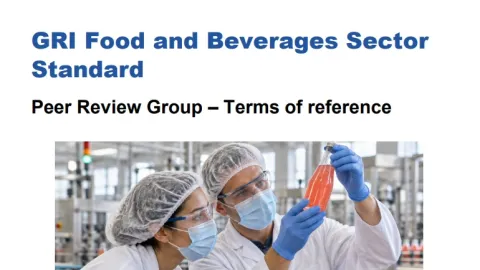
GRI Begins Developing Sustainability Reporting Standard for Food and Beverages
The Global Reporting Initiative (GRI) has begun developing a new Sector Standard for food and beverage companies, covering sustainability impacts across their own operations and value chains.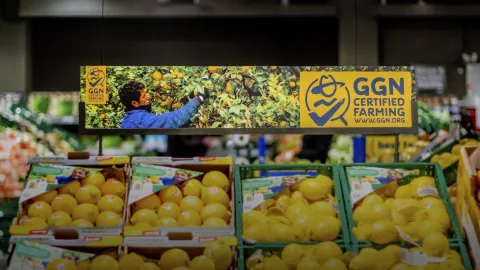
GGN Label Updates Sustainability Claims as EU Rules Begin to Apply
Agraya has updated the sustainability claims used with its GGN label as new European Union rules on environmental marketing began to apply on September 27.
GFSI Seeks Feedback on Freshcare and SQF Programs Under 2024 Requirements
The Global Food Safety Initiative (GFSI) has opened public consultations on Freshcare Food Safety & Quality Standard Edition 5 (2026) and SQF Code Edition 10 for recognition against the GFSI Benchmarking Requirements Version 2024.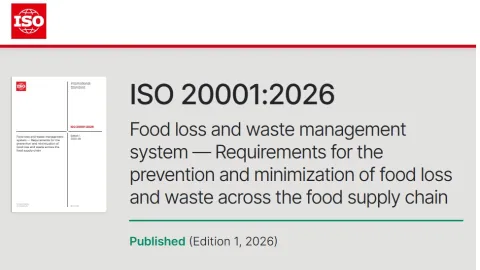
ISO 20001:2026 Published as First Food Loss and Waste Management Standard
The International Organization for Standardization (ISO) has published ISO 20001:2026, its first management system standard dedicated to preventing and reducing food loss and waste across the food supply chain.
ISO 14060 Net-Zero Draft Fails to Secure Approval, Returns for Revision
The draft of ISO 14060, the proposed international standard for net-zero aligned organizations, has failed to secure the approval needed to advance.
Global ACI Aligns CORSIA MRA Sub-Scope With Fourth Edition of ICAO Manual
Global Accreditation Cooperation Incorporated (Global ACI) has updated the Carbon Offsetting and Reduction Scheme for International Aviation (CORSIA) sub-scope of its Multilateral Recognition Arrangement (MRA) to align it with the latest international guidance.
ISO/UNDP 53001 Debuts as First International Management System Standard for Sustainable Development Goals
ISO and UNDP released ISO/UNDP 53001 on September 28, 2026, the world's first International Standard for managing contributions to the United Nations Sustainable Development Goals (SDGs).
ISO Central Secretariat Explains Key Changes in ISO 9001:2026 in New Video
The International Organization for Standardization (ISO) has released a detailed video explaining the changes in ISO 9001:2026 directly from its Central Secretariat.