Management Systems World
All on Quality and other Standards in one place since 2010. Now Worldwide.
News Ecology / Energy / Chemistry
Please note that you have to be a registered member with paid membership in order to see full articles.
RegisterSelected News
Updated Green Textile Product Standard Takes Effect in China
China’s revised green product assessment standard for textiles has taken effect, introducing new criteria for product quality, environmental performance and carbon impact.
BoA Sets ISO 9001:2026 and ISO 14001:2026 Transition Deadlines for Certification Bodies
Vietnam’s National Accreditation Bureau (BoA) has set its transition timetable for certification bodies moving to ISO 9001:2026 and ISO 14001:2026, with assessments against both new editions beginning October 15, 2026.
ABNT Project Helps 11 Small Businesses Gain Ecolabel Certification
The Brazilian Association of Technical Standards (ABNT) has completed a project that helped 11 micro and small businesses obtain the ABNT Ecolabel,
HKAS Sets ISO 14001:2026 Transition Deadlines for Certification Bodies
The Hong Kong Accreditation Service (HKAS) has set its transition requirements for certification bodies moving from ISO 14001:2015 to ISO 14001:2026.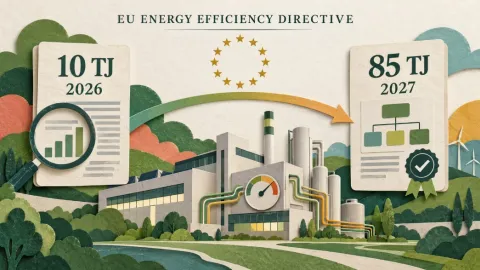
EU Energy Efficiency Directive Sets New Energy Management, Certification and Audit Requirements
The European Union’s (EU) Energy Efficiency Directive 2023/1791 introduces new energy-management, independent certification and energy-audit requirements for companies, with key deadlines in 2026 and 2027.
Fositek Completes ISO 14064-1 Verification for Greenhouse Gas Inventory
Fositek Corp., a Taiwan-listed electronics components manufacturer, has completed third-party verification of its greenhouse gas inventory under ISO 14064-1:2018.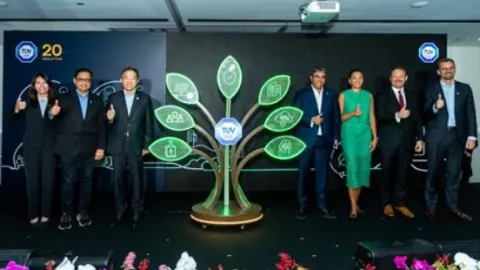
TÜV SÜD Opens Global Decarbonisation Centre in Singapore
TÜV SÜD has opened its Global Decarbonisation Centre of Excellence (CoE) in Singapore, backed by an investment of more than US$24 million and support from the Singapore Economic Development Board (EDB).
India Seeks Public Comments on Draft Standard for Waste Management at Events
The Bureau of Indian Standards (BIS) is seeking public comments on a draft Indian Standard for managing solid waste generated during events and public gatherings.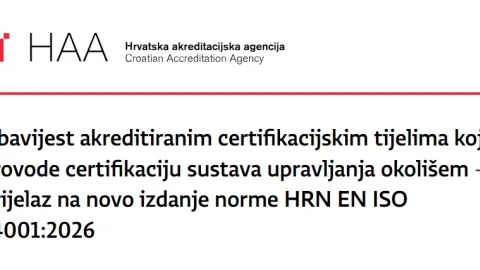
Croatia Gives Certification Bodies Until April 2029 to Transition to ISO 14001:2026
The Croatian Accreditation Agency (HAA) has set April 30, 2029, as the end of a three-year transition period for accredited certification bodies moving to HRN EN ISO 14001:2026.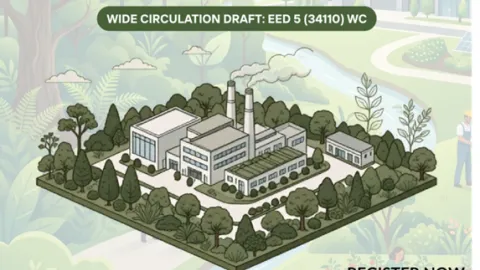
BIS Held Stakeholder Consultation on Draft Greenbelt Standard for Industrial Projects
The Bureau of Indian Standards (BIS) held a national stakeholder consultation on September 9, 2026, on a draft Indian standard for greenbelts, or planted buffer areas around industrial sites. The draft remains open for stakeholder comments until September 22, 2026.
Young Professionals Invited to Help Shape India’s Future Environmental Standards
The Bureau of Indian Standards (BIS) is inviting young professionals and other experts to propose ideas for new environmental standards, guidelines and frameworks that could eventually form the basis of future Indian Standards.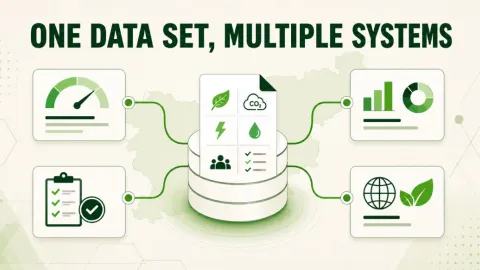
How Slovenian Suppliers Prove Sustainability Practices to Large Buyers
Slovenian companies supplying automotive, electrical engineering, chemical, food and retail groups are increasingly being asked by large customers to provide sustainability data.Global News
ISO Survey 2025 Shows Global Certification Growth, With Unusually Sharp Rise in India
The International Organization for Standardization (ISO) has released the 2025 ISO Survey, reporting more than 3.28 million valid management system certificates worldwide.
AIAG Updates Guidelines for Supplier Management and Electronic Assembly
The Automotive Industry Action Group (AIAG) has released updated editions of two Continuous Quality Improvement (CQI) guidelines covering supplier management and electronic assembly manufacturing.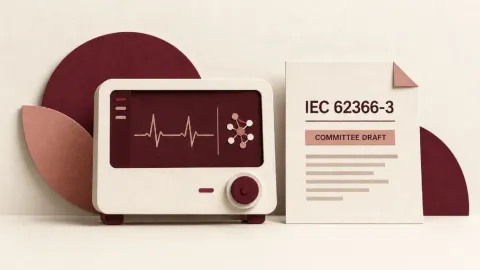
IEC 62366-3 for AI Medical Device Usability Reaches Committee Draft Stage
A proposed technical specification providing guidance on usability engineering for medical devices using artificial intelligence (AI) and machine learning (ML), IEC 62366-3, has reached the committee draft stage.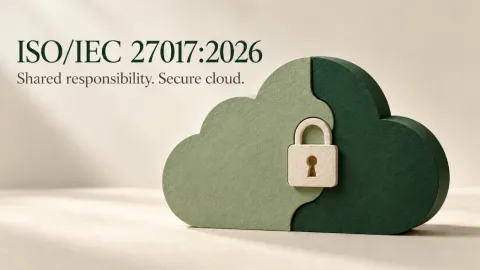
ISO/IEC 27017:2026 Updates Information Security Controls for Cloud Services
ISO and IEC have published ISO/IEC 27017:2026, an updated international standard providing guidance on information security controls for cloud services.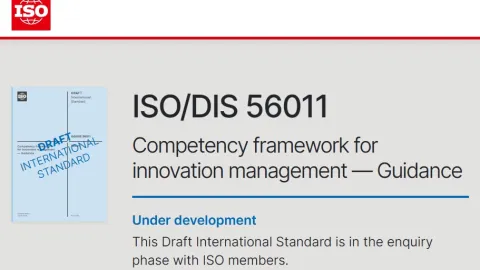
ISO Seeks Feedback on Draft ISO 56011 for Innovation Management Competencies
ISO/DIS 56011, a draft international standard outlining the knowledge, skills, and behaviors needed to manage innovation effectively, is now open for feedback.
ISO Publishes New Guide on Education About Standardization Around the World
The International Organization for Standardization (ISO) has published Education about Standardization: Perspectives and Practices (PUB100508), a new guide exploring how standards are being integrated into education systems worldwide.
ISO/IEC 9837:2026 Establishes Common Concepts for Systems Resilience
ISO/IEC 9837:2026, a new international standard on systems resilience, provides a common basis for understanding how systems can withstand disruptions, adapt to adverse conditions, and recover from failures.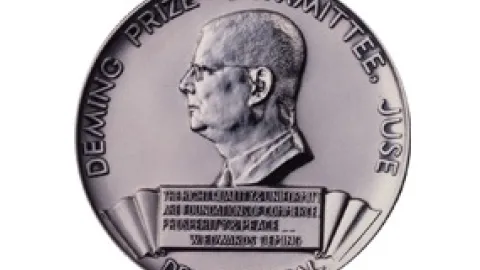
2026 Deming Prize Winners Announced
The Deming Prize Committee announced the 2026 winners on October 6, recognizing two individuals for their contributions to quality management and four organizations from Japan, India, and Indonesia.
Draft ISO/IEC 42007 Sets Framework for AI Conformity Assessment Schemes
ISO and IEC are developing ISO/IEC DIS 42007, a framework for conformity assessment schemes for artificial intelligence (AI) systems.
ISO Approves Development of Innovation Management Guidance for Startups and SMEs
The International Organization for Standardization (ISO) has approved a new project to develop innovation management guidance for startups and small and medium-sized enterprises (SMEs).
BRCGS Consumer Products Issue 5 Set for Launch at Connect Americas
BRCGS will launch Consumer Products Issue 5 at BRCGS Connect Americas in Nashville on October 13, 2026, introducing a revised certification standard for consumer product manufacturers. Audits against the new edition will begin on June 1, 2027.