Management Systems World
All on Quality and other Standards in one place since 2010. Now Worldwide.
News
Please note that you have to be a registered member with paid membership in order to see full articles.
RegisterSelected News
China’s CNIS Presents AI Tools for Standards Drafting, Translation and Search
The China National Institute of Standardization (CNIS) has presented a range of artificial intelligence (AI) tools designed to make standards easier to develop, translate, search and use.
Lavazza Becomes First Italian Coffee Roaster to Earn Rainforest Alliance Regenerative Agriculture Certification
Lavazza has become the first coffee roaster in Italy to earn certification under the Rainforest Alliance Regenerative Agriculture Standard, with independent verification carried out by Italian certification body CSQA.
ANSI and America Makes Launch Free Database for 3D-Printing Standards
The American National Standards Institute (ANSI) and America Makes have launched a free online database to help manufacturers, regulators, and researchers find and track standards for additive manufacturing (AM), also known as 3D printing.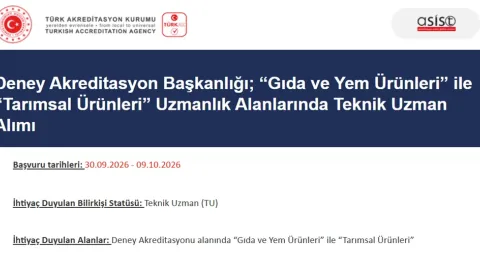
TÜRKAK Seeks Technical Experts in Food, Feed and Agricultural Product Testing
The Turkish Accreditation Agency (TÜRKAK) is recruiting technical experts to support the accreditation of testing laboratories in two areas: food and feed products, and agricultural products.
Cofrac Outlines Accreditation Routes for Cyber Resilience Act Assessments
France's national accreditation body, the French Accreditation Committee (Cofrac), has outlined two accreditation routes for organizations seeking to assess products under the European Union's Cyber Resilience Act (EU CRA).
BIPM Confirms Armenia as Signatory to International Measurement Agreement
The International Bureau of Weights and Measures (BIPM) has officially confirmed Armenia’s National Body for Standards and Metrology (ARMSTANDARD) as a signatory to the International Committee for Weights and Measures Mutual Recognition Arrangement (CIPM MRA).
DIN and DKE Publish Whitepaper on Using SMART Standards to Simplify AI Testing
The German Institute for Standardization (DIN) and the German Commission for Electrical, Electronic and Information Technologies (DKE) have published a whitepaper outlining how SMART Standards could
Bulgaria’s BAS Passes Re-Evaluation, Retains EA MLA Signatory Status
The Bulgarian Accreditation Service (BAS) has retained its signatory status under the European co-operation for Accreditation (EA) Multilateral Agreement (MLA) after passing its latest peer re-evaluation.
SNAS Updates Accreditation Guidelines on Sanctions and Use of ICT
The Slovak National Accreditation Service (SNAS) has updated two accreditation guidelines covering sanctions and the use of information and communication technology (ICT) in audits and assessments.
Japan Begins Transition of ISO 14001 Auditor Qualifications, Sets April 2029 Deadline
The Japanese Registration of Certificated Auditors (JRCA) began accepting applications on October 1, 2026, to transition environmental management system (EMS) auditor qualifications to JIS Q 14001:2026.
RvA Gains European Recognition for EN ISO 20387 Biobank Accreditation
The Dutch Accreditation Council (RvA) has gained European recognition for its EN ISO 20387 biobank accreditation activity, after the standard was added to its European co-operation for Accreditation (EA) Multilateral Agreement (MLA) scope.
ReMade Gains European Accreditation Recognition With Accredia in Coordinating Role
The European co-operation for Accreditation (EA) has recognized the ReMade certification scheme within the European accreditation system, with Accredia taking the lead in coordinating accreditation for the scheme across Europe.Global News
GFSI Opens Consultation on FSSC 22000 Version 7 Against 2024 Benchmarking Requirements
The Global Food Safety Initiative (GFSI) has opened a public consultation on the recently updated FSSC 22000 Version 7 as part of its assessment against the GFSI Benchmarking Requirements Version 2024.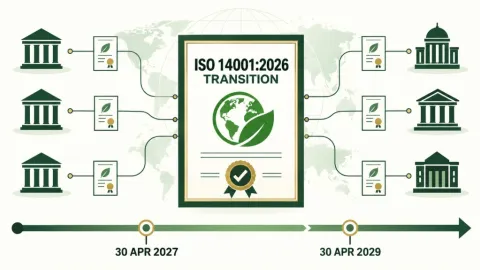
Accreditation Bodies Roll Out ISO 14001 Transition Plans
Accreditation bodies are putting the ISO 14001:2026 transition timetable into practice, with Norwegian Accreditation (NA) among the latest to publish detailed arrangements for certification bodies moving to the revised environmental management systems standard.
ISO Considers Three Tourism Proposals on Restaurant Evaluation, Tourist Guides and AI
Three tourism standardization proposals are now under consideration at the International Organization for Standardization (ISO), covering restaurant evaluation, professional tourist guide services and the use of artificial intelligence with tourism destination data.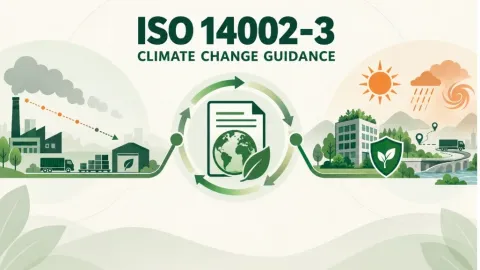
ISO 14002-3 Released as Guidance on Climate Change
The International Organization for Standardization (ISO) has released ISO 14002-3:2026, new guidance to help organizations using ISO 14001 address climate change through their environmental management systems.
AIQI Publishes First AI Use Case for Management System Certification Decisions
The Artificial Intelligence Quality Infrastructure (AIQI) Consortium has published a new use case examining how AI could support management system certification decisions, including the risks, limitations and controls that conformity assessment bodies may need to consider.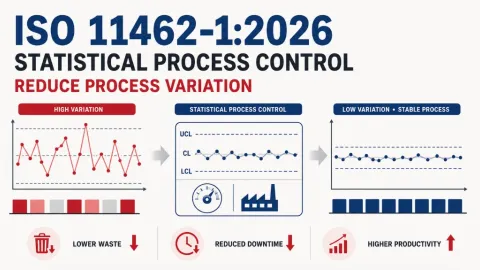
ISO 11462-1:2026 Updates Statistical Process Control to Reduce Process Variation
The International Organization for Standardization (ISO) has published ISO 11462-1:2026, updating guidance on statistical process control (SPC) to help organizations improve the stability and capability of their processes.
Codex Sets New Labelling Rules for Multipacks and Outer Packaging
The Codex Alimentarius Commission (CAC) has adopted new requirements for foods sold in multipacks or grouped together in one outer package, clarifying what information must appear on the packaging consumers see when buying the product.
SBTi Net-Zero Standard Version 2.0 Adds New Rules for Corporate Climate Targets, Reporting and Carbon Removals
The Science Based Targets initiative (SBTi) published Version 2.0 of its Corporate Net-Zero Standard on June 11, introducing new requirements for how companies set climate targets, plan their transition to net zero, report progress and deal with emissions that remain.
CSA Group to Sell Testing and Certification Business to Kiwa
Kiwa and CSA Group have agreed on a deal worth around $1.5 billion for Kiwa to acquire CSA Group’s testing, inspection and certification business, significantly expanding the Dutch company’s presence in North America.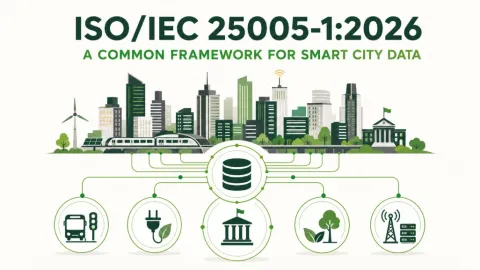
ISO/IEC 25005-1:2026 Creates Common Framework for How Smart Cities Use Data
ISO/IEC 25005-1:2026, published in July, provides a common international framework for how smart cities can make better use of data across urban governance and services.
Global ACI Delays Launch of New MRA Mark Pending Trademark Registration
Global Accreditation Cooperation Incorporated (Global ACI) has paused the launch of its new Multilateral Recognition Arrangement (MRA) Mark while trademark registrations are completed across member economies.