
Management Systems World
All on Quality and other Standards in one place since 2010. Now Worldwide.
News
Please note that you have to be a registered member with paid membership in order to see full articles.
RegisterSelected News
German Edition of ISO 9001:2026 Available Ahead of Schedule
The German edition of ISO 9001:2026 is now available, several weeks ahead of its planned November release.
China Updates Accreditation Requirements for Energy Management System Certification Bodies
The China National Accreditation Service for Conformity Assessment (CNAS) has published CNAS-SC190:2026, a revised accreditation scheme for energy management system certification bodies.
Indonesia Proposes Halal Assurance Guidelines for Processing Services
Indonesia has proposed new guidelines for implementing the Halal Product Assurance System (SJPH) in processing services for food, beverages, medicines, and cosmetics.
EU Proposes Overhaul of European Standardization Rules to Speed Up Standards and Expand Access
The European Commission (EC) presented a proposal on October 6 to replace Regulation (EU) No. 1025/2012, which governs European standardization.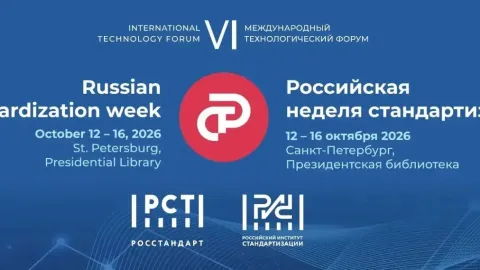
Russian Standardization Week 2026 Brings Experts Together in St. Petersburg
The sixth edition of Russian Standardization Week, an international technology forum, is taking place in St. Petersburg from October 12 to 16, bringing together government officials, industry representatives, researchers, and international standardization experts.
DANAK Sets Transition Deadlines for ISO 14001:2026 and ISO/IEC 17024:2026
The Danish Accreditation Fund (DANAK) has issued two accreditation notices setting transition requirements for ISO 14001:2026 and ISO/IEC 17024:2026.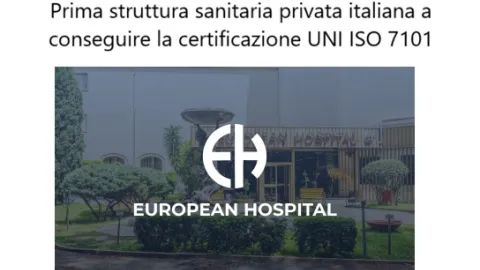
European Hospital Becomes First Private Healthcare Facility in Italy to Achieve UNI ISO 7101 Certification
European Hospital has become the first private healthcare facility in Italy accredited by the National Health Service (SSN) to achieve UNI ISO 7101 certification.
Bulgaria’s Standards Education Initiatives Featured in New ISO Publication
The International Organization for Standardization (ISO) has featured the Bulgarian Institute for Standardization (BDS) and its university partnerships in a new publication on standards education.
UKAS Improves Customer Portal for Accreditation Applicants
The United Kingdom Accreditation Service (UKAS) has introduced several improvements to its Customer Portal, making it easier for organizations to communicate with UKAS, track queries, and access documents during the accreditation process.
Spicy Dju Becomes First Food Producer to Complete IFS Local Check
Berlin-based food producer Spicy Dju Made by J. Scholz has become the first to successfully complete an IFS Local Check, an assessment designed for small-scale food producers.
Hong Kong Sets Accreditation Deadlines for ISO 9001:2026 Transition
The Hong Kong Accreditation Service (HKAS) has announced its accreditation arrangements for the transition to ISO 9001:2026 and is now accepting applications from certification bodies.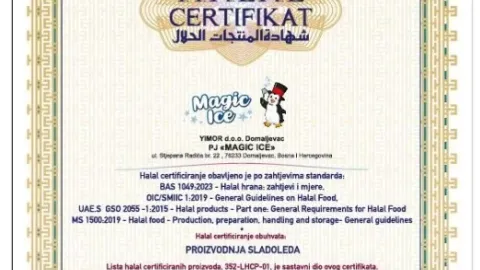
Magic Ice Achieves Higher-Level IFS Status and Halal Certification for 42 Products
Bosnian ice cream producer Magic Ice, part of Yimor, has achieved higher-level recertification under International Featured Standards (IFS) and obtained halal certification covering 42 products.Global News
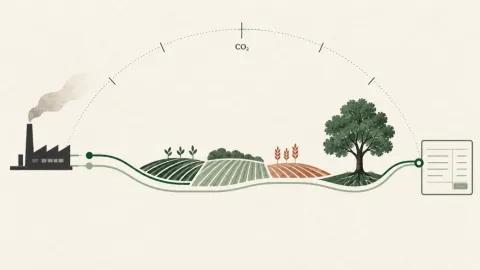
How SBTi and GHG Protocol Updates Expand Options for Corporate Emissions Accounting
Changes from the Science Based Targets initiative (SBTi) and Greenhouse Gas Protocol, two major frameworks for corporate climate targets and greenhouse-gas accounting, are expanding the options companies have for addressing and accounting for value-chain emissions.
ISO 9001:2026 Officially Launched
The sixth edition of ISO 9001, the world’s most widely used quality management system standard, has been officially launched by ISO during a virtual press conference.
Global Responsible Textile Standard (GRTS) Launches for Certification of Wider Range of Fibers
Global Standards has launched the Global Responsible Textile Standard (GRTS), a new certification standard for textiles made from a wider range of plant, animal, synthetic, man-made cellulosic and recycled fibers.
ISO 45001 Second Edition Clears DIS Ballot With Overwhelming Support
The draft second edition of ISO 45001 has passed its Draft International Standard (DIS) vote with only one vote against, moving the revision closer to its planned publication in the first half of 2027.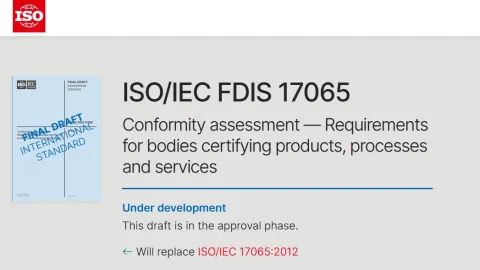
Second Edition of ISO/IEC 17065 Reaches Final Approval Phase
The second edition of ISO/IEC 17065, which sets requirements for bodies that certify products, processes and services, has moved further into the final approval process and is now at stage 50.20 of the Final Draft International Standard (FDIS) phase.
SMART Initiative Enters Pilot Phase in October, Testing Nine Standards
A pilot of the ISO and IEC SMART standards initiative will begin in October, testing nine selected international standards.
New Net Zero Carbon Cities Standard Project Approved as ISO 37115-2
The International Organization for Standardization (ISO) has approved a proposal for ISO 37115-2, a new standard that will set out principles and fundamentals for net zero carbon cities.
First Edition of ISO 41002 Guides Development of Facility Management Organizations
The first edition of ISO 41002 gives organizations guidance on how to develop and structure their facility management function across strategic, tactical and operational levels.
ISO/DTS 5112 Road Vehicle Cybersecurity Audit Guidance Reaches Final Approval Stage
ISO/DTS 5112, the draft Technical Specification for auditing cybersecurity management systems (CSMS) across the automotive supply chain, has reached the final approval stage.
ISO 37011 Webinars on Purpose-Driven Organizations Set for September 22 and 23
Two international webinars on ISO 37011, the draft guidance standard for purpose-driven organizations, will be held on September 22 and 23 ahead of consultation on the draft beginning September 24, 2026.
ISO 45010 Becomes First International Standard on Menstruation and Menopause at Work
ISO has published ISO 45010, the first International Standard focused on supporting employees experiencing menstruation and menopause at work.