Management Systems World
All on Quality and other Standards in one place since 2010. Now Worldwide.
News
Please note that you have to be a registered member with paid membership in order to see full articles.
RegisterSelected News
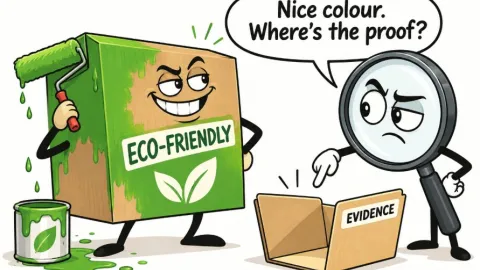
How Denmark Is Implementing EmpCo Rules Against Greenwashing
Denmark tightened its green marketing rules on September 27 as the EU Empowering Consumers for the Green Transition (EmpCo) Directive began applying across member states.
Taiwan Announces Narrower Mandatory Adoption of IFRS Sustainability Disclosure Standards
Taiwan’s Financial Supervisory Commission (FSC) and Ministry of Environment (MOENV) have narrowed the number of listed companies that will be required to apply the IFRS Sustainability Disclosure Standards from about 1,970 to roughly 560.
Patrice Godonou and Digital Product Passports Committee Honored in SIS Annual Awards
The Swedish Institute for Standards (SIS) has named Patrice Godonou its 2026 Leader of the Year and TK 639 Digital Product Passports its Committee of the Year.
INACAL September Bulletin Highlights IAAC Assembly, Fishing Weighing Controls and Blueberry Standard
The National Institute of Quality (Inacal) has published its September 2026 Calidad bulletin, led by coverage of the 35th General Assembly of the Inter-American Accreditation Cooperation (IAAC) in Lima.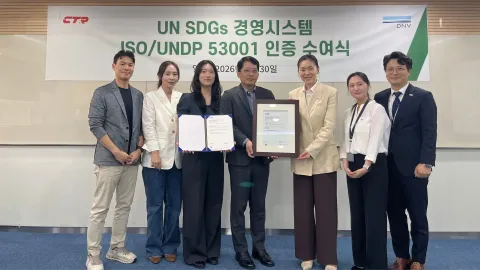
CTR Among First Organizations Certified to ISO/UNDP 53001
South Korean automotive components manufacturer CTR Co., Ltd. has become one of the first organizations worldwide to achieve certification ISO/UNDP 53001:2026,
BDS Updates Terms for Buying and Using Standards
The Bulgarian Institute for Standardization (BDS) has updated its general terms for providing standards and services, clarifying how purchased standards may be used and the rules protecting copyright.
TAF Seeks Comments on ISO 14001:2026 Certification Transition Rules
The Taiwan Accreditation Foundation (TAF) has opened public consultation on draft rules for moving accredited environmental management system certification to ISO 14001:2026.
EU Introduces Sustainability Rating Scheme for Data Centers
The European Commission (EC) has proposed a common EU rating scheme for data centers to make their energy and water use more transparent and encourage more sustainable integration with the electricity system.
TÜRKAK Updates Website With Improved Search and Mobile Access
The Turkish Accreditation Agency (TÜRKAK) launched its redesigned website on October 4, with a simpler structure intended to make services, technical resources and information easier to find.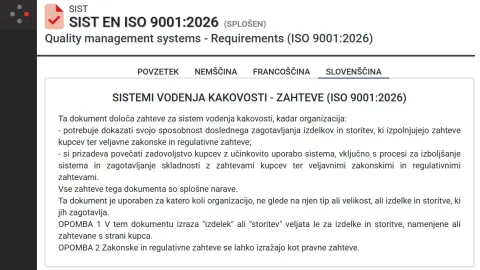
Slovenian Translation of ISO 9001:2026 Now Available
The Slovenian Institute for Standardization (SIST) has published ISO 9001:2026 in Slovenian as SIST EN ISO 9001:2026, Quality management systems – Requirements.
Montenegro Accreditation Body Retains EA MLA Signatory Status
The Accreditation Body of Montenegro (ATCG) has retained its status as a signatory to the European co-operation for Accreditation (EA) Multilateral Agreement (MLA) following a successful peer re-evaluation.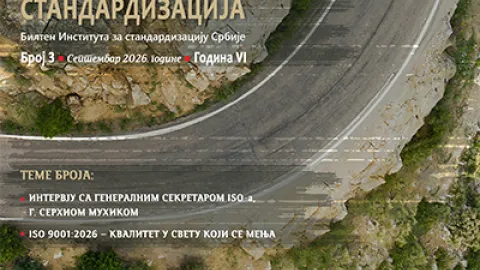
New ISS Bulletin Features ISO 9001:2026 and Interview With ISO Secretary-General
The Institute for Standardization of Serbia (ISS) has released a new issue of its Standardizacija bulletin, featuring an interview with ISO Secretary-General Sergio Mujica, an in-depth look at ISO 9001:2026 and Serbia’s work on the second-generation Eurocodes.Global News
ISO 20001 Set for Publication as First Food Loss and Waste Management Standard
ISO 20001, the world’s first ISO management system standard dedicated to food loss and waste reduction, is scheduled for publication on September 29, 2026, marking the International Day of Awareness of Food Loss and Waste.
Upcoming ISO/UNDP 53001 Sets First Management System Requirements for the SDGs
ISO/UNDP 53001, set for publication in September 2026, will provide the first management system requirements specifically for organizations seeking to manage and improve their contribution to the Sustainable Development Goals (SDGs).
VDA Releases VDA 5.4 Draft for Fastening Measurement Tools
The Quality Management Center of the German Association of the Automotive Industry (VDA QMC) has released VDA 5.4, Interface for measuring tools in fastening technology, as a Yellow Volume for industry feedback.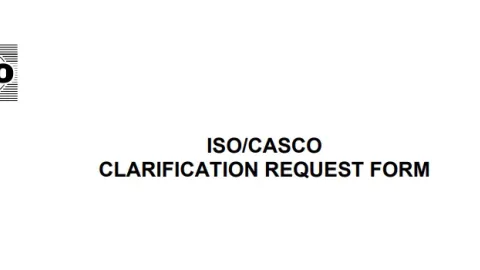
ISO/CASCO Clarifies: ISO/IEC 17025 Does Not Require Labs to Treat Accreditation Bodies as Suppliers
The maintenance group of the International Organization for Standardization’s Committee on Conformity Assessment (ISO/CASCO) has clarified that ISO/IEC 17025:2017 does not require laboratories to treat their accreditation bodies as external service providers subject to the standard’s supplier controls.
JFS-C Standard Version 3.2 Gains GFSI Recognition Under 2024 Benchmarking Requirements
The Global Food Safety Initiative (GFSI) has recognized JFS-C Standard Version 3.2 from the Japan Food Safety Management Association (JFSM) against its 2024 Benchmarking Requirements.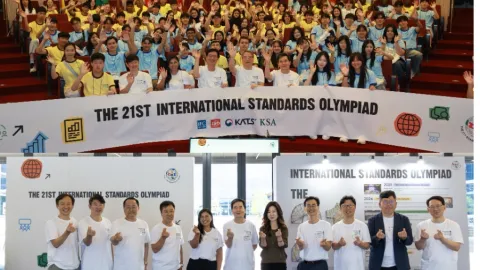
21st International Standards Olympiad Held in Korea
The 21st International Standards Olympiad brought together 105 middle-and high-school students from 11 countries in the Republic of Korea for a three-day competition and hands-on experience with international standardization.
ISO Environmental Management Committee Seeks Global Input for 2027-30 Plan
The International Organization for Standardization (ISO) Technical Committee 207 (ISO/TC 207), Environmental management, has launched a global consultation to help set its priorities for 2027-30.
DIS Ballot for ISO 30401 Knowledge Management Revision Closes September 17
ISO 30401, the international standard for knowledge management systems, is currently at the Draft International Standard (DIS) stage, with voting on the proposed second edition due to close September 17, 2026.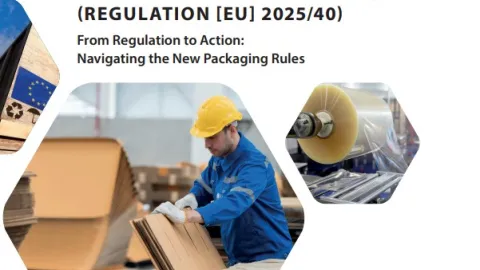
IFS Publishes PPWR White Paper and Launches Self-Assessment as EU Rules Take Effect
International Featured Standards (IFS) has published a new PPWR white paper and launched a self-assessment tool as the first requirements of the European Union’s Packaging and Packaging Waste Regulation (PPWR) took effect on August 12, 2026.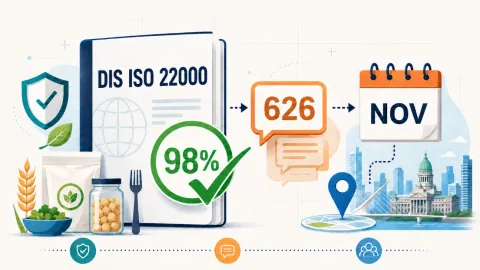
ISO 22000 Draft Approved With 98% Support, Comments Review Set for November
The revision of ISO 22000, the international standard for food safety management systems, has cleared its Draft International Standard (DIS) ballot with 98% positive votes.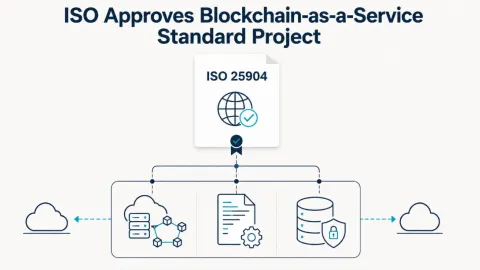
ISO Approves Blockchain-as-a-Service Standard Project
The International Organization for Standardization (ISO) has approved ISO 25904, a new standard project to establish a common technical framework and functional requirements for Blockchain-as-a-Service (BaaS) platforms.