Management Systems World
All on Quality and other Standards in one place since 2010. Now Worldwide.
News
Please note that you have to be a registered member with paid membership in order to see full articles.
RegisterSelected News
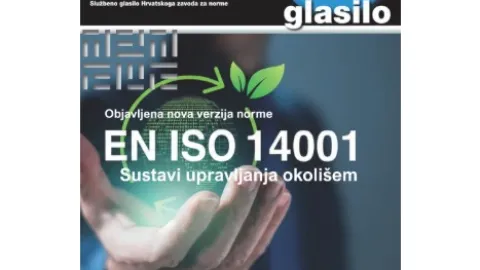
Environmental Management and Digital Transformation Headline New HZN e-Glasilo
The Croatian Standards Institute (HZN) has published issue 5/2026 of HZN e-Glasilo, with environmental management and digital transformation emerging as the publication's leading themes.
Montenegro Invites Proposals for 2027 National Standards Plan
The Institute for Standardization of Montenegro (ISME) has opened a public call for participation in the development of Montenegro’s 2027 plan for adopting national standards and related documents.
Current Standards System at Risk After IBR Court Decisions, ANSI Brief Warns
The American National Standards Institute (ANSI) is warning standards developing organizations (SDOs) that recent US court decisions involving standards incorporated by reference (IBR) could threaten the long-standing system used to fund, maintain, and update voluntary standards.
Inmetro Gains International Recognition for FSSC 24000 Accreditation
The National Institute of Metrology, Quality, and Technology (Inmetro) has received international recognition to accredit certification bodies under the FSSC 24000 social responsibility certification scheme.
PCA Opens Consultation on Revised Biobank Accreditation Program
Polish Centre for Accreditation (PCA) has opened a public consultation on a revised version of its DABB-01 accreditation program for biobanks, introducing clearer rules for accreditation scope descriptions and updates aligned with PN-EN ISO 20387:2021-01.
India Adopts ISO 14001:2026 as National Environmental Management Standard
The Bureau of Indian Standards (BIS) has published IS/ISO 14001:2026 as an identical adoption of ISO 14001:2026, updating India’s national framework for environmental management systems.
SEK Launches KravSmart Digital Standards Platform
SEK Svensk Elstandard (SEK) has introduced SEK KravSmart, a new digital platform designed to make electrical standards easier to search, use, and integrate into daily work.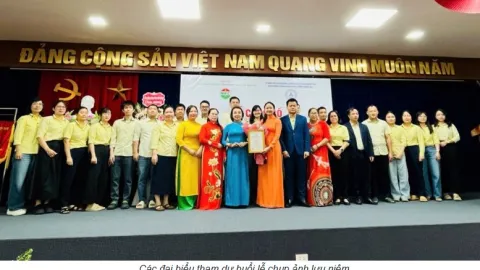
Vietnam Food Safety Institute Achieves GLP-OECD Status
The National Accreditation Office for Quality (BOA) awarded OECD Good Laboratory Practice (GLP) recognition to the National Institute for Food Control (NIFC),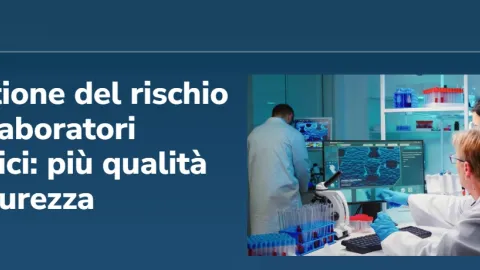
Italy Adopts ISO 22367:2026 for Medical Laboratory Risk Management
The Italian National Standardization Body (UNI) has published the Italian adoption of ISO 22367:2026, the revised international guidance standard for risk management in medical laboratories.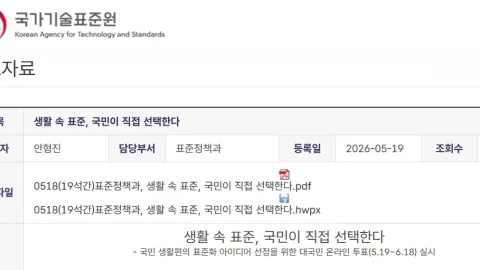
South Korea Opens Public Vote on Six Everyday Standards Proposals
The Korean Agency for Technology and Standards (KATS) has opened a nationwide online vote to help decide which everyday issues should be developed into future Korean Standards (KS).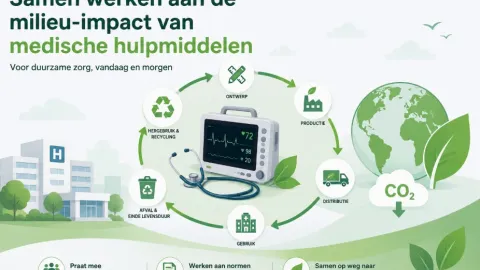
Dutch Initiative Prepares New Committee on Medical Device Environmental Impact
The Royal Netherlands Standardization Institute (NEN) is preparing a new committee focused on methods for assessing the environmental impact of medical devices, with the aim of helping shape Dutch input into future European and international standardization work.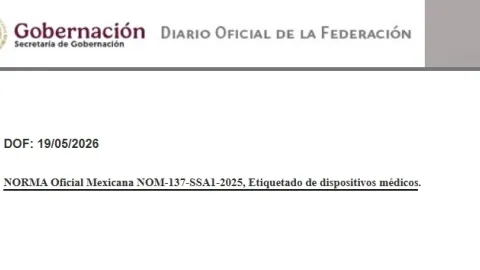
Mexico Updates Medical Device Labeling Standard With New Safety and Digital Information Rules
Mexico’s Ministry of Health has published a revised version of NOM-137-SSA1-2024, the national standard that sets labeling requirements for medical devices sold in the country.Global News
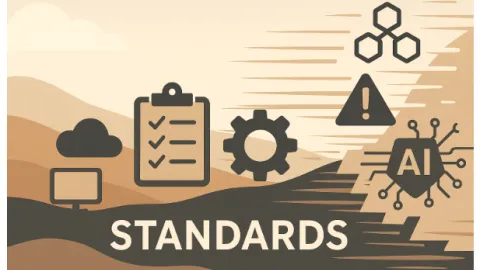
Cutting-Edge Technologies Drive Urgent Creation of New Safety Standards
As cutting-edge technologies like AI, robotics, and 3D printing rapidly evolve, standards organizations are working urgently to develop new safety guidelines.
GLOBALG.A.P. Tests New Stakeholder-Created Environmental Solution on Farms
GLOBALG.A.P.'s new environmental sustainability solution is now being tested in real-world farm settings across Europe.
Revised SR10 Standard Strengthens Global Framework for Social Responsibility and ESG Integration
The SR10 standard for social responsibility and sustainable development helps organizations embed ethical, social, and environmental goals into their operations.
ISO 9001 Revision Moves Closer to Public Review Stage After April Meeting
The ISO working group ISO/TC 176/SC 2/WG 29, responsible for revising ISO 9001, met online on April 28, 2025, to address and resolve some of the remaining comments on the second committee draft.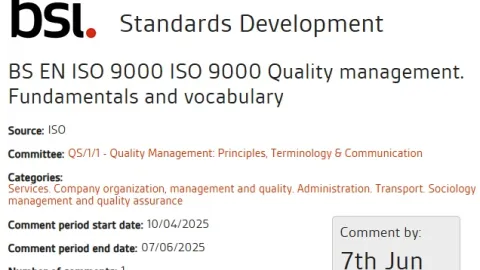
Public Consultation Opens for Draft Revision of ISO 9000 Standard
The draft version of ISO 9000—covering fundamentals and vocabulary for quality management—is now open for public consultation ahead of its planned update.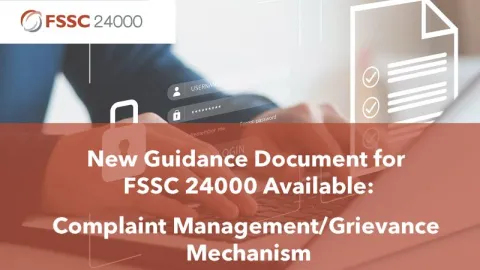
FSSC 24000 Guidance Released for Managing Complaints and Grievances
The Foundation FSSC has published a new guidance document under the FSSC 24000 certification scheme, offering a structured approach for handling complaints and grievances from workers and other stakeholders.
IFS Launches New ESG Compliance Check to Tackle Supply Chain Risks
IFS has introduced the IFS ESG Compliance Check, a tool designed to help companies manage environmental, social, and governance (ESG) risks in their supply chains.
SA8000 Overhaul Centers on Worker Rights, Privacy and Living Wages
The SA8000 standard on workplace social accountability is undergoing a major revision, with the new SA8000:2026 expected to be finalized by the end of next year.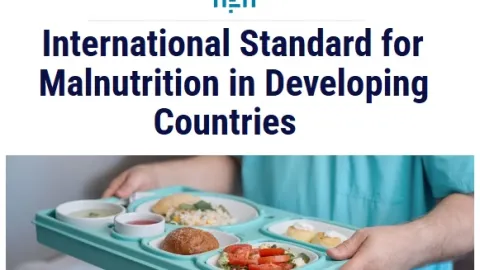
ISO Developing Malnutrition Care Standard for Hospitals in Developing Countries
A new international standard is being developed to help hospitals in developing countries better prevent, detect, and treat malnutrition—a condition affecting nearly half of all hospital patients worldwide.
ISO, IEC, and ITU Publish April 2025 Listings of Standardization Projects
A coordinated list of major standardization projects was released for April 2025, covering new and ongoing work across a wide range of technical areas.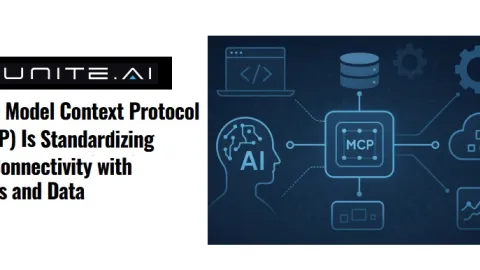
Model Context Protocol (MCP) Emerges as Leading Standard for AI Connectivity
The Model Context Protocol (MCP) is rapidly becoming a key framework for linking artificial intelligence (AI) systems with the tools and data they depend on.