Management Systems World
All on Quality and other Standards in one place since 2010. Now Worldwide.
News
Please note that you have to be a registered member with paid membership in order to see full articles.
RegisterSelected News
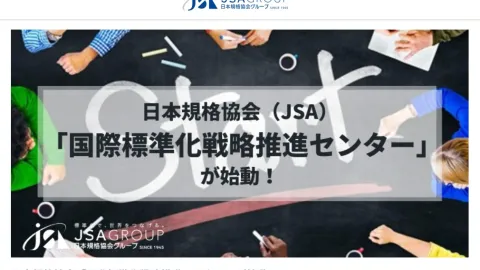
JSA Launches International Standardization Strategy Center
The Japan Standards Association (JSA) established a new International Standardization Strategy Promotion Center on April 1, 2026, to support government-led priority sectors and strengthen Japan’s role in international standardization.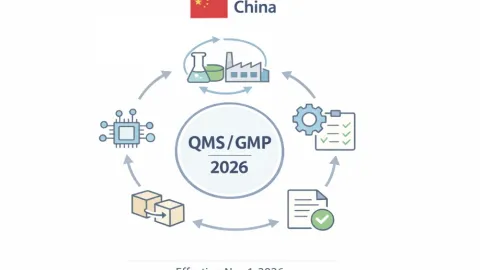
China Tightens GMP Rules For Medical Device Manufacturers Effective November 2026
The National Medical Products Administration (NMPA) has revised China’s Good Manufacturing Practice (GMP) requirements for medical devices, introducing stricter quality management system rules that will take effect on November 1, 2026 and replace the current 2014 version.
FSC Introduces Interim Forest Stewardship Standard for South Africa’s Natural Forests
The Forest Stewardship Council (FSC) has introduced an interim standard for South Africa’s natural forests, setting clear rules for responsible forest management and certification from July 1, 2026.
India Invites MSMEs to Join Healthcare Standards Committees
The Bureau of Indian Standards (BIS) is inviting micro, small, and medium enterprises (MSMEs) to join technical committees in its Medical Equipment and Hospital Planning Department (MHD), opening the standardization process to a wider range of industry participants.
Vietnam Draft Standard Sets Clear Metrics for Online Public Services
The Commission for Standards, Metrology and Quality of Viet Nam (STAMEQ) has introduced a draft national standard for online public services that defines how user experience will be measured using specific indicators.
AI Certification and CBAM Featured in March Accredia Letter
The Italian Accreditation Body (Accredia) has released the March edition of its Accredia Letter, highlighting key developments in accreditation, certification, and regulatory updates.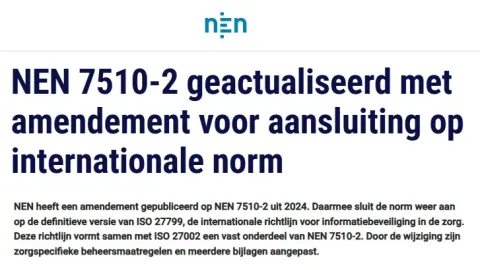
Dutch Healthcare Information Security Standard Updated to Align With ISO 27799
The Royal Netherlands Standardization Institute (NEN) has published an amendment to NEN 7510-2 to align it with ISO 27799,
ANSI Outlines Implementation Plan for U.S. Standards Strategy 2025
The American National Standards Institute (ANSI) has outlined how it will move the U.S. Standards Strategy 2025 (USSS) into implementation,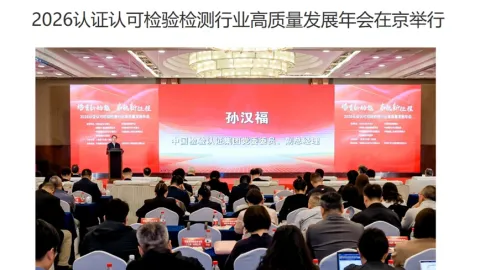
TIC Industry Conference in Beijing Focuses on Trust, Restructuring, and Global Standards Role
The China Quality Certification Center (CQC) hosted the 2026 annual conference on testing, inspection, and certification (TIC) in Beijing on March 26, focusing on strengthening trust, supporting trade, and guiding industry transformation.
JB International Achieves BCI Good Cotton Certification
The Taiwan branch of JB International Co., Ltd. has achieved Better Cotton Initiative (BCI) certification, completing system setup and external verification to align its cotton sourcing with international sustainability requirements.
ISO 37001 Transition in Poland Clarified for Certified Organizations
The Certification Center for Quality (CCJ) explains how organizations certified to ISO 37001, the anti-bribery management systems standard (ABMS),
Lubimar First Certified Under Unified ASC Farm Standard
Lubimar, a seabass and seabream farm in southern Spain, has become the first to be certified to the Aquaculture Stewardship Council (ASC) Farm Standard.Global News

UNECE Recommendations Aim to Enhance Conformity Data Exchange and Product Transparency
The United Nations Economic Commission for Europe (UNECE) has released two significant documents that could shape global trade and sustainability frameworks.
ISO 37001 Updated to Strengthen Anti-Bribery Efforts Worldwide
The International Organization for Standardization (ISO) has released ISO 37001:2025, an updated anti-bribery management system standard aimed at strengthening integrity, ethical leadership, and governance in organizations worldwide.
GLOBALG.A.P. to Meet All Three Pillars of FSI "Basket of Standards" for Flowers Soon
In 2025, GLOBALG.A.P. will align its solutions with all three pillars of the Floriculture Sustainability Initiative's (FSI) "Basket of Standards", enhancing responsible sourcing in the floriculture sector.
ISO 27028 Expected in 2025: New Framework for Tailoring Security Attributes
ISO is currently developing ISO 27028, a guideline on attributes aligned with ISO/IEC 27002:2022.
FSSC Launches Resource Library for Social Sustainability Consultants
Foundation FSSC has launched the FSSC 24000 Consultants Resource Library to support consultants specializing in the social component of Environmental, Social, and Governance (ESG) management.
IFS Commodity List Helps Businesses Assess Risks—Brochure Explains How
The IFS Commodity List plays a key role in the IFS Supply Chain Processes Check, an annual assessment that ensures companies have effective processes to analyze commodity-related risks.
PEFC Seeks Feedback on Three New RED III Standards
The Programme for the Endorsement of Forest Certification (PEFC) is inviting stakeholders worldwide to comment on three newly developed standards under the Renewable Energy Directive 2023/2413 (RED III).
Portugal Pioneers the First Global Standard for Startup Quality and Innovation
The Portuguese Standardization Body, Instituto Português da Qualidade (IPQ) has launched NP 4595, a pioneering standard designed to help startups improve quality management and innovation.
IFS Updates Guideline for Logistics Audit Checklist
IFS has updated its Guideline for the IFS Logistics Audit Checklist to align with IFS Logistics version 3.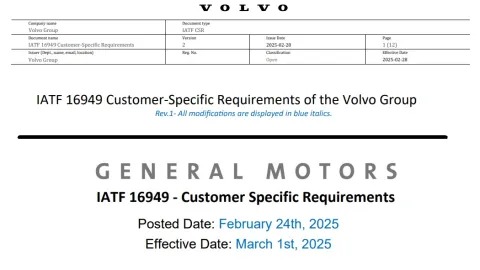
Volvo and GM Update Customer-Specific Requirements for IATF 16949
Volvo Group and General Motors have updated their customer-specific requirements (CSRs) for IATF 16949, the automotive quality management system standard.
IRIS Certification News: Railway Quality Management Upgrades with Rev. 4 and Siemens Mobility’s Gold Award
The International Railway Industry Standard (IRIS) underwent significant updates with the implementation of Revision 4 in April 2024, introducing key changes to improve quality management for railway sector companies.