Management Systems World
All on Quality and other Standards in one place since 2010. Now Worldwide.
News
Please note that you have to be a registered member with paid membership in order to see full articles.
RegisterSelected News
UK Future Homes Standards Prompt New BSI Certification Scheme
The UK government has published the Future Homes and Buildings Standards, introducing new requirements for how the energy performance of windows and doors will be assessed in new buildings from March 2027.
Córdoba Event Maps Quality Infrastructure Needs for Circular Economy
The Center of Excellence on Innovation and Transformative Technologies for the Circular Economy (CEITTEC) hosted a regional meeting in Córdoba, Argentina,
KATS Expands GRP Certification for Disability Association
The Korea Agency for Technology and Standards (KATS) has expanded the Good Remanufactured Product (GRP) Certification held by the Korea Association for Information Technology of Persons with Disabilities (KADI), adding 64 remanufactured toner cartridge models to its existing certification.
Digital Product Passport at the Center of June PKN News
The Polish Committee for Standardization (PKN) has published the June 2026 issue of Wiadomości PKN, with the Digital Product Passport (DPP) at the center of the edition.
SNAS Publishes ISO/IEC 17020:2026 Transition Policy
The Slovak National Accreditation Service (SNAS) has published policy PL-64, outlining how accredited inspection bodies will transition to ISO/IEC 17020:2026, the international standard for inspection bodies.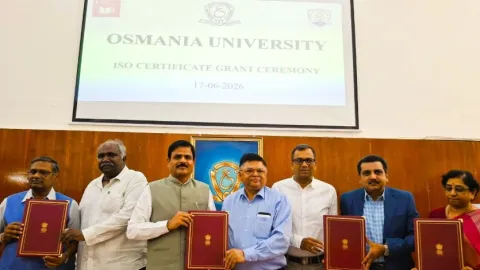
Osmania University Earns Four ISO Management System Certifications
Osmania University in Hyderabad, India, has earned four ISO management system certifications from the Bureau of Indian Standards (BIS), covering education, environmental management, energy management and food safety.
ECIJA Becomes First Spanish Law Firm Certified to ISO 42001
ECIJA Abogados has become the first law firm in Spain to achieve accredited certification to ISO/IEC 42001:2023, the international standard for artificial intelligence management systems.
Croatia Adopts ISO/IEC 17024:2026 for Certification of Persons
The Croatian Accreditation Agency (HAA) has announced the publication of HRN EN ISO/IEC 17024:2026,
CNAS Starts Trial Accreditation of Product Carbon Footprint Verifiers
China National Accreditation Service for Conformity Assessment (CNAS) has started trial accreditation of organizations that verify product carbon footprint data under CNAS-SV03:2026, which took effect on June 15, 2026.
German Cybersecurity Agency Favors ISO 27001 for Cyber Resilience Act Compliance
Germany's Federal Office for Information Security (BSI) has published TR-03183-H, a guideline that promotes ISO/IEC 27001 as the main framework for demonstrating compliance with the EU Cyber Resilience Act (CRA).
S&C 2035 Roadmap Charts Future of Standards and Conformance in Singapore
Enterprise Singapore has unveiled the Standards and Conformance (S&C) 2035 Roadmap,
UKAS Clarifies Status of BBA Accreditation Suspension
The United Kingdom Accreditation Service (UKAS) has confirmed that the British Board of Agrément (BBA) remains under suspension following action taken on February 26, 2026.Global News
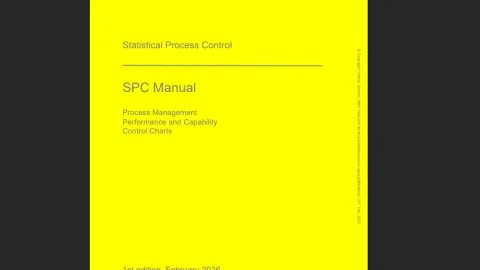
AIAG–VDA Release Harmonized SPC Yellow Volume for Automotive Industry
The Automotive Industry Action Group (AIAG) and the German Association of the Automotive Industry (VDA) have released a joint Statistical Process Control (SPC) Manual.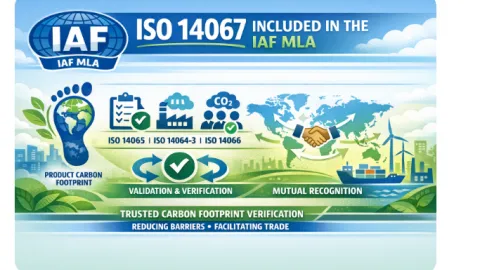
IAF Adds ISO 14067 Product Carbon Footprint To Its Multilateral Recognition Arrangement
The International Accreditation Forum (IAF) has decided to include ISO 14067 in its Multilateral Recognition Arrangement (IAF MLA), extending mutual recognition to
BRCGS Publishes FAQ For Packaging Materials Issue 7
BRCGS has released a new frequently asked questions (FAQ) document to support the implementation of the Global Standard Packaging Materials Issue 7.
GLOBALG.A.P. IFA Version 6 Audits Now Available for Combinable Crops and Plant Propagation Material
GLOBALG.A.P. has confirmed that audits are now available under Integrated Farm Assurance (IFA) version 6 for combinable crops and plant propagation material, two product categories within the IFA certification framework.
LEAF Updates Its Marque Standard With Version 17.0 For Sustainable Agriculture
LEAF (Linking Environment And Farming) has launched version 17.0 of the LEAF Marque Standard, introducing updated requirements for sustainable agriculture as the scheme continues to expand globally.
Revised ISO 2859-1 Brings Formal Skip-Lot Rules and New Curve Methods
The third edition of ISO 2859-1 has been published by the International Organization for Standardization (ISO), marking the first major revision of the international acceptance sampling standard in 27 years.
ISO 42119 Series Signals New Era for AI Testing and Assurance
The ISO/IEC 42119 series sets out a new international framework for testing and assuring artificial intelligence (AI) systems, with one document now published and several further parts under development.
ISO 14001 Revision Nears Publication After Final Draft Reaches Ballot Stage
The revision of ISO 14001, the international standard for environmental management systems, is nearing publication,
Food Safety Issue 10: BRCGS Opens Technical Working Group Applications
BRCGS has opened applications for a new Technical Working Group to support the development of Issue 10 of the Global Standard Food Safety.
ISO 15223-1 Amendment Changes Medical Device Labeling Requirements
An amendment to ISO 15223-1 changes how the authorized representative is shown on medical device labels, affecting manufacturers inside and outside the EU.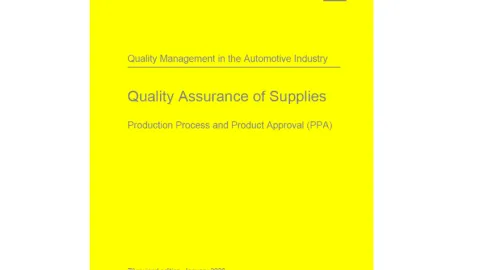
VDA 2 Yellow Volume Updates Quality Management in Automotive Production
The German automotive industry (VDA) has published the VDA 2 Yellow Volume, opening a public consultation on draft guidance for Production Process and Product Approval used across the global automotive supply chain, with feedback open until April 2, 2026.