Management Systems World
All on Quality and other Standards in one place since 2010. Now Worldwide.
News
Please note that you have to be a registered member with paid membership in order to see full articles.
RegisterSelected News
Belly Bella Becomes Armenia’s First GRASP-Assessed Farm
Belly Bella Fruit Company has become the first agricultural producer in Armenia to complete the GLOBALG.A.P. Risk Assessment on Social Practice (GRASP), adding independent checks of worker welfare and labor practices to its existing GLOBALG.A.P. certifications.
Peru to Adopt ISO 9001:2026 With International Release
Peru will adopt ISO 9001:2026 as NTP-ISO 9001:2026, with the national standard set for publication alongside the international edition on September 16.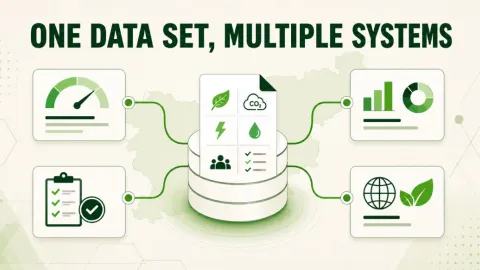
How Slovenian Suppliers Prove Sustainability Practices to Large Buyers
Slovenian companies supplying automotive, electrical engineering, chemical, food and retail groups are increasingly being asked by large customers to provide sustainability data.
HZN Publishes Croatian Translation of Electrical Voltage Standard EN 60038
The Croatian Standards Institute (HZN) has published a Croatian-language translation of EN 60038:2011, which Croatia has adopted nationally as HRN EN 60038:2011. The standard sets standard voltage values for electrical supply systems and for the design of electrical equipment and systems.
Serbia’s Innovation Fund Offers MSMEs Up to RSD 3.6 Million in AI Vouchers
The Innovation Fund of the Republic of Serbia (IF) is offering eligible micro, small and medium-sized enterprises (MSMEs) up to RSD 3.6 million in AI vouchers to introduce or expand the use of artificial intelligence in their business.
Sarajevo Centar Municipality Offers Up to KM 2,000 for Certification Costs
Sarajevo’s Centar Municipality is offering certification cost refunds to local craft businesses and micro, small and medium-sized enterprises (MSMEs) based and operating in the municipality.
First Five European Agile Specifications (EAS) Published as Faster Path to Standards
The first five European Agile Specifications (EAS) have been published following pilot projects that demonstrated a faster way to develop technical documents that may later become full European standards.
After Months of Negotiations, DAkkS Applies to Join Global ACI
The German Accreditation Body (DAkkS) has formally applied to join Global Accreditation Cooperation Incorporated (Global ACI), moving toward membership after months of negotiations over changes to the new international accreditation organization’s rules.
ANSI Looks for U.S. Participants in Innovative and Retail Logistics Standardization
The American National Standards Institute (ANSI) is looking for U.S. companies and organizations interested in taking part in ISO standardization work through its Technical Committee 344 (ISO/TC 344), Innovative logistics, and its Subcommittee 1 (SC 1), Retail logistics.
Austria Makes Greenwashing Illegal From September 27
Austria will make specified forms of greenwashing, the use of misleading environmental claims in marketing, illegal from September 27, 2026.
Ten QM Software Providers to Present Their Tools at SAQ-QUALICON Event
SAQ-QUALICON is organizing a free online Tool Arena on December 10, 2026, where 10 providers will present their own quality management software.
Peru Adopts ISO 19011:2026 as National Management System Audit Standard
Peru has adopted ISO 19011:2026 as a national standard for management system auditing.Global News
IMDRF Playbook Guides Global Use Of Shared Medical Device Regulatory Reviews
The International Medical Device Regulators Forum (IMDRF) has published a playbook to help regulators use shared approaches when reviewing medical devices, known as regulatory reliance.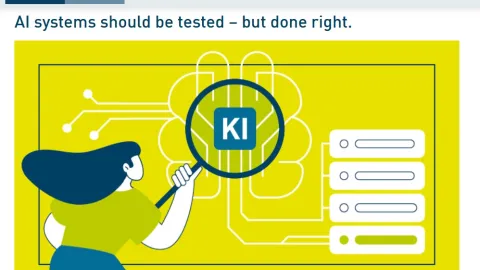
DIN Introduces First Framework For AI Testing Tools
The German Institute for Standardization (DIN) has published DIN SPEC 92006, introducing the first unified framework for artificial intelligence (AI) testing tools and setting clear requirements for how these tools should be designed and used.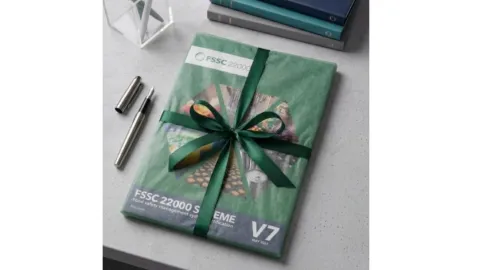
FSSC 22000 Version 7 Release Moved To May 2026
The Foundation for Food Safety Certification (FSSC) has delayed the launch of FSSC 22000 Version 7, with publication now expected in early May 2026.
FSC Launches Normative Newsfeed For Clearer Requirements Updates
The Forest Stewardship Council (FSC) has introduced a new Normative Newsfeed to make updates to its requirements easier to track and understand.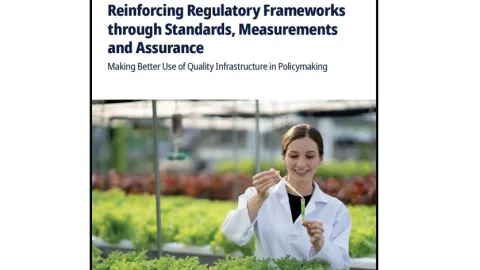
OECD Report Links Standards To More Effective Regulation
The Organisation for Economic Co-operation and Development (OECD) has released a report examining how governments can improve regulation by making better use of standards, measurement, and assurance systems, known as quality infrastructure (QI).
ISO 9000 Revision Reaches Final Draft Stage, Publication Expected In May 2026
The revision of ISO 9000, the international standard that defines the basic concepts and vocabulary of quality management, has reached the Final Draft International Standard (FDIS) stage, the final step before publication.
ISO and IEC Form JTC 5 Committee on Digital Product Passport Standards
A new international standards committee has been created to develop standards for digital product passports (DPPs), systems designed to share key product information across the entire lifecycle and improve transparency and circular economy practices.
Third Edition of ISO 22301 Business Continuity Standard Enters Development
The next revision of ISO 22301, the international standard for business continuity management systems (BCMS), has moved into development.
Global Accreditation Cooperation Incorporated Launches Website
Global Accreditation Cooperation Incorporated has launched its new official website, providing a central online platform for the organization that became the single global body for international accreditation cooperation.
Cradle to Cradle Certified Version 5 Released With Stronger Focus On Measurable Product Requirements
The Cradle to Cradle Products Innovation Institute (C2CPII) has released Version 5 of the Cradle to Cradle Certified standard,
IEC 63372 Establishes Method For Measuring Carbon Footprint And Avoided Emissions In Electronics
The International Electrotechnical Commission (IEC) has published IEC 63372,