Management Systems World
All on Quality and other Standards in one place since 2010. Now Worldwide.
News
Please note that you have to be a registered member with paid membership in order to see full articles.
RegisterSelected News
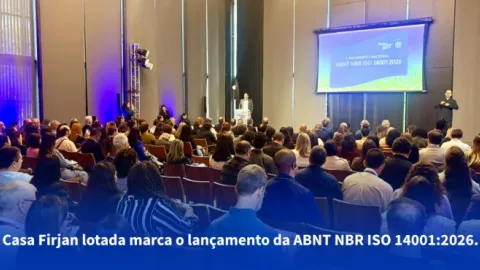
ABNT Launches Brazilian Adoption of Revised ISO 14001
The Brazilian Association of Technical Standards (ABNT) officially launched ABNT NBR ISO 14001, Brazil's adoption of the revised ISO 14001 environmental management standard, during an event at the Federation of Industries of the State of Rio de Janeiro (Firjan).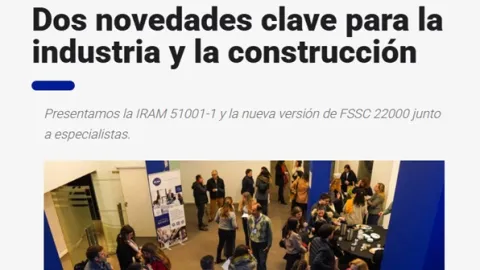
IRAM Launches Argentina's First Steel Framing Standard and Presents FSSC 22000 Version 7
The Argentine Institute for Standardization and Certification (IRAM) launched Argentina's first national standard for Steel Framing construction systems and hosted a separate event introducing Version 7 of the FSSC 22000 food safety certification scheme.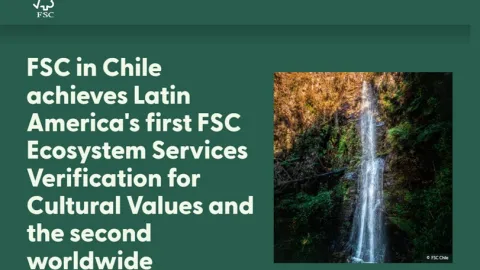
FSC in Chile Celebrates Latin America's First Cultural Values Verification
The Forest Stewardship Council (FSC) has announced Latin America's first and the world's second FSC Ecosystem Services Verification for Cultural Values, covering the Hueima Waterfall in Chile's Los Ríos Region.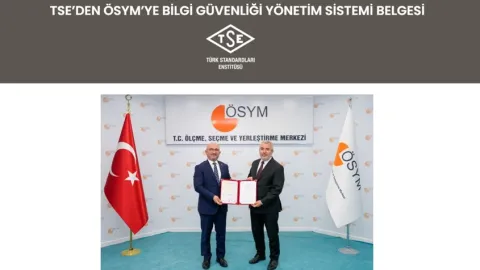
TSE Renews ISO 27001 Certification for Türkiye's National Examination Agency
The Turkish Standards Institution (TSE) has renewed the TS EN ISO/IEC 27001 Information Security Management System certificate of the Measurement, Selection and Placement Center (ÖSYM),
Vietnam's HALCERT Receives International Halal Accreditation From GAC
Vietnam's Halal certification body HALCERT has received international Halal accreditation from the Gulf Accreditation Center (GAC),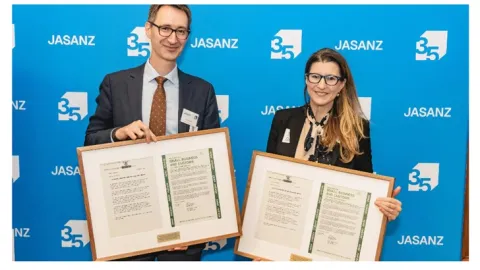
JASANZ Marks 35 Years at Wellington Anniversary Event
The Joint Accreditation System of Australia and New Zealand (JASANZ) celebrated its 35th anniversary with an event at New Zealand's Parliament in Wellington, bringing together partners, government representatives, and members of its accreditation network to mark the milestone.
Lina Araceli González Morales Wins Inaugural IAAC Women Leader Award
The Inter-American Accreditation Cooperation (IAAC) has presented its first Women Leader in Accredited Conformity Assessment Award to Lina Araceli González Morales, director of operations at FACTUAL SERVICES S.C.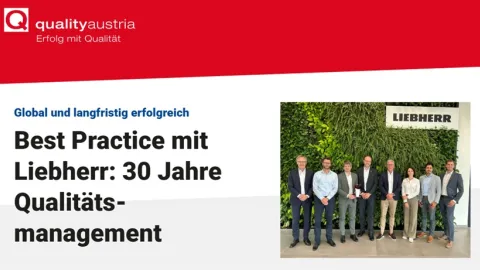
Liebherr Appliances Marks Three Decades of ISO 9001 Certification
Liebherr Appliances has marked 30 years of ISO 9001 certification, reflecting three decades of maintaining a certified quality management system across its global operations.
Dutch Accreditation Council Retains EA MLA Status After Peer Evaluation
The Dutch Accreditation Council (RvA) has retained its status as a signatory to the European co-operation for Accreditation Multilateral Agreement (EA MLA) after successfully completing its latest peer evaluation.
Cofrac Highlights Risk-Based Accreditation and Digital Progress in 2025 Report
The French Accreditation Committee (Cofrac) has published its 2025 annual report, highlighting the rollout of a new risk-based accreditation approach, continued digital modernization, and strong activity across its accreditation programs.
SNAS Revises Two Accreditation Guidelines for Management Systems Certification Bodies
The Slovak National Accreditation Service (SNAS) has revised two accreditation guidelines for management systems certification bodies.
Serbia Adopts ISO Standards for Quality Tools and Educational Organizations
The Institute for Standardization of Serbia (ISS) has published the national editions of SRPS ISO 10009:2026 and SRPS ISO 21001:2026, making two international ISO management standards available for use in Serbia.Global News
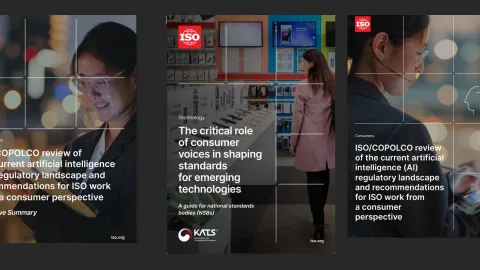
ISO Publishes Two New Resources on Consumer Voices in AI and Emerging Technologies
The International Organization for Standardization (ISO) has released two new resources aimed at strengthening the role of consumers in the standardization of artificial intelligence (AI) and other emerging technologies.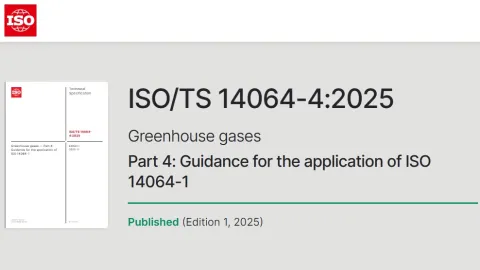
ISO/TS 14064-4 Introduced to Support Greenhouse Gas Reporting
The International Organization for Standardization (ISO) has published ISO/TS 14064-4, a new technical specification designed to help organizations apply ISO 14064-1 more consistently when measuring and reporting greenhouse gas emissions.
BRCGS Opens Public Consultation on Consumer Products Issue 5 Draft
BRCGS has opened a public consultation on the draft of Global Standard Consumer Products Issue 5, marking the first full revision of the standard since 2016 and setting the direction for how non-food consumer products will be certified in the coming years.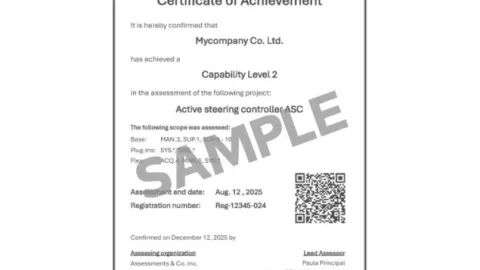
VDA QMC Introduces Official Certificates for Automotive SPICE Assessments
From January 1, 2026, companies will be able to officially register Automotive SPICE assessment results with the VDA Quality Management Center (VDA QMC) and issue recognized certificates without infringing trademark rules.
ISO 22095 Chain of Custody Standard Under Review With Call for Stakeholder Input
The international ISO 22095:2020 Chain of Custody standard is currently under review, and stakeholders are being invited to share their experience with using the standard.
International Standards Bodies Issue Seoul Statement on Trustworthy AI
International standards organizations have jointly issued the Seoul Statement on Artificial Intelligence, setting out a shared commitment to develop global standards that support safe, inclusive, and trustworthy AI.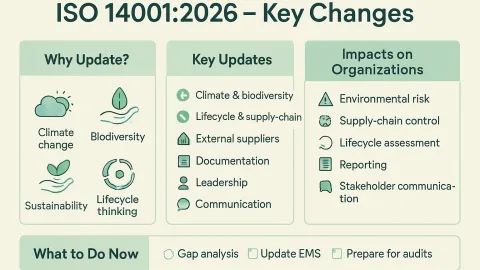
ISO 14001:2026 Final Draft Sets New Rules for Climate, Biodiversity and Documentation
The revision of ISO 14001 has recently entered its Final Draft International Standard (FDIS) stage, and the updated standard is scheduled for publication in April 2026.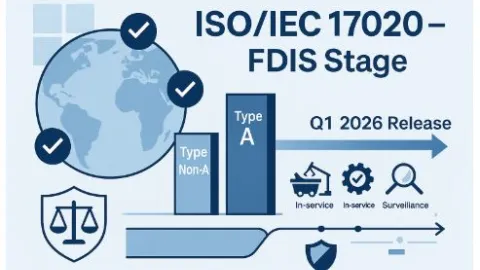
ISO 17020 Reaches Final Global Vote toward 2026 Release
The revision of ISO/IEC 17020, the international standard for inspection bodies, has reached the Final Draft International Standard (FDIS) stage and is now in its final global voting phase.
VDA Releases Draft Product Safety And Conformity Guidance for the Automotive Supply Chain
The German Association of the Automotive Industry (VDA) has released the first edition of Product Compliance Volume 2 as a draft edition, focused on safety and conformity requirements across the automotive supply chain, and opened it for industry feedback until February 21, 2026.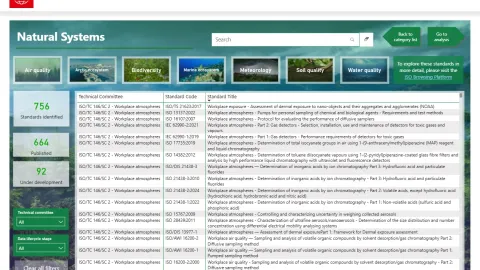
ISO Launches Interactive Dashboard with Over 1,100 Environmental Standards
The International Organization for Standardization (ISO) has launched a new interactive dashboard that brings together more than 1,100 International Standards linked to environmental data.
EcoVadis Recognizes FSSC 24000 Social Certification Scheme
EcoVadis has recognized the FSSC 24000 Social Management System Scheme as a valid certificate under the Labor and Human Rights topic, allowing certified companies to use it directly in EcoVadis sustainability assessments.