
Management Systems World
All on Quality and other Standards in one place since 2010. Now Worldwide.
News Europe
Please note that you have to be a registered member with paid membership in order to see full articles.
RegisterSelected News
Revised AMC 40 Removes Earlier Restrictions on Accreditation Scopes
The Danish Accreditation Fund, DANAK, has issued a new edition of AMC 40 that removes earlier restrictions that limited which activities certification bodies could cover under their accreditation for quality, environmental, OH&S, and energy management systems.
Edu4Standards.eu Project Establishes European Student Association for Standardization
CEN and CENELEC are establishing the first European student association dedicated to standardization and inviting students to help co-create it.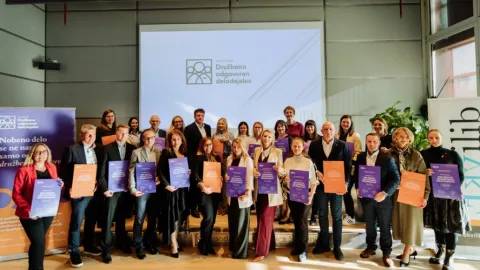
Slovenian Employers Awarded Socially Responsible Employer Certificates
Twenty-eight Slovenian companies and organizations received the Socially Responsible Employer certificate at a formal ceremony held on December 1, 2025, at the Chamber of Commerce and Industry of Slovenia (GZS).
Denmark Aligns Accreditation Rules for Referral Laboratories and Specialists With ISO 15189
Denmark has revised its national accreditation rules for the use of referral laboratories and external specialists to align with the Danish version of ISO 15189:2022 for medical laboratories.
HZN Publishes Work Programme For National Standardization Activities In 2026
The Croatian Standards Institute (HZN) has published its Work Programme for 2026, setting out the national standardization projects it plans to develop, revise, or complete during the year, in line with European Union rules and international trade commitments.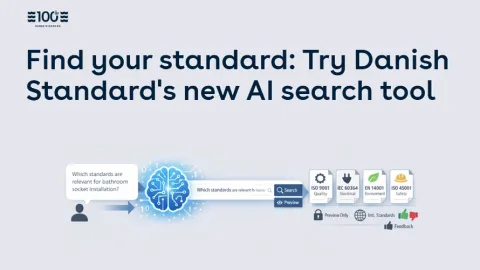
Danish Standards Introduces AI Search Tool for Standards
Danish Standards (DS) has developed a new AI-based search tool to make standards search easier and more relevant for organizations.
26th National Awards of the Czech Republic Invite Applications
The 26th National Awards of the Czech Republic have officially opened, inviting organizations to apply for one of the country’s established national recognition programs focused on quality, responsibility, and sustainability.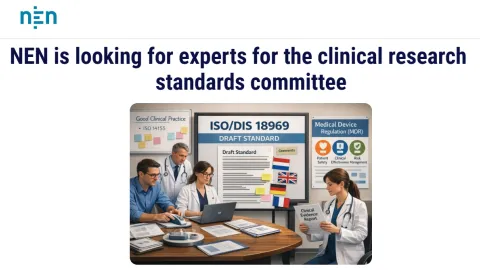
NEN Seeks Experts for Clinical Research Standards Committee
The Netherlands Standardization Institute (NEN) is inviting experts to join its Clinical Research standards committee to help shape international standards for clinical investigations of medical devices.
Milano Cortina 2026 Winter Olympics Highlight Quality Systems in Italy
Italy’s preparations for the Milano Cortina 2026 Winter Olympics are bringing quality and trust systems into sharp focus,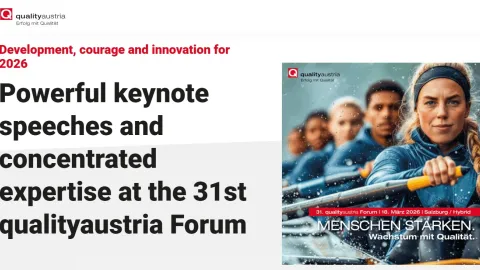
Registration Opens for the 31st Quality Austria Forum in Salzburg
Registration is now open for the 31st Quality Austria Forum, which will take place on March 18, 2026, in Salzburg,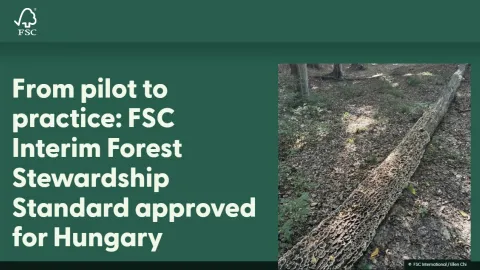
FSC Interim Forest Stewardship Standard Approved for Hungary
The Forest Stewardship Council (FSC) has approved a new Interim Forest Stewardship Standard for Hungary, introducing a single national framework for responsible forest management that will take effect on May 1, 2026.
Climate Transition And Circular Economy In New Edition Of UNE Magazine
The latest edition of UNE Magazine puts climate transition at the center,Global News
DAkkS Submits Formal Legal Fixes to GLOBAC Code of Conduct and Governance Documents
The German Accreditation Body (DAkkS) has formally submitted its proposed amendments to the GLOBAC Code of Conduct, Constitution, and General Rules, aiming to eliminate legal barriers preventing its accession.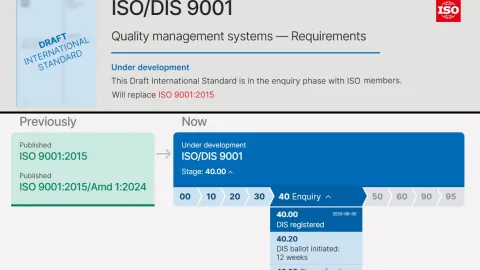
ISO 9001 Revision Shall Reach Ballot Stage
The revision of ISO 9001 has reached a new milestone, as the Draft International Standard (DIS) is set to enter a 12-week ballot period.
IFS Releases Updated Food 8 and PACsecure 3 Doctrines with New Audit Clarifications
IFS has released two updated normative documents: version 4 of the IFS Food 8 Doctrine and version 2 of the IFS PACsecure 3 Doctrine.
Draft of ISO 11135 for Medical Device Sterilization Under Review
A revision of ISO 11135, the global standard for ethylene oxide sterilization of medical devices, is now in the Draft International Standard (DIS) stage and under review by ISO member bodies.
Promoting Safer Bicycle Tourism Worldwide With New ISO 11956
A new international standard, ISO 11956:2025, has been published to support safe and responsible bicycle tourism across the globe.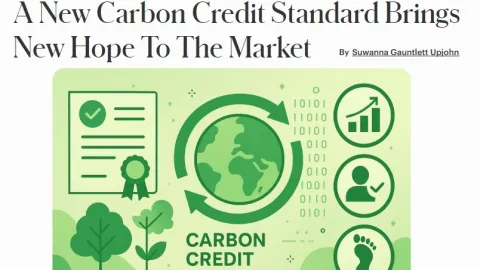
Equitable Earth Forest Carbon Credit Standard Aims to Restore Market Trust
A new forest carbon credit standard and accreditation system are expected to launch by 2026 under the leadership of Equitable Earth.
ISO 18295 Revision: Modern Communication Trends Reshape Customer Contact Standards
The International Organization for Standardization (ISO) has launched a revision of its two customer contact standards, ISO 18295-1 and ISO 18295-2, to reflect current communication practices and the growing role of artificial intelligence in customer interactions.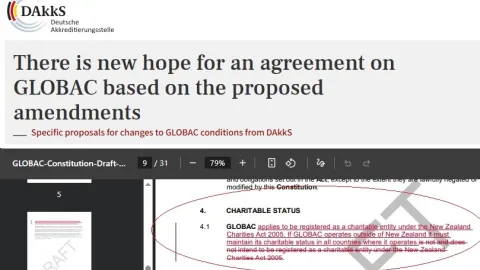
DAkkS Proposes GLOBAC Fix: No Conflicts of Interest, No Profit Motive
The German Accreditation Body (DAkkS) has proposed legal changes to GLOBAC that would allow EU national accreditation bodies to join without violating European law.
France and Norway to Lead Committee in Charge of ISO 9000 Family of Standards
The French Standardization Association (AFNOR) and Standard Norway (SN) will jointly lead ISO/TC 176, Quality management and quality assurance, the ISO technical committee responsible for the ISO 9000 family of quality management standards.
Second Consultation Round Begins for Global Organic Textile Standard Version 8.0
The second public consultation for Version 8.0 of the Global Organic Textile Standard (GOTS) is now open and will run until August 15, 2025.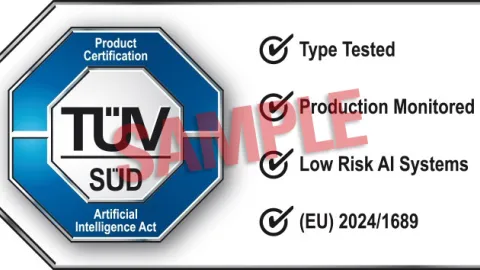
TÜV Süd Launches Voluntary Test Mark for Low-Risk AI Systems
TÜV Süd has launched a voluntary certification mark for low-risk AI (artificial intelligence) systems, allowing manufacturers to prove the quality of their AI solutions even when no legal requirements apply.