Management Systems World
All on Quality and other Standards in one place since 2010. Now Worldwide.
News Europe
Please note that you have to be a registered member with paid membership in order to see full articles.
RegisterSelected News
COSA Method Certification Debuts with CSQA as First Authorized Body
A new COSA Method certification has been introduced to measure and strengthen food safety culture in agri-food companies.
France Qualité Launches Project Group to Develop White Paper on Integrated CSR
France Qualité, a French association that promotes quality management and organizational performance,
UNI Opens 20th Edition of Paolo Scolari Award with February 26 Deadline
The Italian National Standardization Body (UNI) has launched the 20th edition of the Paolo Scolari Award (Premio Paolo Scolari),
ENAC Grants First Accreditations for EU ETS 2 Emissions Trading Regime
The Spanish National Accreditation Entity (ENAC) has granted the first accreditations for verifiers under the upcoming EU ETS 2 emissions trading regime, which will apply to buildings, road transport, and other sectors.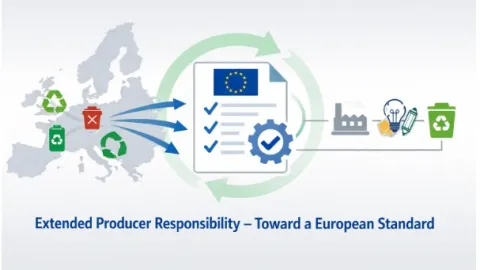
Europe Develops Standard on Extended Producer Responsibility (EPR)
The European Committee for Standardization (CEN) is developing a new standard on Extended Producer Responsibility (EPR) to align how producer responsibility systems are applied across EU countries and reduce barriers for companies operating in multiple markets.
SIST Invites Entrepreneurs to Free Seminar on Using Standards for Market Entry
The Slovenian Institute for Standardization (SIST) is hosting a free seminar to help entrepreneurs place products on the market with fewer risks and fewer barriers.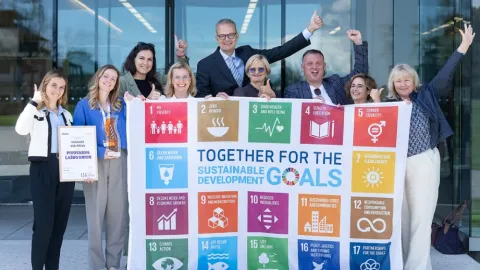
Pivovarna Laško Union Wins Two Sustainability Recognitions
Pivovarna Laško Union has been named ESG Champion of Slovenia 2025 and has also received a five star Green Star certificate, two national recognitions linked to its sustainability performance.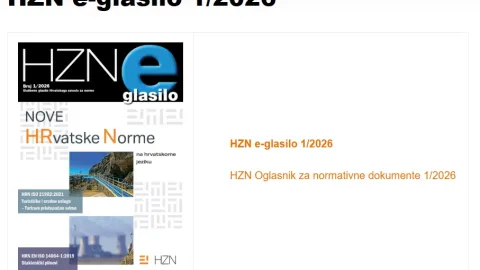
HZN First 2026 Newsletter Highlights Appointment of New Director
The Croatian Standards Institute (HZN) has released the first 2026 issue of issue of HZN e-glasilo, its official e-newsletter,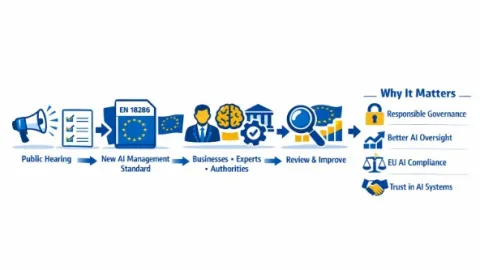
High Interest Across Europe As EN 18286 AI Management Standard Draws Over 1,000 Comments
A forthcoming European management system standard for artificial intelligence, EN 18286, aimed at quality management systems for high-risk AI systems, has attracted more than 1,000 comments during its public consultation.
UNI Establishes Technical Commission on Governance and Compliance
The Italian standards body has created UNI/CT 062, to strengthen the link between governance and compliance and align national work with international standards.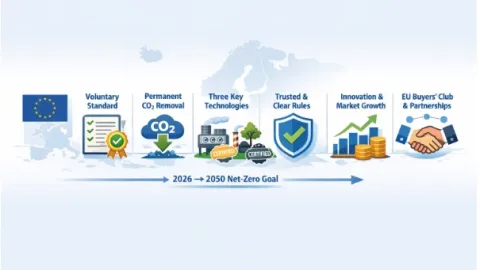
EU Creates First Voluntary Framework For Certifying Permanent Carbon Removals
The European Union (EU) has adopted its first voluntary framework for permanent carbon removals, setting EU-wide rules for how carbon dioxide removals are measured, verified, and certified.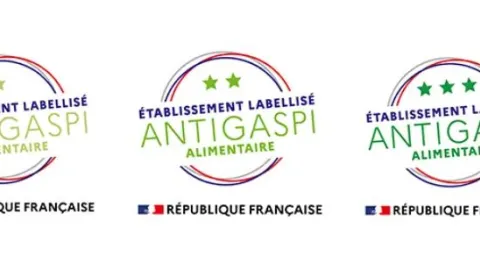
France Launches Work On National Anti Food Waste Label For Agrifood Companies
France has launched work on a new reference framework for the National Anti Food Waste Label aimed at agrifood companies, extending a state-backed scheme created under the AGEC law to reduce food waste across the supply chain.Global News

VDA 19.1 Yellow Book Published With Expanded Cleanliness Inspection Rules
The German Association of the Automotive Industry (VDA) has published the new English edition of the VDA 19.1 Yellow Book,
First Meeting of IWA 50 Launches Work on Hydrological Risk Standards
The first online meeting of IWA 50 will be held on October 7, marking the start of international work on guidelines and potential standards for managing floods, droughts, and water scarcity.
NIST Publishes New Cryptography Standard to Protect Small Devices
The National Institute of Standards and Technology (NIST) has finalized its NIST SP 800-232, a new standard to secure small, resource-limited electronics against cyberattacks.
CSQ Releases Cannabis Standards for Retail and Warehousing & Distribution, Updates Supplements
Cannabis Safety and Quality (CSQ) has released new safety and quality standards for retail, warehousing and distribution, along with updated requirements for dietary supplement products.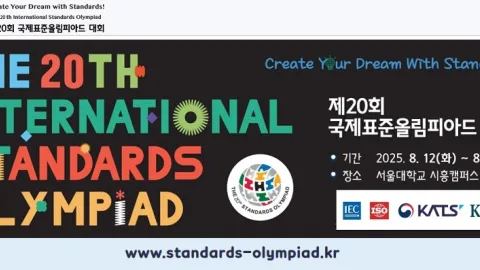
China’s Zenith-Ward Pathfinders Team Wins Top Award at International Standards Olympiad
The 20th International Standards Olympiad, organized by the Korean Agency for Technology and Standards (KATS),
EASI Model Becomes First Sustainability Governance Scheme Accredited by Accredia
The EASI Model has been introduced as the first governance scheme accredited by Accredia and open to independent certification.
Core Medical Device Safety Standard IEC 60601-1 Overhaul Puts Software, Connectivity and AI in Focus
The International Electrotechnical Commission (IEC) has launched a major revision of its foundational medical device safety standard, IEC 60601-1.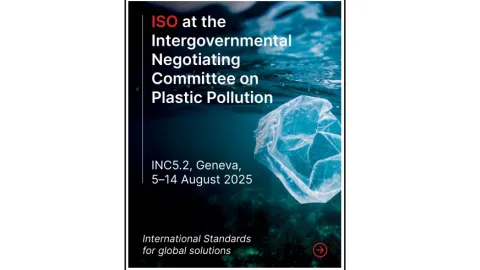
Geneva Meeting on Global Plastic Pollution Treaty Ends Without Agreement
The Intergovernmental Negotiating Committee (INC-5.2) met in Geneva from August 5 to 15 to finalize a global, legally binding treaty on plastic pollution.
IAF Issues Framework for Tackling Risks of Counterfeit Certificates
The International Accreditation Forum (IAF) has released IAF ID 17:2025, a new informative document that provides a framework for managing risks related to counterfeit certificates.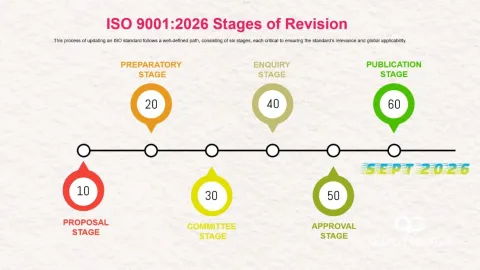
SGS Launches Guidances to Support Transition to New Versions of ISO 9001 and ISO 14001
SGS has released two new guidance resources to help organizations prepare for the upcoming revisions of ISO 9001 and ISO 14001, both scheduled for release in 2026.
Revised ISO 30500 Standard Boosts Sustainable Sanitation in Non-Sewered Areas
The International Organization for Standardization (ISO) has released a revised version of ISO 30500, the international standard for non-sewered sanitation systems.