Management Systems World
All on Quality and other Standards in one place since 2010. Now Worldwide.
News
Please note that you have to be a registered member with paid membership in order to see full articles.
RegisterSelected News
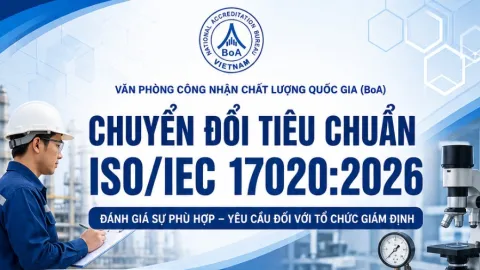
Vietnam Sets Transition Dates for ISO/IEC 17020:2026
The National Accreditation Bureau of Vietnam (BoA) has announced the transition schedule for ISO/IEC 17020:2026, the new edition of the conformity assessment standard for inspection bodies replacing ISO/IEC 17020:2012.
ISO 59020 Revision Starts With Indian Experts in Prominent Roles
Work has officially started within ISO/TC 323 Working Group 3 on revising ISO 59020, the international standard for measuring and assessing circularity performance.
UNI and Accredia Release April Editions of Their Monthly Publications
The Italian National Unification Body (UNI) and the Italian accreditation body Accredia have released the April 2026 editions of their monthly publications, STANDARD and AccrediaLetter.
Australia Selects First Teams for International Standards Olympiad
The Standards Australia (SA) has selected two school teams to represent the country at the 21st International Standards Olympiad, marking Australia’s first participation in the event.
EN 18235-1 Sets Foundation for Trusted Data Sharing in Europe
CEN and CENELEC have published EN 18235-1:2026, setting out a common framework for trusted data transactions across organizations.
Serbia Opens Public Review of Serbian Translation of Updated ISO 14001
The Institute for Standardization of Serbia (ISS) has opened a public consultation on the draft naSRPS EN ISO 14001:2026, inviting experts to comment on the Serbian translation of the updated environmental management standard.
Montenegro Adopts 2026 Plan for National Standards Development
The Institute for Standardization of Montenegro (ISME) has adopted its annual plan for 2026, setting out the standards and related documents to be introduced, updated, or reviewed during the year.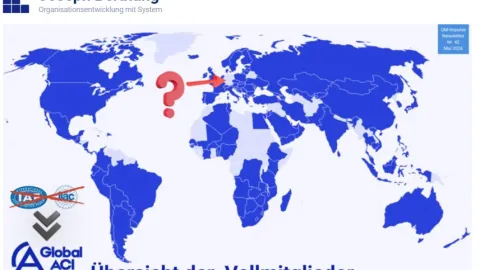
DAkkS Remains In International Accreditation System Even Without Direct Global ACI Membership
The German Accreditation Body (DAkkS) remains effectively part of the global accreditation system through the European co-operation for Accreditation (EA),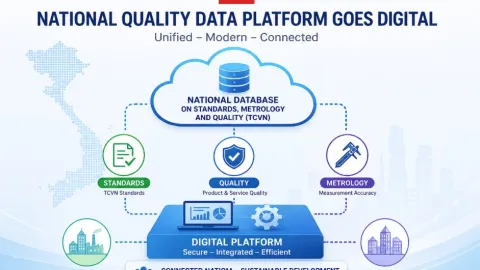
Vietnam Establishes National Database for Standards, Metrology and Quality
The Commission for Standards, Metrology and Quality of Viet Nam (STAMEQ) has defined a unified national database for standards, metrology and quality underDecree 22/2026/ND-CP,
Italy Expands Workplace Safety Prevention Through Free Access To UNI Standards
The Italian Ministry of Labour and Social Policies (MLPS), the National Institute for Insurance against Accidents at Work (INAIL), and the Italian National Standardization Body (UNI) have signed a three-year agreement to provide free access to technical standards on workplace health and safety.
ANSI Starts National Effort To Align Critical Minerals Standards Across The Supply Chain
The American National Standards Institute (ANSI) has launched a multi-phase initiative to coordinate standards for critical minerals, aiming to strengthen U.S. supply chains and reduce reliance on foreign sources.
China Introduces First Commercial Space Standards System Covering Full Industry Chain
The China National Space Administration (CNSA) and the State Administration for Market Regulation (SAMR) have released the Commercial Space Standard System (Version 1.0), China’s first structured framework to guide the country’s growing private space sector.Global News
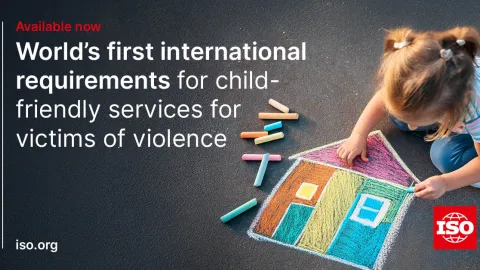
First Global Standard for Child-Friendly Services for Victims of Violence Released by ISO
In a historic move, the International Organization for Standardization (ISO) has introduced WA 49:2025, the first international guidelines for child-friendly services aimed at supporting victims of violence.
ISO Develops Two Standards for eDNA Analysis in Aquatic Life Research
ISO is developing two international standards to improve the reliability of environmental DNA (eDNA) techniques used to study aquatic life and assess water quality.
Renault Group Updates Quality Requirements for IATF 16949
Renault Group has updated its Customer-Specific Requirements (CSRs) for IATF 16949:2016, effective March 14, 2025.
BRCGS Invites Experts to Join Technical Working Group for Consumer Products Issue 5
BRCGS is calling for industry professionals to join its Technical Working Group (TWG) to help revise the Consumer Products Standard, currently at Issue 4, which was launched in 2016.
FSSC 22000 Certification Body Applications Paused Due to High Demand
The Foundation FSSC has announced a 12-month pause on new applications from Certification Bodies (CBs) for the FSSC 22000 Scheme, effective from March 14, 2025, to March 14, 2026.
UNECE Recommendations Aim to Enhance Conformity Data Exchange and Product Transparency
The United Nations Economic Commission for Europe (UNECE) has released two significant documents that could shape global trade and sustainability frameworks.
ISO 37001 Updated to Strengthen Anti-Bribery Efforts Worldwide
The International Organization for Standardization (ISO) has released ISO 37001:2025, an updated anti-bribery management system standard aimed at strengthening integrity, ethical leadership, and governance in organizations worldwide.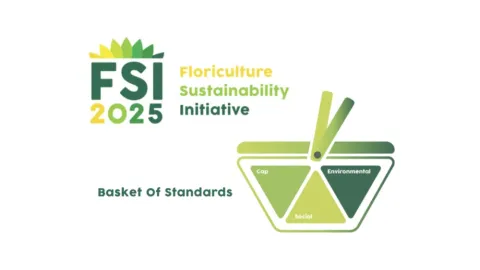
GLOBALG.A.P. to Meet All Three Pillars of FSI "Basket of Standards" for Flowers Soon
In 2025, GLOBALG.A.P. will align its solutions with all three pillars of the Floriculture Sustainability Initiative's (FSI) "Basket of Standards", enhancing responsible sourcing in the floriculture sector.
ISO 27028 Expected in 2025: New Framework for Tailoring Security Attributes
ISO is currently developing ISO 27028, a guideline on attributes aligned with ISO/IEC 27002:2022.
FSSC Launches Resource Library for Social Sustainability Consultants
Foundation FSSC has launched the FSSC 24000 Consultants Resource Library to support consultants specializing in the social component of Environmental, Social, and Governance (ESG) management.
IFS Commodity List Helps Businesses Assess Risks—Brochure Explains How
The IFS Commodity List plays a key role in the IFS Supply Chain Processes Check, an annual assessment that ensures companies have effective processes to analyze commodity-related risks.