Management Systems World
All on Quality and other Standards in one place since 2010. Now Worldwide.
News Sweden
Please note that you have to be a registered member with paid membership in order to see full articles.
RegisterSelected News
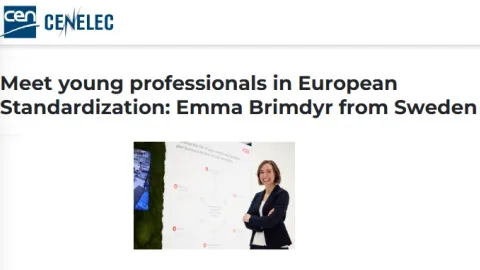
Emma Brimdyr on Making Robotics More Sustainable: CEN and CENELEC Young Professionals Series
Robotics expert Emma Brimdyr, representing the Swedish Institute for Standards (SIS), is featured in the latest interview of CEN and CENELEC’s Meet Young Professionals in European Standardization series.
Three Finalists Announced for Sweden’s 2025 Standardization Prize
The Swedish Institute for Standards (SIS) has named DigitalWell Arena, the project Renewable 2030 (Förnybart 2030), and the company MannTek as finalists for the 2025 Standardization Prize.
Swedac Expands Rules on Proficiency Testing and Interlaboratory Comparisons
Swedac, Sweden’s national accreditation body, has updated its policy governing how accredited bodies participate in proficiency testing (PT) and interlaboratory comparisons (ILC).
Sweden Seeks Public Input on Draft of Revised ISO 9001
Sweden has joined countries inviting comments on the draft revision of ISO 9001,
Sweden Links Upcoming Preparedness Standard to Supply Security
An upcoming standard is taking shape in Sweden to improve public procurement security and support the country’s total defense readiness.
Free Standard Improves Data Sharing in Swedish Education
Sweden’s National Agency for Education (Skolverket) is making a national data exchange standard freely available to schools and training providers to boost digitalization and improve how educational information is shared.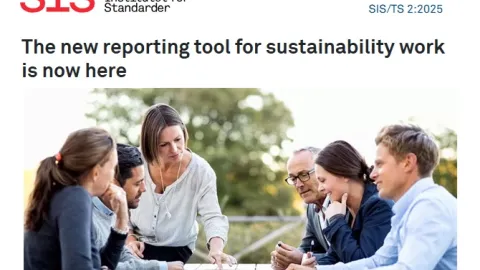
SIS Launches New Tool to Help Companies Report Sustainability Work
The Swedish Institute for Standards (SIS) has launched an updated version of its self-declaration tool, SIS/TS 2:2025, designed to help organizations report their sustainability efforts in a clear, credible, and comparable way.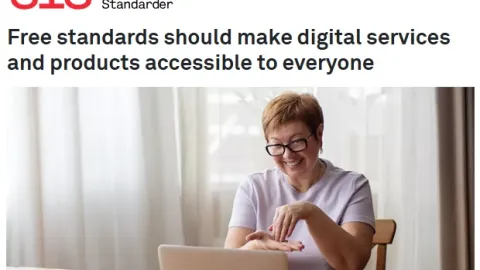
Sweden Improving Inclusion With Two Free Accessibility Standards
The Swedish Post and Telecom Agency (PTS) is making both the European standard Design for All (SS-EN 17161 Universal Design) and the global standard for cognitive design, ISO 21801, accessible to everyone free of charge.
NATO Membership Triggers Sweden's Defense Accreditation and Standards Updates
Sweden has updated its certification and accreditation requirements in the defense sector following its full NATO membership in March 2024.
Simplified Sustainability Reporting Now Available for Sweden’s Small Enterprises
Sweden has introduced a new self-declaration to make sustainability reporting easier for small and medium-sized enterprises (SMEs).
Sweden Launches TS 560 Certification Based on ISO 56001 to Strengthen Innovation Management
Swedac has approved TS 560, a new national certification scheme that enables Swedish organizations to demonstrate structured innovation management practices.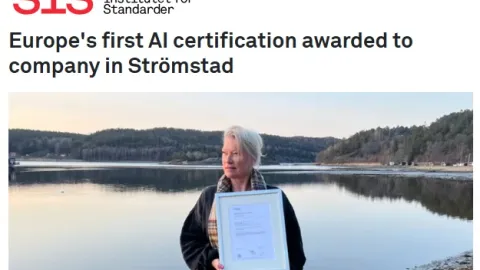
SamCert Becomes First in Europe to Earn AI Certification Under ISO 42001
SamCert, a consulting firm based in Strömstad, has become the first company in Europe to be certified under ISO 42001, the new international standard for artificial intelligence management systems.Global News
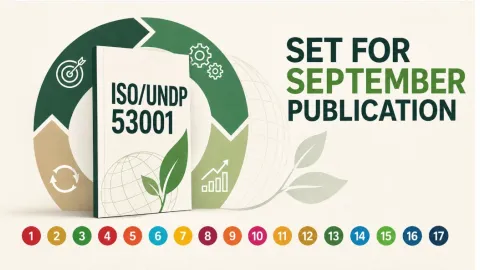
Upcoming ISO/UNDP 53001 Sets First Management System Requirements for the SDGs
ISO/UNDP 53001, set for publication in September 2026, will provide the first management system requirements specifically for organizations seeking to manage and improve their contribution to the Sustainable Development Goals (SDGs).
VDA Releases VDA 5.4 Draft for Fastening Measurement Tools
The Quality Management Center of the German Association of the Automotive Industry (VDA QMC) has released VDA 5.4, Interface for measuring tools in fastening technology, as a Yellow Volume for industry feedback.
ISO/CASCO Clarifies: ISO/IEC 17025 Does Not Require Labs to Treat Accreditation Bodies as Suppliers
The maintenance group of the International Organization for Standardization’s Committee on Conformity Assessment (ISO/CASCO) has clarified that ISO/IEC 17025:2017 does not require laboratories to treat their accreditation bodies as external service providers subject to the standard’s supplier controls.
JFS-C Standard Version 3.2 Gains GFSI Recognition Under 2024 Benchmarking Requirements
The Global Food Safety Initiative (GFSI) has recognized JFS-C Standard Version 3.2 from the Japan Food Safety Management Association (JFSM) against its 2024 Benchmarking Requirements.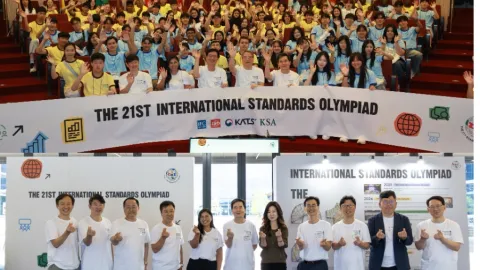
21st International Standards Olympiad Held in Korea
The 21st International Standards Olympiad brought together 105 middle-and high-school students from 11 countries in the Republic of Korea for a three-day competition and hands-on experience with international standardization.
ISO Environmental Management Committee Seeks Global Input for 2027-30 Plan
The International Organization for Standardization (ISO) Technical Committee 207 (ISO/TC 207), Environmental management, has launched a global consultation to help set its priorities for 2027-30.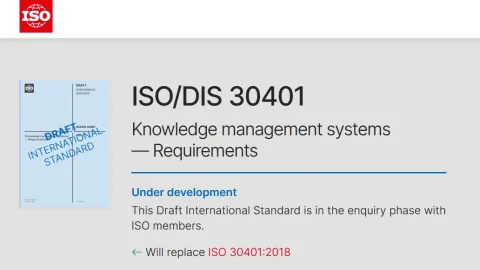
DIS Ballot for ISO 30401 Knowledge Management Revision Closes September 17
ISO 30401, the international standard for knowledge management systems, is currently at the Draft International Standard (DIS) stage, with voting on the proposed second edition due to close September 17, 2026.
IFS Publishes PPWR White Paper and Launches Self-Assessment as EU Rules Take Effect
International Featured Standards (IFS) has published a new PPWR white paper and launched a self-assessment tool as the first requirements of the European Union’s Packaging and Packaging Waste Regulation (PPWR) took effect on August 12, 2026.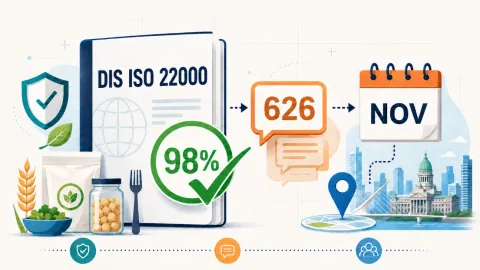
ISO 22000 Draft Approved With 98% Support, Comments Review Set for November
The revision of ISO 22000, the international standard for food safety management systems, has cleared its Draft International Standard (DIS) ballot with 98% positive votes.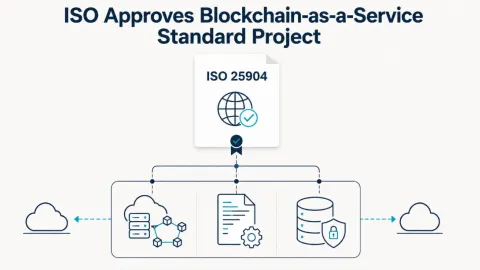
ISO Approves Blockchain-as-a-Service Standard Project
The International Organization for Standardization (ISO) has approved ISO 25904, a new standard project to establish a common technical framework and functional requirements for Blockchain-as-a-Service (BaaS) platforms.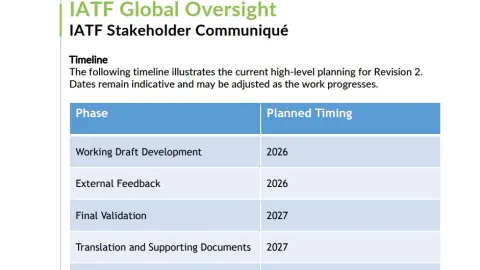
IATF 16949 Second Edition Expected in Mid-2027 With Five Priorities Set
IATF 16949 is expected to reach its second edition in mid-2027, with five priorities set for the revision.