Management Systems World
All on Quality and other Standards in one place since 2010. Now Worldwide.
News
Please note that you have to be a registered member with paid membership in order to see full articles.
RegisterSelected News

European Accreditation Publishes Policy on Geographical Indications PDO, PGI and TSG
The European co-operation for Accreditation (EA) has published a new policy EA-3/02, setting out how certification bodies for geographical indications are accredited,
Serbia Adopts Translation of ISO 21001:2025 for Educational Organizations
The KS CASCO Commission has adopted the Serbian translation of ISO 21001:2025, the management system standard for educational organizations.
European Commission Prepares Draft Rules for Digital Product Passport Registry
The European Commission (EC) is preparing a draft implementing regulation to set out how the Digital Product Passport Registry will operate under the Ecodesign for Sustainable Products Regulation, with adoption planned for the first quarter of 2026.
EU Medical Device Database EUDAMED Opens First Mandatory Modules
The European Commission has published the first four functional modules of EUDAMED, the EU database for medical devices and in vitro diagnostic devices.
European Climate Adaptation Standards Advance Under CEN and CENELEC
CEN and CENELEC are progressing European standardization work on climate adaptation,
How European Standardization Prepares For EU Circular Economy Act
European standardization bodies CEN and CENELEC are structuring how circular economy principles will be translated into practical rules, as the EU moves toward the adoption of the Circular Economy Act.
Europe Begins Work on a 3D Printing Standards Roadmap
Europe has begun work on a new roadmap to guide the future development of standards for 3D printing, with the aim of supporting safe, reliable, and widely usable additive manufacturing across the continent.
France Qualité Opens Registration For Young Generations Quality Club
France Qualité AFQP, the national network that promotes quality practices in France, has opened registration for the Young Generations Quality Club, a new initiative aimed at students, apprentices, and young professionals interested in quality.
NATA Opens Consultation On ISO 17025 Accreditation Criteria
The National Association of Testing Authorities (NATA) of Australia has released two draft accreditation criteria documents for public comment that explain how calibration laboratories are assessed under ISO 17025.
Slovenia Establishes New Technical Committee on Digital Product Passport
Slovenia has set up a new technical committee, SIST/TC DPP Digital Product Passport, to support the country’s digital and sustainable transition and to align national practice with upcoming European rules on product data and circularity.
NIST Releases Draft on How Cybersecurity Programs Can Adapt to Artificial Intelligence
The National Institute of Standards and Technology (NIST) has released a preliminary draft that explains how organizations can adapt their cybersecurity programs to the growing use of artificial intelligence.
China Sets National Plan To Advance Modern Logistics Standardization
Six Chinese government bodies have jointly issued a national plan for modern logistics standardization covering 2025–2027,Global News
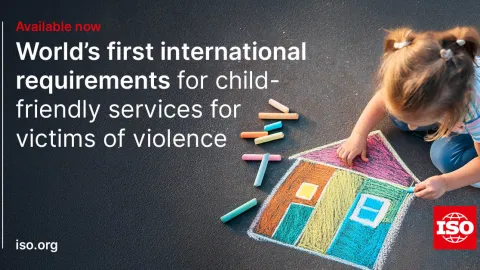
First Global Standard for Child-Friendly Services for Victims of Violence Released by ISO
In a historic move, the International Organization for Standardization (ISO) has introduced WA 49:2025, the first international guidelines for child-friendly services aimed at supporting victims of violence.
ISO Develops Two Standards for eDNA Analysis in Aquatic Life Research
ISO is developing two international standards to improve the reliability of environmental DNA (eDNA) techniques used to study aquatic life and assess water quality.
Renault Group Updates Quality Requirements for IATF 16949
Renault Group has updated its Customer-Specific Requirements (CSRs) for IATF 16949:2016, effective March 14, 2025.
BRCGS Invites Experts to Join Technical Working Group for Consumer Products Issue 5
BRCGS is calling for industry professionals to join its Technical Working Group (TWG) to help revise the Consumer Products Standard, currently at Issue 4, which was launched in 2016.
FSSC 22000 Certification Body Applications Paused Due to High Demand
The Foundation FSSC has announced a 12-month pause on new applications from Certification Bodies (CBs) for the FSSC 22000 Scheme, effective from March 14, 2025, to March 14, 2026.
UNECE Recommendations Aim to Enhance Conformity Data Exchange and Product Transparency
The United Nations Economic Commission for Europe (UNECE) has released two significant documents that could shape global trade and sustainability frameworks.
ISO 37001 Updated to Strengthen Anti-Bribery Efforts Worldwide
The International Organization for Standardization (ISO) has released ISO 37001:2025, an updated anti-bribery management system standard aimed at strengthening integrity, ethical leadership, and governance in organizations worldwide.
GLOBALG.A.P. to Meet All Three Pillars of FSI "Basket of Standards" for Flowers Soon
In 2025, GLOBALG.A.P. will align its solutions with all three pillars of the Floriculture Sustainability Initiative's (FSI) "Basket of Standards", enhancing responsible sourcing in the floriculture sector.
ISO 27028 Expected in 2025: New Framework for Tailoring Security Attributes
ISO is currently developing ISO 27028, a guideline on attributes aligned with ISO/IEC 27002:2022.
FSSC Launches Resource Library for Social Sustainability Consultants
Foundation FSSC has launched the FSSC 24000 Consultants Resource Library to support consultants specializing in the social component of Environmental, Social, and Governance (ESG) management.
IFS Commodity List Helps Businesses Assess Risks—Brochure Explains How
The IFS Commodity List plays a key role in the IFS Supply Chain Processes Check, an annual assessment that ensures companies have effective processes to analyze commodity-related risks.