Management Systems World
All on Quality and other Standards in one place since 2010. Now Worldwide.
News European Union
Please note that you have to be a registered member with paid membership in order to see full articles.
RegisterSelected News
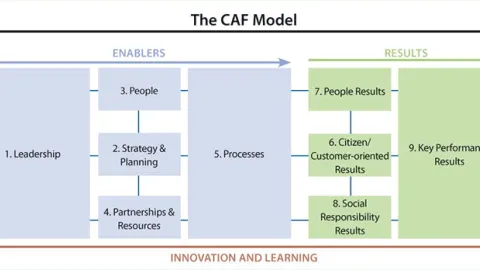
CAF Quality Management Model Set for Major Revision
A revision of the Common Assessment Framework (CAF), Europe's quality management and self-assessment model for public sector organizations, is underway, with a new version expected in 2027.
Finally Official: DAkkS Joins Global ACI
Germany’s national accreditation body, Deutsche Akkreditierungsstelle (DAkkS), has officially joined Global Accreditation Cooperation Incorporated (Global ACI) as a Full Member and signatory to its Multilateral Recognition Arrangement (MRA).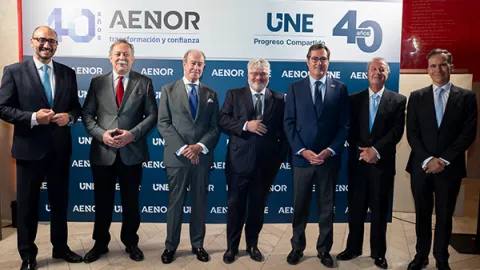
UNE Group Celebrates 40 Years of Supporting Spanish Business
The Spanish Association for Standardization (UNE) and the companies that make up the UNE Group have marked 40 years of supporting industry through standards, certification and testing.
SNAS Issues MSA-09 for Evaluating Conformity Assessment Schemes and Scheme Owners
The Slovak National Accreditation Service (SNAS) has issued MSA-09, setting criteria for accreditation bodies to evaluate conformity assessment schemes and the organizations that own them.
Luxembourg Starts Review of Revised ILNAS 107 for Laboratory Information Security
The Luxembourg Institute of Standardisation, Accreditation, Safety and Quality of Products and Services (ILNAS) has opened a public consultation on ILNAS 107:2026, which updates national guidance for information security audits during laboratory accreditation.
Dutch Accreditation Council Updates ISO/IEC 17020 Transition Document and Publishes ISO/IEC 17024 Plan
The Dutch Accreditation Council (RvA) has updated its existing ASR013 transition specification for EN ISO/IEC 17020:2026 and published a new ASR014 transition specification for EN ISO/IEC 17024:2026.
SEK Enhances KravSmart Digital Standards Platform
Swedish Electrotechnical Standardization Organization (SEK) has updated its KravSmart digital standards platform with a new lifecycle view, improved search results and easier navigation.
Poland Adjusts Accreditation Rules for Transition to New EU Construction Products Regulation
The Polish Centre for Accreditation (PCA) has opened consultation on revised DAN-01 accreditation rules as the construction products sector transitions from the existing EU Construction Products Regulation (CPR), Regulation (EU) No 305/2011, to the new CPR, Regulation (EU) 2024/3110.
Bureau Veritas Iberia Becomes First ENAC-Accredited ISO 37301 Certification Body
Bureau Veritas Iberia has become the first certification body accredited by the Spanish National Accreditation Body (ENAC) to certify compliance management systems under UNE-EN ISO 37301.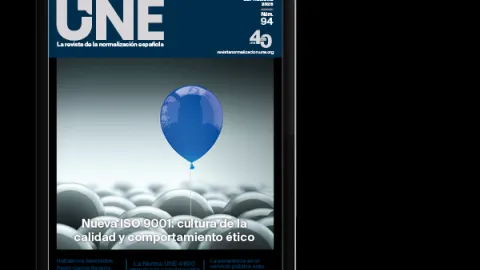
Revista UNE Puts New ISO 9001 at Center Stage With Detailed Look at 2026 Changes
The Spanish Association for Standardization (UNE) has published the September 2026 issue of Revista UNE, with ISO 9001:2026 as its main feature and a closer look at the changes organizations will need to understand.
CEN and CENELEC Announce 2026 Standards+Innovation Award Nominees
CEN and CENELEC have published the nominees for the 2026 Standards+Innovation Awards, with 26 submissions received from their members across four categories.
Italy Publishes UNI/PdR 193:2026 for Digital Skills Certification
The Italian Standards Body (UNI) has published UNI/PdR 193:2026, setting common requirements for assessing and certifying digital skills in Italy based on the European DigComp and DigCompEdu frameworks.Global News
ISO 20001:2026 Published as First Food Loss and Waste Management Standard
The International Organization for Standardization (ISO) has published ISO 20001:2026, its first management system standard dedicated to preventing and reducing food loss and waste across the food supply chain.
ISO 14060 Net-Zero Draft Fails to Secure Approval, Returns for Revision
The draft of ISO 14060, the proposed international standard for net-zero aligned organizations, has failed to secure the approval needed to advance.
Global ACI Aligns CORSIA MRA Sub-Scope With Fourth Edition of ICAO Manual
Global Accreditation Cooperation Incorporated (Global ACI) has updated the Carbon Offsetting and Reduction Scheme for International Aviation (CORSIA) sub-scope of its Multilateral Recognition Arrangement (MRA) to align it with the latest international guidance.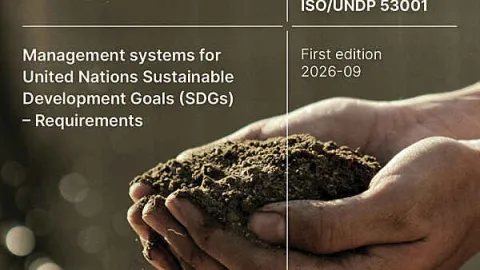
ISO/UNDP 53001 Debuts as First International Management System Standard for Sustainable Development Goals
ISO and UNDP released ISO/UNDP 53001 on September 28, 2026, the world's first International Standard for managing contributions to the United Nations Sustainable Development Goals (SDGs).
ISO Central Secretariat Explains Key Changes in ISO 9001:2026 in New Video
The International Organization for Standardization (ISO) has released a detailed video explaining the changes in ISO 9001:2026 directly from its Central Secretariat.
Journalism Trust Initiative Proposed as New ISO Workshop Agreement
A proposal has been submitted to develop the Journalism Trust Initiative (JTI) into a new ISO International Workshop Agreement (IWA), extending an existing European framework for trustworthy journalism to the international level.
Global ACI Sets Three-Year Transition Timelines for ISO 14001:2026 and ISO 9001:2026
Global Accreditation Cooperation Incorporated (Global ACI) has set three-year transition periods for accredited certification to ISO 14001:2026 and ISO 9001:2026, ending September 30, 2029 and April 30, 2029, respectively.
China Approves World’s First Medical Device Standard for AI Brain-Computer Interfaces
China has approved YY/T 2029-2026, the world’s first medical device standard for brain-computer interfaces (BCIs) that use artificial intelligence (AI).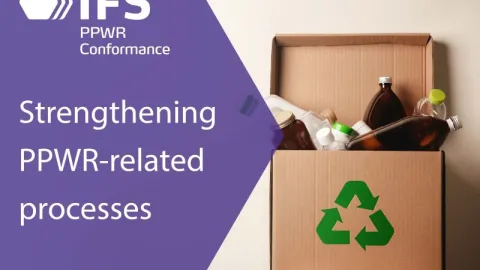
IFS Makes EU Packaging Rules Self-Assessment Tool Available After 70-Company Pilot
International Featured Standards (IFS) has made its self-assessment tool for the EU Packaging and Packaging Waste Regulation (PPWR) available in the IFS Database after a pilot involving 70 companies.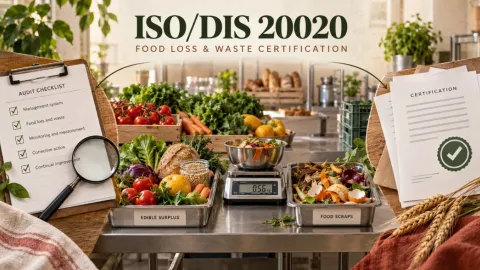
Comment Open on ISO/DIS 20020 for Bodies Auditing and Certifying Food Loss and Waste Management Systems
Comments are open on ISO/DIS 20020, a draft standard setting requirements for bodies that audit and certify food loss and waste management systems (FLWMS).
ISO Begins Developing IWA 52 to Harmonize Transport GHG Emission Factors
The International Organization for Standardization (ISO) is developing IWA 52 to harmonize how greenhouse gas (GHG) emission factors are calculated for transport.