Management Systems World
All on Quality and other Standards in one place since 2010. Now Worldwide.
News Asia
Please note that you have to be a registered member with paid membership in order to see full articles.
RegisterSelected News

Accreditations for Carbon and Water Footprint Verification Now Open Through TÜRKAK
TÜRKAK has begun accepting accreditation applications from organizations seeking to verify compliance with ISO 14067 and ISO 14046 standards. The move supports Turkey’s broader efforts to track and manage environmental impacts in line with global climate goals.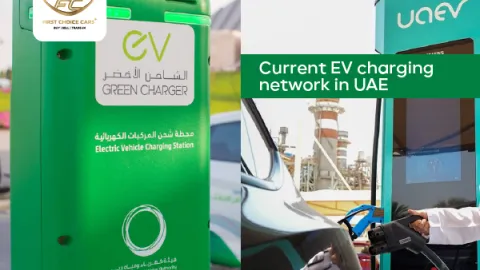
UAE to Enforce Mandatory Certification for Electric Vehicle Chargers Starting May 2025
Electric Vehicle (EV) charging equipment will need mandatory certification in the United Arab Emirates beginning May 2025.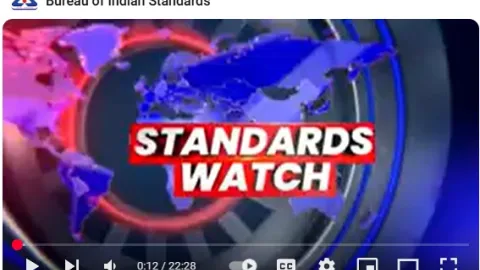
BIS Launches First Episode of Standards Watch to Share Key Quality and Safety Updates
The Bureau of Indian Standards (BIS) has released the first episode of Standards Watch, a new video series aimed at delivering timely updates on quality, standardization, and consumer safety.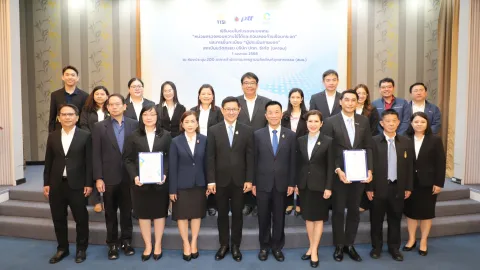
PTT Innovation Institute Certified as Greenhouse Gas Validation and Verification Body
Thailand’s PTT Innovation Institute has received formal certification to act as a validation and verification body for greenhouse gas emissions.
Household Appliance Makers in China Face Stricter Standards After Update
China has updated key national standards for household appliances and power supplies, introducing tougher safety, electromagnetic compatibility, and energy efficiency requirements.
First Edition of BIS Newsletter Highlights Key Moves in India's Standards Landscape
The Bureau of Indian Standards (BIS) has released the inaugural edition of its monthly newsletter Manak Samachar, offering a clear look at major updates in Indian standardization, quality control, and global cooperation efforts.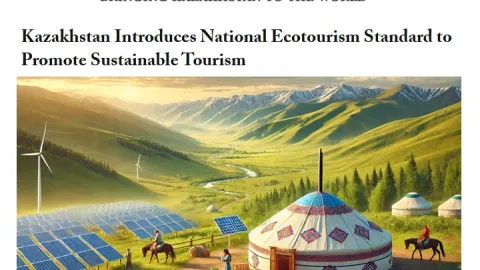
Kazakhstan Introduces National Standard to Boost Eco-Friendly Tourism
Kazakhstan will implement a new national ecotourism standard on June 1 to cut tourism’s environmental impact and protect the country’s unique natural landscapes and biodiversity.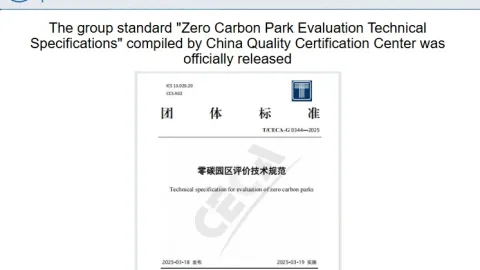
China Quality Certification Center Leads Release of Zero-Carbon Park Evaluation Standard
The China Quality Certification Center (CQC) has led the creation of a new national group standard to guide the development of low-carbon industrial parks.
China Updates National Rules for Labeling Prepackaged Food
China has issued a revised version of its national standard GB 7718–2025 for labeling prepackaged food, which will take effect on March 16, 2027, following a two-year transition period.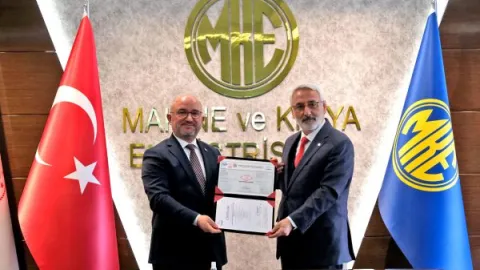
Turkish Defense Manufacturer MKE Earns Occupational Health and Safety Certification From TSE
Machinery and Chemical Industry (MKE), a key player in Türkiye’s defense sector, has been awarded the TS EN ISO 45001 Occupational Health and Safety Management System Certificate by the Turkish Standards Institute (TSE) following a successful conformity audit.
Korea Sets Standards for Recycled Plastic in Exported Auto Parts
South Korea has issued a new standard to promote the recycling of polypropylene (PP), a key plastic used in exported car parts and packaging.
TÜRKAK Starts Accreditation Service for ISO 22301 Business Continuity Standard
TÜRKAK has launched accreditation services for certification bodies working with the ISO 22301:2019 Business Continuity Management System standard, which helps organizations remain operational during crises.Global News
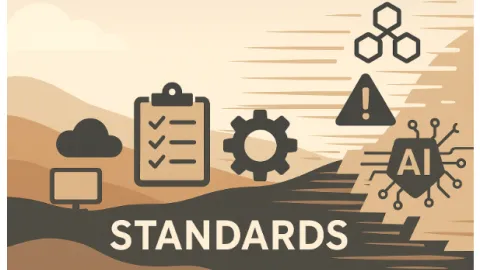
Cutting-Edge Technologies Drive Urgent Creation of New Safety Standards
As cutting-edge technologies like AI, robotics, and 3D printing rapidly evolve, standards organizations are working urgently to develop new safety guidelines.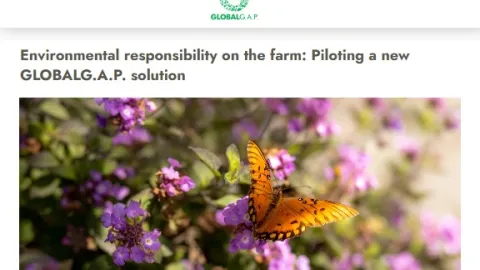
GLOBALG.A.P. Tests New Stakeholder-Created Environmental Solution on Farms
GLOBALG.A.P.'s new environmental sustainability solution is now being tested in real-world farm settings across Europe.
Revised SR10 Standard Strengthens Global Framework for Social Responsibility and ESG Integration
The SR10 standard for social responsibility and sustainable development helps organizations embed ethical, social, and environmental goals into their operations.
ISO 9001 Revision Moves Closer to Public Review Stage After April Meeting
The ISO working group ISO/TC 176/SC 2/WG 29, responsible for revising ISO 9001, met online on April 28, 2025, to address and resolve some of the remaining comments on the second committee draft.
Public Consultation Opens for Draft Revision of ISO 9000 Standard
The draft version of ISO 9000—covering fundamentals and vocabulary for quality management—is now open for public consultation ahead of its planned update.
FSSC 24000 Guidance Released for Managing Complaints and Grievances
The Foundation FSSC has published a new guidance document under the FSSC 24000 certification scheme, offering a structured approach for handling complaints and grievances from workers and other stakeholders.
IFS Launches New ESG Compliance Check to Tackle Supply Chain Risks
IFS has introduced the IFS ESG Compliance Check, a tool designed to help companies manage environmental, social, and governance (ESG) risks in their supply chains.
SA8000 Overhaul Centers on Worker Rights, Privacy and Living Wages
The SA8000 standard on workplace social accountability is undergoing a major revision, with the new SA8000:2026 expected to be finalized by the end of next year.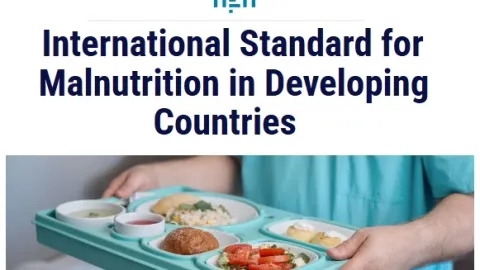
ISO Developing Malnutrition Care Standard for Hospitals in Developing Countries
A new international standard is being developed to help hospitals in developing countries better prevent, detect, and treat malnutrition—a condition affecting nearly half of all hospital patients worldwide.
ISO, IEC, and ITU Publish April 2025 Listings of Standardization Projects
A coordinated list of major standardization projects was released for April 2025, covering new and ongoing work across a wide range of technical areas.
Model Context Protocol (MCP) Emerges as Leading Standard for AI Connectivity
The Model Context Protocol (MCP) is rapidly becoming a key framework for linking artificial intelligence (AI) systems with the tools and data they depend on.