
Management Systems World
All on Quality and other Standards in one place since 2010. Now Worldwide.
News
Please note that you have to be a registered member with paid membership in order to see full articles.
RegisterSelected News

UNI’s STANDARD Magazine Returns With Coverage of Demographic Change and New ISO 9001
The September 2026 issue of STANDARD, the magazine of the Italian Standards Body (UNI),
Peru Adopts ISO 9001:2026 as National Standard
Peru has adopted ISO 9001:2026 as NTP-ISO 9001:2026,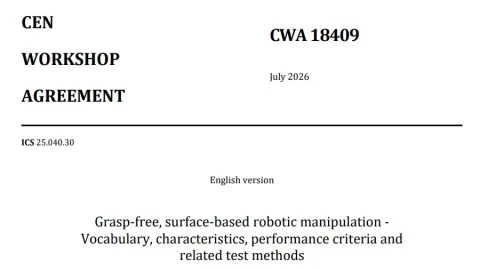
European MOZART Project Develops CWA 18409:2026 for Grasp-Free Robotic Food Handling
CWA 18409:2026 has been published by the European Committee for Standardization (CEN), providing a common technical framework for grasp-free robotic systems designed to move and manipulate soft, fragile and irregular food products using deformable surfaces instead of conventional grippers.
ISBIH Glasnik 2/26 Covers Hot Topics From Household Robots to the Mostar Fair
The Institute for Standardization of Bosnia and Herzegovina (ISBIH) has published the second 2026 issue of its Glasnik newsletter, covering recent standards developments alongside the Institute’s work in Bosnia and Herzegovina and across the region.
Eighth HZN e-Glasilo of 2026 Covers Cloud Security, AI and European Standards
The Croatian Standards Institute (HZN) has published the eighth issue of its e-Glasilo newsletter in 2026, bringing together new Croatian standards and developments from ISO, IEC, CEN and CENELEC, and ETSI.
SIST e-Sporočila Covers AI, Quantum Technologies, Digital Product Passports and EU Packaging Rules
The Slovenian Institute for Standardization (SIST) has published the second 2026 issue of its e-Sporočila newsletter,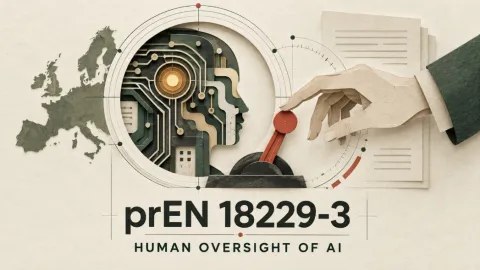
EN 18229-3 Human Oversight, Part of AI Trustworthiness Framework, Opens for Comment
A draft on human oversight is now open for comment within the five-part European EN 18229 AI trustworthiness framework.
NEN Launches Customer Panel to Shape AI Tools for Standards
The Royal Netherlands Standardization Institute (NEN) has launched an AI customer panel to help shape tools that make standards easier to find, understand and use while reducing the risk of incorrect answers from general-purpose AI systems.
NSAI Forms Committee to Develop Mass Engineered Timber Specification
The National Standards Authority of Ireland (NSAI) is forming a new technical committee to examine the development of a national specification for Mass Engineered Timber (MET) in Ireland.
Work–Life Balance Certification Scheme Opens in Italy
Italy has opened a certification scheme for organizations applying UNI/PdR 192:2026, which sets requirements for managing work–life balance and family well-being.
New Accreditation Scheme for Construction Site Supervision Firms Debuts in Singapore
The Singapore Accreditation Council (SAC) has launched a new accreditation program for construction site supervision firms, using ISO/IEC 17020:2026 to assess whether firms are competent to supervise building and construction work.
Indonesia Proposes Halal Assurance Rules for Genetically Modified Products
Indonesia has notified the World Trade Organization (WTO) of proposed halal assurance rules for genetically modified products.Global News
PEFC Launches Project Sourcing Certification for Construction Projects
The Programme for the Endorsement of Forest Certification (PEFC) has launched a new Project Sourcing certification program for the construction sector.
Development Begins on ISO 59001 Circular Economy Management Standard
The International Organization for Standardization (ISO) has begun development of ISO 59001, a future certifiable management system standard for the circular economy.
ISO 32212 Introduces Net Zero Transition Planning Framework for Finance
The International Organization for Standardization (ISO) has published ISO 32212:2026,
ISO 45010 Workplace Menstruation and Menopause Guidance Advances to Final Approval Stage
The International Organization for Standardization (ISO) has advanced ISO 45010, which provides guidance on menstruation and menopause in the workplace, has advanced to the Final Draft International Standard - FDIS stage.
ISO Considers New Committee for Tunnel Design
A proposal to create a dedicated ISO technical committee for tunnel design is under consideration.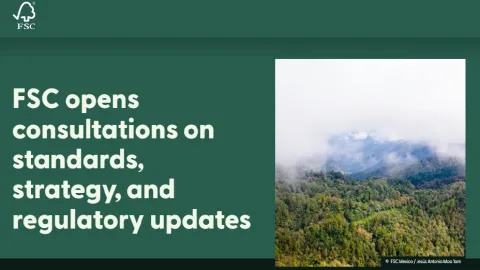
FSC Invites Feedback on Four Active Consultations
The Forest Stewardship Council (FSC) is inviting feedback on four active consultations.
CQI Launches Knowledge Hub for Quality Professionals
The Chartered Quality Institute (CQI) has launched a new Knowledge Hub that brings together quality information, learning resources and industry insights in one place.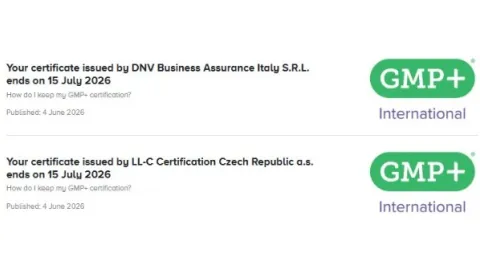
July 15 Deadline Nears for GMP+ Certificates Issued by DNV Italy and LL-C
GMP+ International has warned companies GMP+ Feed certificates issued by DNV Business Assurance Italy S.R.L. or LL-C Certification Czech Republic a.s. that
ISO 9000 and ISO 19011 Revised: New Guidance for Quality and Auditing
Two cornerstone standards for quality management and auditing have been revised, with the International Organization for Standardization (ISO) publishing new editions of ISO 9000 and ISO 19011.
ISO 9002 Revision Reaches Public Comment Stage
The International Organization for Standardization (ISO) has advanced the revision of ISO 9002 to the Draft International Standard (DIS) stage, opening the project for wider review and feedback.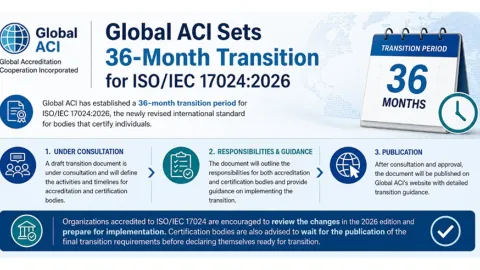
Global ACI Sets 36-Month Transition for ISO/IEC 17024:2026
The Global Accreditation Cooperation Incorporated (Global ACI) has established a 36-month transition period for ISO/IEC 17024:2026, the newly revised international standard for bodies that certify individuals.