Management Systems World
All on Quality and other Standards in one place since 2010. Now Worldwide.
News IT / Telecommunication
Please note that you have to be a registered member with paid membership in order to see full articles.
RegisterSelected News
SASO First In Saudi Arabia To Secure ISO 42001 AI Management Certification
The Saudi Standards, Metrology and Quality Organization (SASO) has become the first organization in Saudi Arabia to achieve ISO/IEC 42001 certification for its artificial intelligence management system (AIMS),
Montenegro Launches National Technical Committee for Building Information Modeling in Construction
The Institute for Standardization of Montenegro (ISME) has launched the formation of a national technical committee dedicated to building information modeling (BIM),
Free Risk Tool Launched for Healthcare Information Security Standard NEN 7510
The Netherlands Standardization Institute (NEN) has launched a free risk analysis tool to help healthcare organizations and other entities that process personal health data carry out the information security risk assessment required under NEN 7510.
ISO 21800: Making Sense Of Long And Confusing Online Terms And Conditions
Long and complex online terms and conditions often discourage consumers from reading them, creating a gap between what people agree to and what they actually understand.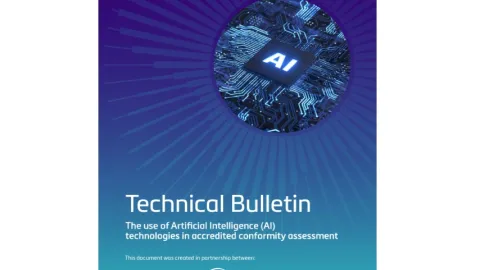
UKAS and DAkkS Publish Joint Guidance on AI in Accredited Conformity Assessment
The United Kingdom Accreditation Service (UKAS) and the German accreditation body (DAkkS) have published joint guidance to help conformity assessment bodies adopt artificial intelligence (AI) responsibly in accredited activities.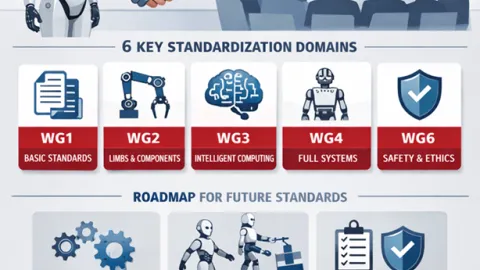
China Releases Framework For Humanoid Robotics And Embodied AI Standards
China has introduced its first national framework for humanoid robotics and embodied artificial intelligence, AI integrated into physical machines such as robots,
Czech Republic Proposes Technical Committee On Cybersecurity And Information Security
The Czech Standardization Agency (ČAS) has announced a proposal to establish a new technical standardization committee focused on cybersecurity and information security.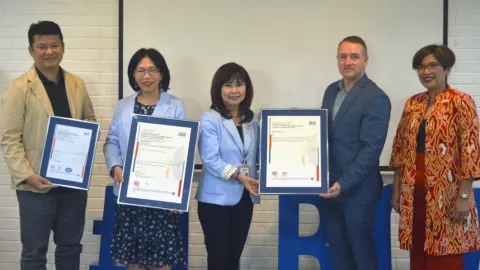
BCA First In Indonesia To Earn AI Management System Certification
PT Bank Central Asia Tbk (BCA) has become the first organization and consumer bank in Indonesia to be certified to ISO/IEC 42001 for its artificial intelligence management system (AIMS).
Bahrain Council of Representatives Pioneers ISO 42001 Certification In Legislative Governance
Bahrain’s Council of Representatives, the elected lower house of Bahrain’s National Assembly, has become the first legislative body in the world to obtain ISO/IEC 42001 certification for AI management systems.
NIST Launches AI Agent Standards Initiative To Address Security And Interoperability
The National Institute of Standards and Technology (NIST) has launched an AI Agent Standards Initiative to address security, identity, and interoperability challenges as AI agents become more widely used.
Australia Set To Enforce New Cybersecurity Rules For Smart Devices
Australia will begin enforcing new mandatory cybersecurity requirements for consumer smart devices on March 4, 2026, as the Cyber Security (Security Standards for Smart Devices) Rules 2025 take effect.
NATA Seeks Experts in Software as Medical Devices and AI for Human Pathology Advisory Committee
The National Association of Testing Authorities, Australia (NATA) is inviting expressions of interest to join its Human Pathology Accreditation Advisory Committee,Global News

Digital Identity Standards Now Freely Accessible Worldwide
Key ISO and IEC digital identity standards, including the ISO/IEC 18013 and ISO/IEC 23220 series, are now freely accessible worldwide through a new sponsorship model set up by the German Institute for Standardization (DIN) and the OpenWallet Foundation (OWF).
GFSI Opens Consultation on FSSC 22000 Version 7 Against 2024 Benchmarking Requirements
The Global Food Safety Initiative (GFSI) has opened a public consultation on the recently updated FSSC 22000 Version 7 as part of its assessment against the GFSI Benchmarking Requirements Version 2024.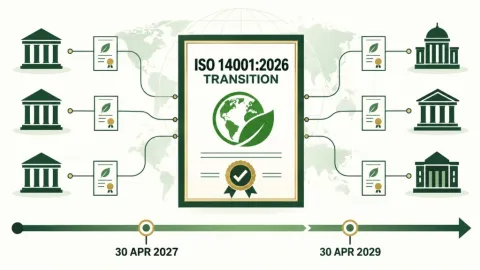
Accreditation Bodies Roll Out ISO 14001 Transition Plans
Accreditation bodies are putting the ISO 14001:2026 transition timetable into practice, with Norwegian Accreditation (NA) among the latest to publish detailed arrangements for certification bodies moving to the revised environmental management systems standard.
ISO Considers Three Tourism Proposals on Restaurant Evaluation, Tourist Guides and AI
Three tourism standardization proposals are now under consideration at the International Organization for Standardization (ISO), covering restaurant evaluation, professional tourist guide services and the use of artificial intelligence with tourism destination data.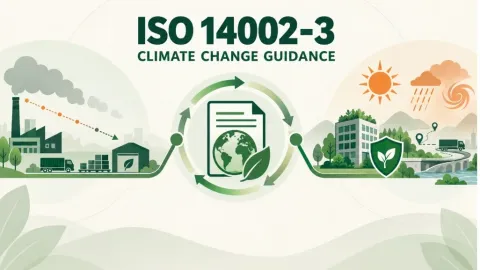
ISO 14002-3 Released as Guidance on Climate Change
The International Organization for Standardization (ISO) has released ISO 14002-3:2026, new guidance to help organizations using ISO 14001 address climate change through their environmental management systems.
AIQI Publishes First AI Use Case for Management System Certification Decisions
The Artificial Intelligence Quality Infrastructure (AIQI) Consortium has published a new use case examining how AI could support management system certification decisions, including the risks, limitations and controls that conformity assessment bodies may need to consider.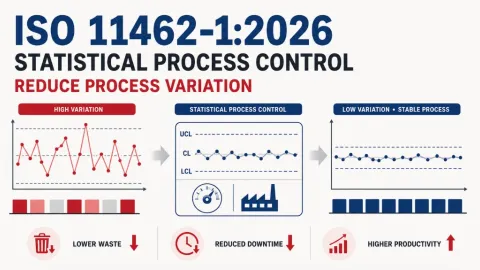
ISO 11462-1:2026 Updates Statistical Process Control to Reduce Process Variation
The International Organization for Standardization (ISO) has published ISO 11462-1:2026, updating guidance on statistical process control (SPC) to help organizations improve the stability and capability of their processes.
Codex Sets New Labelling Rules for Multipacks and Outer Packaging
The Codex Alimentarius Commission (CAC) has adopted new requirements for foods sold in multipacks or grouped together in one outer package, clarifying what information must appear on the packaging consumers see when buying the product.
SBTi Net-Zero Standard Version 2.0 Adds New Rules for Corporate Climate Targets, Reporting and Carbon Removals
The Science Based Targets initiative (SBTi) published Version 2.0 of its Corporate Net-Zero Standard on June 11, introducing new requirements for how companies set climate targets, plan their transition to net zero, report progress and deal with emissions that remain.
CSA Group to Sell Testing and Certification Business to Kiwa
Kiwa and CSA Group have agreed on a deal worth around $1.5 billion for Kiwa to acquire CSA Group’s testing, inspection and certification business, significantly expanding the Dutch company’s presence in North America.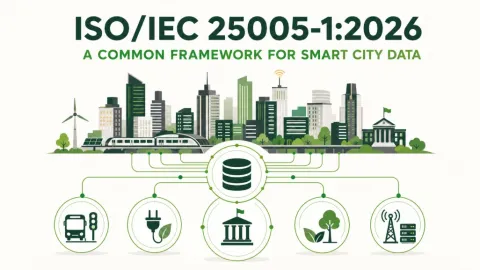
ISO/IEC 25005-1:2026 Creates Common Framework for How Smart Cities Use Data
ISO/IEC 25005-1:2026, published in July, provides a common international framework for how smart cities can make better use of data across urban governance and services.