Management Systems World
All on Quality and other Standards in one place since 2010. Now Worldwide.
News Food / Agriculture
Please note that you have to be a registered member with paid membership in order to see full articles.
RegisterSelected News
Italy Opens Consultation on Food Traceability Certification Rules
The Italian National Unification Body (UNI) has opened a public consultation on a new reference practice that would define how accredited certification bodies assess traceability systems in agri-food supply chains under UNI EN ISO 22005:2008.
Canada Funds STDF Efforts to Strengthen Food Safety Systems in Developing Countries
The Government of Canada is investing about 360,000 US dollars in the Standards and Trade Development Facility (STDF) to help developing countries strengthen food safety, plant health, and animal health systems tied to international trade requirements.
France Invites Food Sector Feedback on ISO 22000 Revision
The French Association for Standardization (AFNOR) is inviting food sector stakeholders to comment on the draft revision of ISO 22000 as part of both the international update process and the future French adoption of the standard as NF EN ISO 22000.
Yad Mordechai Becomes Only Israeli Olive Oil Producer With SII Standards Mark
The Standards Institution of Israel (SII) has awarded Yad Mordechai an official Standards Mark certificate for its olive oil products, recognizing the company as the only producer currently holding the mark.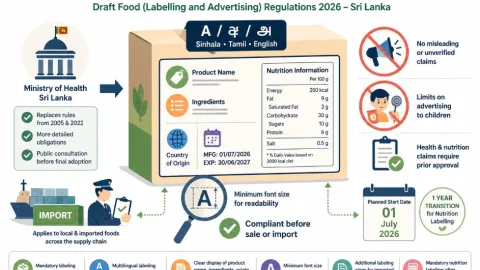
Sri Lanka Proposes Food Labelling And Advertising Rules With Mandatory Nutrition Information
Sri Lanka’s Ministry of Health has issued draft Food (Labelling and Advertising) Regulations 2026 for public consultation.
Vietnam Sets Rules for Halal Product Quality and Certification
The Government of Vietnam has issued Decree No. 127/2026/ND-CP, setting a legal framework for managing the quality of halal products and services and supporting their development.
ISO 22000 Draft Gets French Translation
A French translation of the Draft International Standard (DIS) for ISO 22000, which sets requirements for food safety management systems, has now been completed as part of the revision led by the International Organization for Standardization (ISO).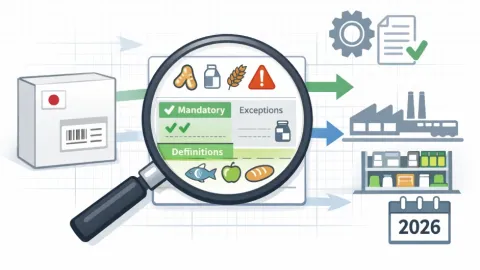
Japan Updates Food Labeling Rules for Allergen Information
The Consumer Affairs Agency (CAA) has revised Japan’s Food Labeling Standards to update allergen information and improve how key safety details are presented on food products.
Serbia Updates Accreditation Requirements for Organic Product Certification Bodies
The Accreditation Body of Serbia (ATS) has announced updates to accreditation scopes for certification bodies in organic food production following the adoption of a new Law on Organic Production, which takes effect on June 1, 2026.
Lubimar First Certified Under Unified ASC Farm Standard
Lubimar, a seabass and seabream farm in southern Spain, has become the first to be certified to the Aquaculture Stewardship Council (ASC) Farm Standard.
China Organizes National Push For Codex Agricultural Proposals
China has launched a national call for proposals to support its participation in Codex Alimentarius Commission (CAC) work in the agricultural sector,
USDA Campaign Highlights ‘Product of USA’ Label With Full-Origin Requirement
The U.S. Department of Agriculture (USDA) has begun a national campaign to promote its voluntary “Product of USA” label, now limited to meat, poultry, and egg products fully produced in the United States.Global News

ISO 37011 Webinars on Purpose-Driven Organizations Set for September 22 and 23
Two international webinars on ISO 37011, the draft guidance standard for purpose-driven organizations, will be held on September 22 and 23 ahead of consultation on the draft beginning September 24, 2026.
ISO 45010 Becomes First International Standard on Menstruation and Menopause at Work
ISO has published ISO 45010, the first International Standard focused on supporting employees experiencing menstruation and menopause at work.
Digital Identity Standards Now Freely Accessible Worldwide
Key ISO and IEC digital identity standards, including the ISO/IEC 18013 and ISO/IEC 23220 series, are now freely accessible worldwide through a new sponsorship model set up by the German Institute for Standardization (DIN) and the OpenWallet Foundation (OWF).
GFSI Opens Consultation on FSSC 22000 Version 7 Against 2024 Benchmarking Requirements
The Global Food Safety Initiative (GFSI) has opened a public consultation on the recently updated FSSC 22000 Version 7 as part of its assessment against the GFSI Benchmarking Requirements Version 2024.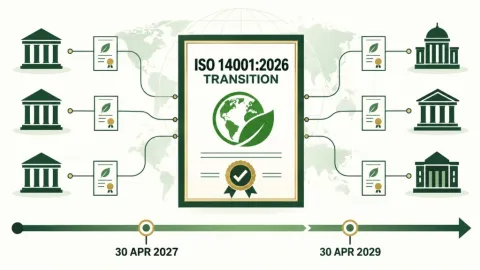
Accreditation Bodies Roll Out ISO 14001 Transition Plans
Accreditation bodies are putting the ISO 14001:2026 transition timetable into practice, with Norwegian Accreditation (NA) among the latest to publish detailed arrangements for certification bodies moving to the revised environmental management systems standard.
ISO Considers Three Tourism Proposals on Restaurant Evaluation, Tourist Guides and AI
Three tourism standardization proposals are now under consideration at the International Organization for Standardization (ISO), covering restaurant evaluation, professional tourist guide services and the use of artificial intelligence with tourism destination data.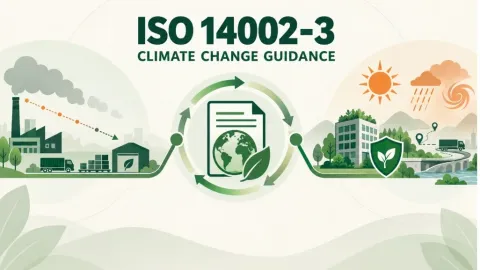
ISO 14002-3 Released as Guidance on Climate Change
The International Organization for Standardization (ISO) has released ISO 14002-3:2026, new guidance to help organizations using ISO 14001 address climate change through their environmental management systems.
AIQI Publishes First AI Use Case for Management System Certification Decisions
The Artificial Intelligence Quality Infrastructure (AIQI) Consortium has published a new use case examining how AI could support management system certification decisions, including the risks, limitations and controls that conformity assessment bodies may need to consider.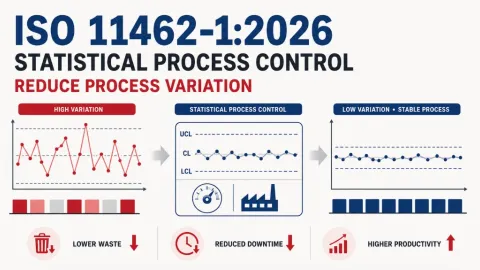
ISO 11462-1:2026 Updates Statistical Process Control to Reduce Process Variation
The International Organization for Standardization (ISO) has published ISO 11462-1:2026, updating guidance on statistical process control (SPC) to help organizations improve the stability and capability of their processes.
Codex Sets New Labelling Rules for Multipacks and Outer Packaging
The Codex Alimentarius Commission (CAC) has adopted new requirements for foods sold in multipacks or grouped together in one outer package, clarifying what information must appear on the packaging consumers see when buying the product.
SBTi Net-Zero Standard Version 2.0 Adds New Rules for Corporate Climate Targets, Reporting and Carbon Removals
The Science Based Targets initiative (SBTi) published Version 2.0 of its Corporate Net-Zero Standard on June 11, introducing new requirements for how companies set climate targets, plan their transition to net zero, report progress and deal with emissions that remain.