Management Systems World
All on Quality and other Standards in one place since 2010. Now Worldwide.
News European Union
Please note that you have to be a registered member with paid membership in order to see full articles.
RegisterSelected News

PCA Seeks Feedback on Update to Poland’s Central Accreditation System Document DA-01
The Polish Centre for Accreditation (PCA) has released for consultation a draft update of its DA-01 document, the central description of Poland’s accreditation system.
BSF 2025 Forum on Standardization in Lithuania Highlights Baltic Cooperation
The Baltic Forum on Standardization (BSF 2025) took place in Vilnius from September 3 to 5,
RvA Publishes Updated Accreditation Protocols for Energy, Carbon Emissions, and Healthcare IT Security
The Dutch Accreditation Council (RvA) has issued new versions of three Specific Accreditation Protocols (SAPs).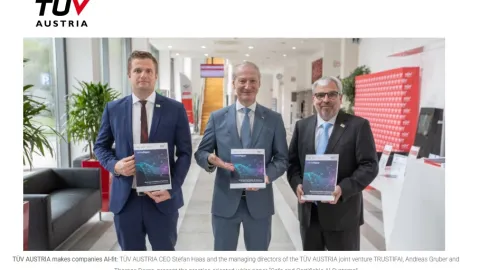
TÜV Austria White Paper Details Trusted AI Framework for Safe and Certifiable Systems
TÜV Austria has released a new white paper presenting its Trusted AI Framework, a structured approach for evaluating and certifying artificial intelligence (AI) systems in safety-critical applications.
EU Acknowledges MSPO as Credible Sustainability Standard Supporting EUDR Compliance
The European Union (EU) has officially recognized the Malaysian Sustainable Palm Oil (MSPO) certification as a credible sustainability standard that supports compliance with the EU Deforestation Regulation (EUDR).
UNI Releases UNI 11919 Part 2 Dedicated to Sustainability Reporting
The Italian national standards body UNI has released UNI 11919-2:2025, a new standard that defines processes for sustainability reporting and accountability.
Luxembourg Forest Certification System Revised and Submitted for PEFC Assessment
The Luxembourg Forest Certification Scheme has been submitted to the Programme for the Endorsement of Forest Certification (PEFC) for assessment.
You Can’t Replace Czech Quality: Latest Episode Examines Certification in Social Services
The latest episode of the series You Can’t Replace Czech Quality looked at social services and the meaning of certification in elderly and disability care.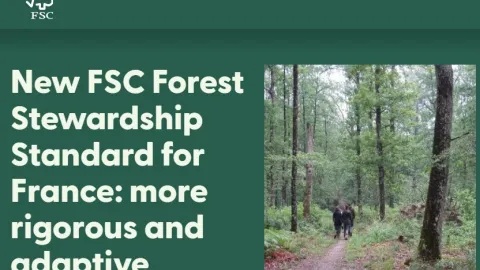
FSC Revises Forest Standard in France, Banning Pesticides and Strengthening Climate Protections
The Forest Stewardship Council (FSC) has approved a new Forest Stewardship Standard for metropolitan France, following four years of consultation, field testing, and collective reflection.
HZN E-Glasilo 8/2025 Highlights Electric Vehicle Charging, Laser Safety and European Quality Infrastructure
The Croatian Standards Institute (HZN) has released the August edition of its e-Glasilo (8/2025) together with the Bulletin on normative documents.
NSAI Opens Consultation on EU eInvoicing Standard
The National Standards Authority of Ireland (NSAI) has launched a public consultation on the revised draft of prEN 16931-1, the European standard on electronic invoicing.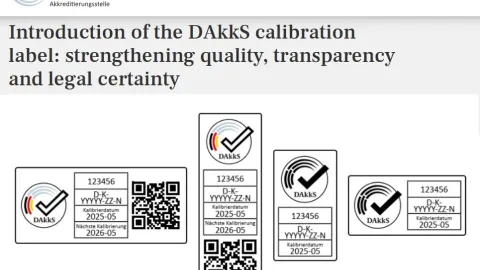
DAkkS Launches Calibration Label to Strengthen Trust and Transparency
The German Accreditation Body (DAkkS) has introduced the new DAkkS calibration label, a protected trademark that accredited calibration laboratories can now use to mark their services.Global News

GFSI Issues Call for Expert Auditors to Join Phase 2 of Development Effort
The Global Food Safety Initiative (GFSI) has issued an extended call for highly experienced auditors to join the second phase of its Auditor Training and Professional Development (ATPD) governance initiative.
JETI Publishes Key Reports on Metaverse and Intelligent Computing
JETI, the dedicated ISO/IEC advisory group specialized in emerging technologies, has released two reports, focusing respectively on the Metaverse and Intelligent Computing.
As EU Faces US Tariff Risks, Quality Infrastructure Strengthens Economic Integration
An analysis by the Accredia Observatory highlights the risk of new US tariffs on European imports and emphasizes the crucial role of Quality Infrastructure (QI) in safeguarding Europe's integrated economy.
ISO Approves Plan to Develop 56012 Innovation Ecosystem Management Standard
ISO has approved a New Work Item Proposal (NWIP) to develop ISO 56012, a guidance standard on innovation ecosystem management.
Germany Declines to Join New Global Accreditation Organization GLOBAC
On February 26, 2025, the German Accreditation Advisory Board advised the Federal Government that Germany, through its national accreditation body (DAkkS), should not join the newly established Global Accreditation Cooperation (GLOBAC).
BRCGS Releases Module 11 to Align Packaging Standards with tms/HAVI Requirements
BRCGS has introduced Module 11 for its Packaging Materials Issue 7 Standard, developed in partnership with tms/HAVI.
Launch of Global Standards Consultation on PNT (Positioning, Navigation, and Timing)
The International Organization for Standardization (ISO) is inviting experts worldwide to participate in an open consultation on Positioning, Navigation, and Timing (PNT) services.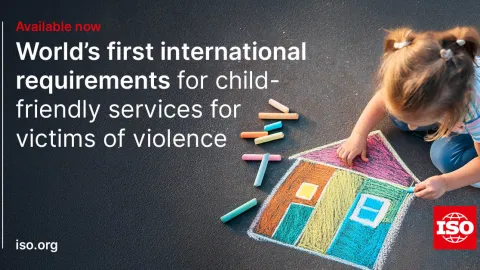
First Global Standard for Child-Friendly Services for Victims of Violence Released by ISO
In a historic move, the International Organization for Standardization (ISO) has introduced WA 49:2025, the first international guidelines for child-friendly services aimed at supporting victims of violence.
ISO Develops Two Standards for eDNA Analysis in Aquatic Life Research
ISO is developing two international standards to improve the reliability of environmental DNA (eDNA) techniques used to study aquatic life and assess water quality.
Renault Group Updates Quality Requirements for IATF 16949
Renault Group has updated its Customer-Specific Requirements (CSRs) for IATF 16949:2016, effective March 14, 2025.
BRCGS Invites Experts to Join Technical Working Group for Consumer Products Issue 5
BRCGS is calling for industry professionals to join its Technical Working Group (TWG) to help revise the Consumer Products Standard, currently at Issue 4, which was launched in 2016.