
Management Systems World
All on Quality and other Standards in one place since 2010. Now Worldwide.
News Ecology / Energy / Chemistry
Please note that you have to be a registered member with paid membership in order to see full articles.
RegisterSelected News
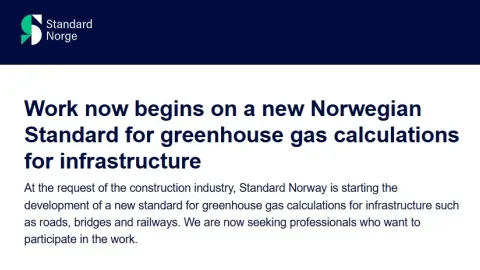
Norway to Develop Unified Method for Infrastructure Emissions Calculations
Standard Norway has launched efforts to create a unified national method for calculating greenhouse gas emissions in infrastructure projects. The new standard will address the current lack of consistency across roads, railways, bridges, and other large-scale works.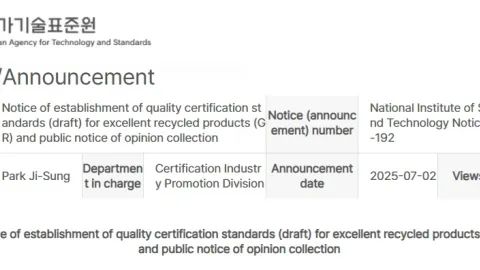
Three Recycled Product Standards Under GR Label Open for Comment in Korea
South Korea’s Korean Agency for Technology and Standards (KATS) has proposed new quality certification standards under the GR (Excellent Recycled Product) label and is now collecting public comments until August 2.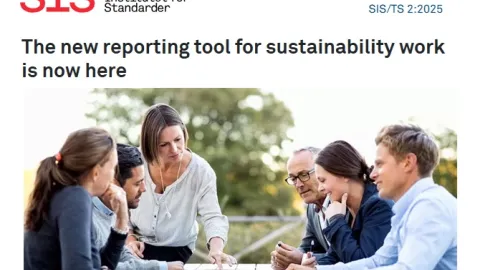
SIS Launches New Tool to Help Companies Report Sustainability Work
The Swedish Institute for Standards (SIS) has launched an updated version of its self-declaration tool, SIS/TS 2:2025, designed to help organizations report their sustainability efforts in a clear, credible, and comparable way.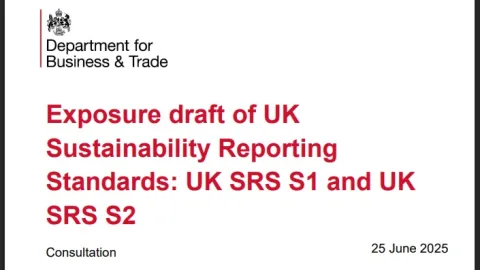
UK Opens Consultation on Draft Sustainability Reporting Standards Based on IFRS
The UK government has published draft sustainability reporting standards, UK SRS S1 and UK SRS S2, and opened a public consultation running until September 17.
Sino Group Recognized for Applying ISO 20400 in Procurement
Sino Group, one of Hong Kong’s leading property developers, has been recognized for aligning its procurement practices with the ISO 20400 Sustainable Procurement – Guidance, following an independent assessment conducted by SGS.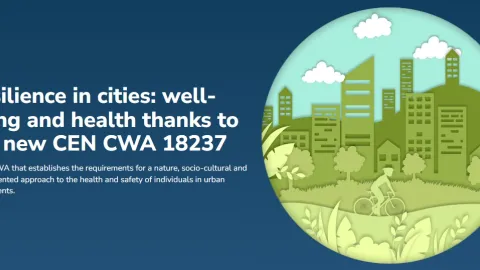
European Guide CWA 18237 Helps Cities Build Healthier, Smarter Urban Spaces
A new CEN Workshop Agreement, CWA 18237:2025, offers European cities a practical guide for improving public health and wellbeing by combining nature, culture, and digital tools in city planning.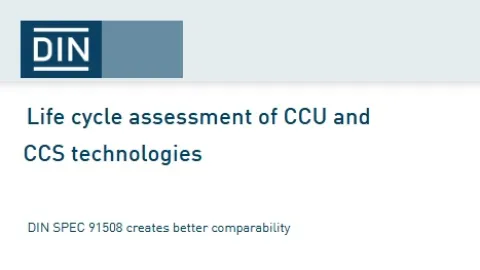
Germany Issues DIN SPEC 91508 for Choosing the Optimal Carbon Management Method
Germany has released DIN SPEC 91508, a free standard for carbon management that helps evaluate whether carbon capture and utilization (CCU) or carbon capture and storage (CCS) is the better choice in a given situation.
South Korea Proposes Revisions to Two GR Standards for Recycled Products
The Korean Agency for Technology and Standards (KATS) has proposed updates to the quality certification standards for Excellent Recycled Products (GR) and launched a public consultation process.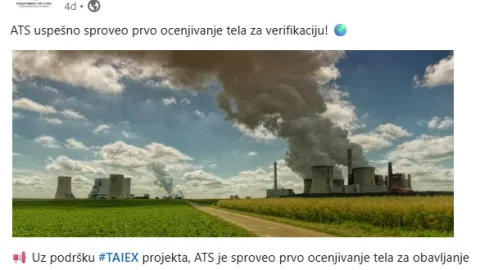
ATS Completes First Assessment of Greenhouse Gas Verifiers
The Accreditation Body of Serbia (ATS) has carried out its first-ever assessment of a body applying for verification of greenhouse gas (GHG) emissions reports.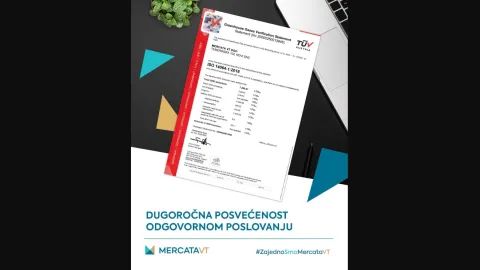
Mercata VT Becomes First in Serbia Verified to ISO 14064-1 for Greenhouse Gas Emissions
Mercata VT has become the first company in Serbia to be verified under ISO 14064-1, the international standard for quantifying and managing greenhouse gas (GHG) emissions.
Korea Hosts Forum to Accelerate Standards for Eco-Friendly Plastics
Korea’s Agency for Technology and Standards (KATS) and the Korea Conformity Laboratories (KCL) organized an international forum on June 12 in Seoul to address standardization in the bioplastics sector.
Netherlands Begins Work on Certification Scheme for Smart Charging Electric Vehicles
The Netherlands is moving forward with a certification scheme for smart charging electric vehicles, building on the recently published NTA 8043.Global News
AutoCarbon Certification Scheme Due in 2027 As Pilot Phase Begins
The International Automotive Oversight Bureau (IAOB) has announced AutoCarbon,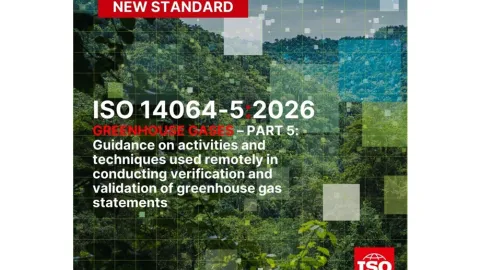
ISO 14064-5 Introduces Guidance For Remote Verification Of Greenhouse Gas Data
The International Organization for Standardization (ISO) has introduced ISO 14064-5, which provides guidance on how to carry out verification and validation of greenhouse gas (GHG) data using remote techniques in digital environments.
ISO 9002 Revision Moves To Draft International Standard Stage
The revision of ISO 9002 has entered the Draft International Standard (DIS) stage, with ISO/TC 176/SC 2, the ISO subcommittee responsible for quality systems, advancing the project into formal consultation.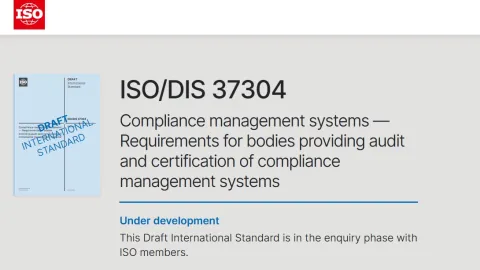
ISO 37304 Compliance Management Certification Standard Advances to Final Draft Stage
The International Organization for Standardization (ISO) has advanced ISO 37304 to the final draft international standard (FDIS) stage.
One Vote Tips Toward New Edition Of ISO/IEC 17065 Over Amendment
One vote has tipped the decision toward publishing a new edition of ISO/IEC 17065 instead of issuing a separate amendment, following a closely split ballot within the International Organization for Standardization (ISO).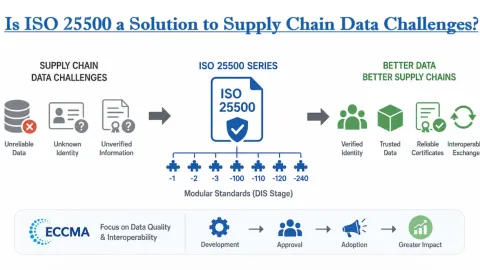
Is ISO 25500 a Solution to Supply Chain Data Challenges?
ISO 25500, a draft series of standards from the International Organization for Standardization (ISO), is presented by the Electronic Commerce Code Management Association (ECCMA) as a possible way to address long-standing problems with unreliable data across global supply chains.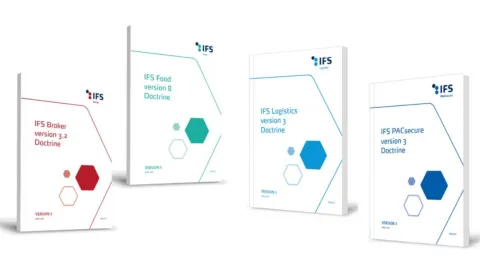
IFS Updates Food, Logistics, Broker And Pacsecure Doctrines To Clarify Certification Rules
The International Featured Standards (IFS) has published updated doctrine documents for its current standards covering food production, logistics, brokerage, and packaging materials, clarifying how certification requirements should be applied without revising the standards themselves.
PAS 25535 on Sustainability in Asset Management Reaches Draft Stage
PAS 25535, a specification focused on integrating sustainability into asset management systems, has reached the committee draft stage within the International Organization for Standardization (ISO), marking the close of its initial comment period.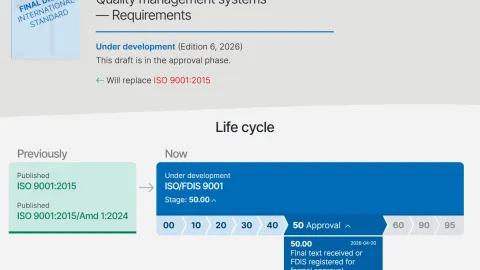
ISO 9001 Revision Moves to FDIS Stage as Early Analysis Questions Scope of Changes
The International Organization for Standardization (ISO) has confirmed that the revision of ISO 9001 has entered the Final Draft International Standard (FDIS) stage, marking the last step before publication.
DIN to Lead ISO IEC Joint Technical Committee 5 on Digital Product Passport Standards
Following an initiative by the German Institute for Standardization (DIN) and the German Commission for Electrical, Electronic & Information Technologies (DKE),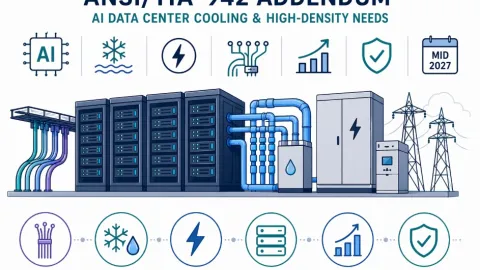
ANSI/TIA-942 Addendum Targets AI Data Center Cooling and High-Density Needs
The Telecommunications Industry Association (TIA) is developing a new addendum to the ANSI/TIA-942 data center standard to address the growing demands of artificial intelligence (AI) infrastructure.
