Management Systems World
All on Quality and other Standards in one place since 2010. Now Worldwide.
News
Please note that you have to be a registered member with paid membership in order to see full articles.
RegisterSelected News
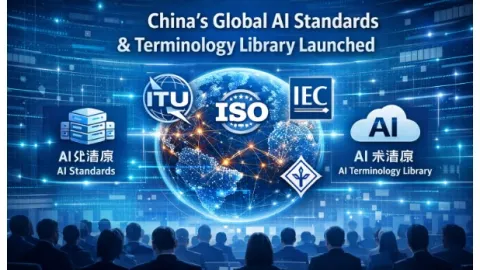
China Launches Global AI Standards Library And Terminology Database
China has officially introduced a global artificial intelligence standards library and a global AI terminology database, consolidating key standards and definitions to support the development and coordination of AI standardization work.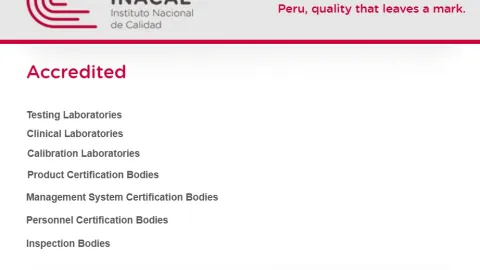
Inacal Clarifies Only Certificates With Its Symbol Are Officially Accredited In Peru
Peru’s National Institute of Quality has clarified that only ISO certificates bearing its accreditation symbol are officially recognized under its national accreditation system.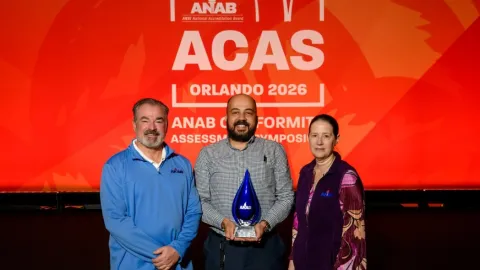
Zaire Garcia Wins Terry Burgess Assessor of the Year Award
Zaire Garcia has won the Ninth Annual Terry Burgess Assessor of the Year Award from the ANSI National Accreditation Board (ANAB) for his leadership in assessments and strong commitment to mentoring others.
UNI Establishes Technical Commission on Governance and Compliance
The Italian standards body has created UNI/CT 062, to strengthen the link between governance and compliance and align national work with international standards.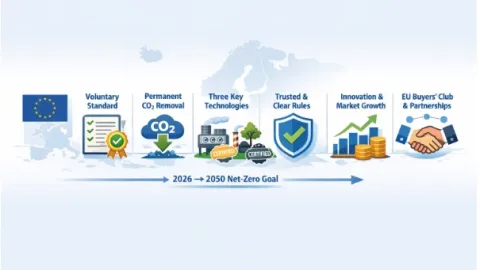
EU Creates First Voluntary Framework For Certifying Permanent Carbon Removals
The European Union (EU) has adopted its first voluntary framework for permanent carbon removals, setting EU-wide rules for how carbon dioxide removals are measured, verified, and certified.
France Launches Work On National Anti Food Waste Label For Agrifood Companies
France has launched work on a new reference framework for the National Anti Food Waste Label aimed at agrifood companies, extending a state-backed scheme created under the AGEC law to reduce food waste across the supply chain.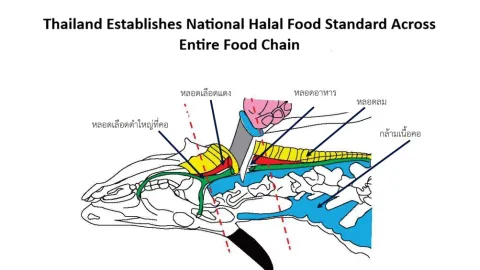
Thailand Establishes National Halal Food Standard Across Entire Food Chain
Thailand has formally established a national Halal food standard that applies to the entire food chain, from raw material acceptance to food service.
Bangladesh Accreditation Board Joins IAF as Accreditation Body Member
The International Accreditation Forum (IAF) has announced that the Bangladesh Accreditation Board (BAB) has joined as an Accreditation Body Member.
China Revises Forest Certification Body Accreditation Scheme Under CNAS-SC23:2026
The China National Accreditation Service for Conformity Assessment has issued a revised forest certification body accreditation scheme, formally replacing the 2022 edition with CNAS-SC23:2026.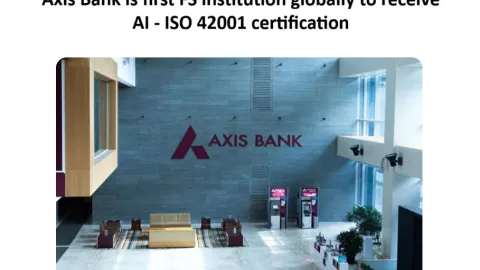
Axis Bank Becomes First Financial Services Institution to Receive ISO 42001 AI Certification
Axis Bank, one of the largest private sector banks in India, has become the first financial services institution globally to be certified to ISO/IEC 42001 for its Artificial Intelligence Management System (AIMS).
Revised AMC 40 Removes Earlier Restrictions on Accreditation Scopes
The Danish Accreditation Fund, DANAK, has issued a new edition of AMC 40 that removes earlier restrictions that limited which activities certification bodies could cover under their accreditation for quality, environmental, OH&S, and energy management systems.