Management Systems World
All on Quality and other Standards in one place since 2010. Now Worldwide.
News France
Please note that you have to be a registered member with paid membership in order to see full articles.
RegisterSelected News
Cybersecurity and High-Risk Country Policy Headline New Cofrac Compétences Issue
The French Accreditation Committee (Cofrac) has published the second 2025 issue of its magazine Compétences.
France Qualité Launches Cybersecurity Commission, Seeks Volunteers
France Qualité AFQP, the national association promoting quality and performance in France, has launched a new commission focused on cybersecurity as part of its Made in Qualité think tank.
France Qualité Releases New Issue of Echanges on HR and Generational Engagement
The latest edition of Echanges magazine by France Qualité AFQP, the French association for quality and performance, centers on the role of human resources and generational diversity in driving quality and performance.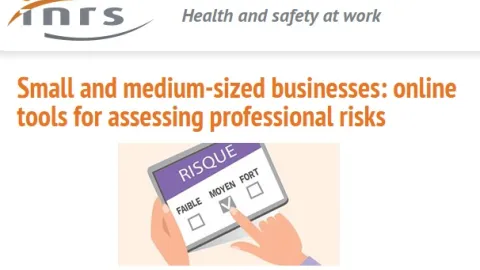
New INRS Guide and Online Tools Help Small Businesses Assess Work Risks
The French National Research and Safety Institute (INRS) has published a new guide to help small and medium-sized enterprises (SMEs) identify and reduce occupational risks.
France Stands Alone in EU in Allowing RED II Biomass After Deadline
The European Commission has clarified how countries should apply the Renewable Energy Directive III (RED III) after the May 21, 2025, transition deadline.
Cofrac Updates Accreditation Guides for Pathology and Reproductive Biology Labs
The French Accreditation Committee (Cofrac) has released revised versions of two technical accreditation guides, SH GTA 03 and SH GTA 05, aligning them with the 2022 edition of the standard NF EN ISO 15189, the French version of the standard for quality and competence in medical laboratories.
French Quality Day Honors Transformative Initiatives Across Sectors
The 2025 French Quality Day, held June 18 in Paris at ESQESE–ICP, highlighted how collective commitment drives organizational change.
Cofrac Opens Renewal Process for Certification Committee Members
The French Accreditation Committee, Cofrac, has started the renewal process for its Certification Section Committee, with current member mandates ending in December 2025.
Cofrac Suspends Bureau Veritas Accreditation for Qualiopi Certification
The French Accreditation Committee (Cofrac) has suspended Bureau Veritas’ accreditation for issuing Qualiopi certifications, affecting its activities under the ISO/IEC 17065 standard.
AFNOR Launches New Study on QSE Function to Track Job Trends and Skills
AFNOR invited professionals working in Quality, Safety, and Environment (QSE) roles to take part in a new study comparing current career trends with findings from a similar 2018 survey.
From Cage Fights to Consoles: AFNOR Kicks Off Standardization for Emerging Sports
Voluntary standardization is gaining ground in new sports sectors, as AFNOR launches efforts to define technical requirements for MMA cages and flooring, pump track infrastructure, and esports event setups.
France Releases Experimental Standard to Support Shift to Electronic Invoicing
France has released the voluntary experimental standard XP Z12-014 to help businesses transition to electronic invoicing and comply with upcoming national requirements.Global News
Major Changes Coming to ISO/IEC Standard-Development Rules
ISO and IEC will put a major rewrite of ISO/IEC Directives, Part 1 into effect on October 5, changing the common rules used to develop, maintain and manage international standards and other publications.
ISO 20001 Set for Publication as First Food Loss and Waste Management Standard
ISO 20001, the world’s first ISO management system standard dedicated to food loss and waste reduction, is scheduled for publication on September 29, 2026, marking the International Day of Awareness of Food Loss and Waste.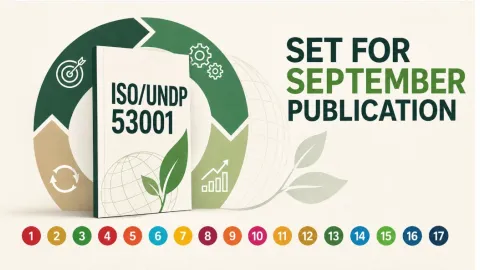
Upcoming ISO/UNDP 53001 Sets First Management System Requirements for the SDGs
ISO/UNDP 53001, set for publication in September 2026, will provide the first management system requirements specifically for organizations seeking to manage and improve their contribution to the Sustainable Development Goals (SDGs).
VDA Releases VDA 5.4 Draft for Fastening Measurement Tools
The Quality Management Center of the German Association of the Automotive Industry (VDA QMC) has released VDA 5.4, Interface for measuring tools in fastening technology, as a Yellow Volume for industry feedback.
ISO/CASCO Clarifies: ISO/IEC 17025 Does Not Require Labs to Treat Accreditation Bodies as Suppliers
The maintenance group of the International Organization for Standardization’s Committee on Conformity Assessment (ISO/CASCO) has clarified that ISO/IEC 17025:2017 does not require laboratories to treat their accreditation bodies as external service providers subject to the standard’s supplier controls.
JFS-C Standard Version 3.2 Gains GFSI Recognition Under 2024 Benchmarking Requirements
The Global Food Safety Initiative (GFSI) has recognized JFS-C Standard Version 3.2 from the Japan Food Safety Management Association (JFSM) against its 2024 Benchmarking Requirements.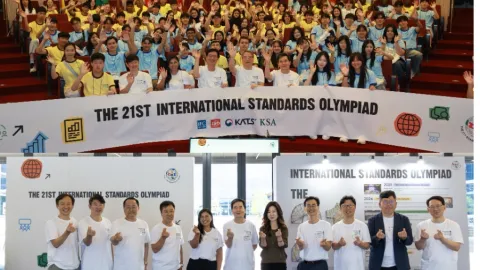
21st International Standards Olympiad Held in Korea
The 21st International Standards Olympiad brought together 105 middle-and high-school students from 11 countries in the Republic of Korea for a three-day competition and hands-on experience with international standardization.
ISO Environmental Management Committee Seeks Global Input for 2027-30 Plan
The International Organization for Standardization (ISO) Technical Committee 207 (ISO/TC 207), Environmental management, has launched a global consultation to help set its priorities for 2027-30.
DIS Ballot for ISO 30401 Knowledge Management Revision Closes September 17
ISO 30401, the international standard for knowledge management systems, is currently at the Draft International Standard (DIS) stage, with voting on the proposed second edition due to close September 17, 2026.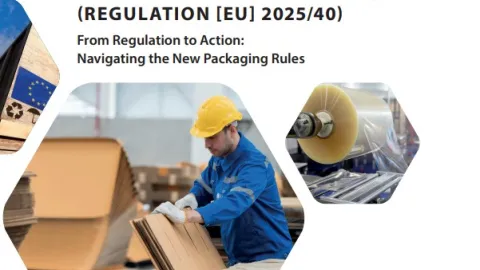
IFS Publishes PPWR White Paper and Launches Self-Assessment as EU Rules Take Effect
International Featured Standards (IFS) has published a new PPWR white paper and launched a self-assessment tool as the first requirements of the European Union’s Packaging and Packaging Waste Regulation (PPWR) took effect on August 12, 2026.
ISO 22000 Draft Approved With 98% Support, Comments Review Set for November
The revision of ISO 22000, the international standard for food safety management systems, has cleared its Draft International Standard (DIS) ballot with 98% positive votes.