Management Systems World
All on Quality and other Standards in one place since 2010. Now Worldwide.
News Europe
Please note that you have to be a registered member with paid membership in order to see full articles.
RegisterSelected News
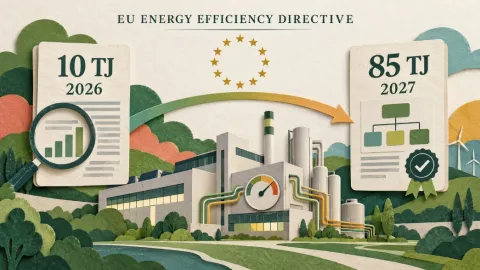
EU Energy Efficiency Directive Sets New Energy Management, Certification and Audit Requirements
The European Union’s (EU) Energy Efficiency Directive 2023/1791 introduces new energy-management, independent certification and energy-audit requirements for companies, with key deadlines in 2026 and 2027.
Library Standards Take Focus in BDS Compass Issue 3/2026
The Bulgarian Institute for Standardization (BDS) has devoted the latest issue of BDS Compass to the standards behind library services, from identifying publications to measuring performance and preserving collections.
AI and Data Center Energy Demand Lead September PKN News
Artificial intelligence (AI) and the growing electricity demand from data centers lead the September issue of Wiadomości PKN (PKN News) from the Polish Committee for Standardization (PKN).
UNI’s STANDARD Magazine Returns With Coverage of Demographic Change and New ISO 9001
The September 2026 issue of STANDARD, the magazine of the Italian Standards Body (UNI),
European MOZART Project Develops CWA 18409:2026 for Grasp-Free Robotic Food Handling
CWA 18409:2026 has been published by the European Committee for Standardization (CEN), providing a common technical framework for grasp-free robotic systems designed to move and manipulate soft, fragile and irregular food products using deformable surfaces instead of conventional grippers.
ISBIH Glasnik 2/26 Covers Hot Topics From Household Robots to the Mostar Fair
The Institute for Standardization of Bosnia and Herzegovina (ISBIH) has published the second 2026 issue of its Glasnik newsletter, covering recent standards developments alongside the Institute’s work in Bosnia and Herzegovina and across the region.
Eighth HZN e-Glasilo of 2026 Covers Cloud Security, AI and European Standards
The Croatian Standards Institute (HZN) has published the eighth issue of its e-Glasilo newsletter in 2026, bringing together new Croatian standards and developments from ISO, IEC, CEN and CENELEC, and ETSI.
SIST e-Sporočila Covers AI, Quantum Technologies, Digital Product Passports and EU Packaging Rules
The Slovenian Institute for Standardization (SIST) has published the second 2026 issue of its e-Sporočila newsletter,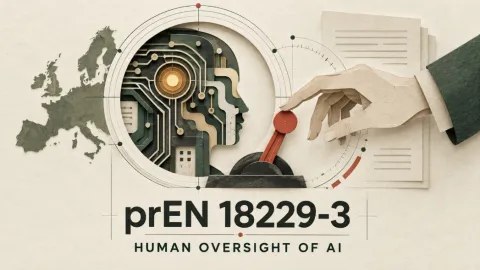
EN 18229-3 Human Oversight, Part of AI Trustworthiness Framework, Opens for Comment
A draft on human oversight is now open for comment within the five-part European EN 18229 AI trustworthiness framework.
NEN Launches Customer Panel to Shape AI Tools for Standards
The Royal Netherlands Standardization Institute (NEN) has launched an AI customer panel to help shape tools that make standards easier to find, understand and use while reducing the risk of incorrect answers from general-purpose AI systems.
NSAI Forms Committee to Develop Mass Engineered Timber Specification
The National Standards Authority of Ireland (NSAI) is forming a new technical committee to examine the development of a national specification for Mass Engineered Timber (MET) in Ireland.
Work–Life Balance Certification Scheme Opens in Italy
Italy has opened a certification scheme for organizations applying UNI/PdR 192:2026, which sets requirements for managing work–life balance and family well-being.Global News

Digital Identity Standards Now Freely Accessible Worldwide
Key ISO and IEC digital identity standards, including the ISO/IEC 18013 and ISO/IEC 23220 series, are now freely accessible worldwide through a new sponsorship model set up by the German Institute for Standardization (DIN) and the OpenWallet Foundation (OWF).
GFSI Opens Consultation on FSSC 22000 Version 7 Against 2024 Benchmarking Requirements
The Global Food Safety Initiative (GFSI) has opened a public consultation on the recently updated FSSC 22000 Version 7 as part of its assessment against the GFSI Benchmarking Requirements Version 2024.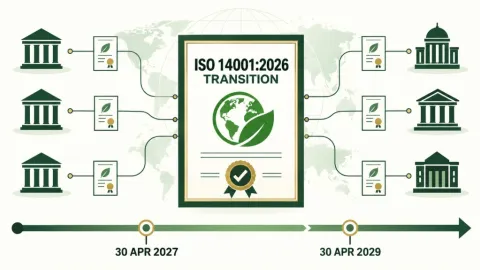
Accreditation Bodies Roll Out ISO 14001 Transition Plans
Accreditation bodies are putting the ISO 14001:2026 transition timetable into practice, with Norwegian Accreditation (NA) among the latest to publish detailed arrangements for certification bodies moving to the revised environmental management systems standard.
ISO Considers Three Tourism Proposals on Restaurant Evaluation, Tourist Guides and AI
Three tourism standardization proposals are now under consideration at the International Organization for Standardization (ISO), covering restaurant evaluation, professional tourist guide services and the use of artificial intelligence with tourism destination data.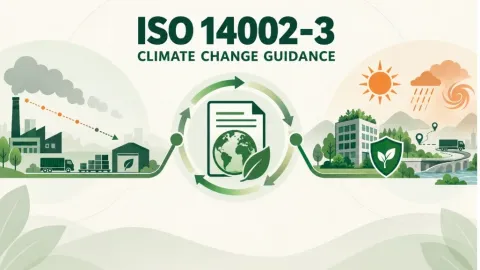
ISO 14002-3 Released as Guidance on Climate Change
The International Organization for Standardization (ISO) has released ISO 14002-3:2026, new guidance to help organizations using ISO 14001 address climate change through their environmental management systems.
AIQI Publishes First AI Use Case for Management System Certification Decisions
The Artificial Intelligence Quality Infrastructure (AIQI) Consortium has published a new use case examining how AI could support management system certification decisions, including the risks, limitations and controls that conformity assessment bodies may need to consider.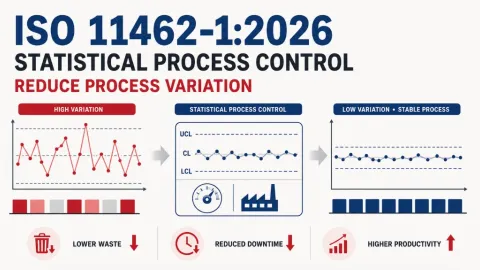
ISO 11462-1:2026 Updates Statistical Process Control to Reduce Process Variation
The International Organization for Standardization (ISO) has published ISO 11462-1:2026, updating guidance on statistical process control (SPC) to help organizations improve the stability and capability of their processes.
Codex Sets New Labelling Rules for Multipacks and Outer Packaging
The Codex Alimentarius Commission (CAC) has adopted new requirements for foods sold in multipacks or grouped together in one outer package, clarifying what information must appear on the packaging consumers see when buying the product.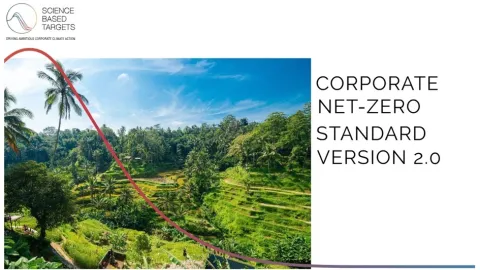
SBTi Net-Zero Standard Version 2.0 Adds New Rules for Corporate Climate Targets, Reporting and Carbon Removals
The Science Based Targets initiative (SBTi) published Version 2.0 of its Corporate Net-Zero Standard on June 11, introducing new requirements for how companies set climate targets, plan their transition to net zero, report progress and deal with emissions that remain.
CSA Group to Sell Testing and Certification Business to Kiwa
Kiwa and CSA Group have agreed on a deal worth around $1.5 billion for Kiwa to acquire CSA Group’s testing, inspection and certification business, significantly expanding the Dutch company’s presence in North America.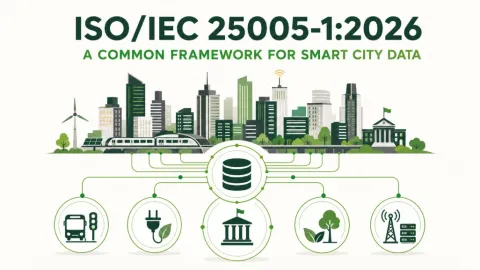
ISO/IEC 25005-1:2026 Creates Common Framework for How Smart Cities Use Data
ISO/IEC 25005-1:2026, published in July, provides a common international framework for how smart cities can make better use of data across urban governance and services.