Management Systems World
All on Quality and other Standards in one place since 2010. Now Worldwide.
News China
Please note that you have to be a registered member with paid membership in order to see full articles.
RegisterSelected News
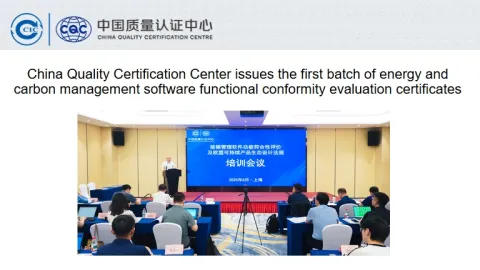
CQC Issues First Conformity Certificates for Energy and Carbon Management Software
The China Quality Certification Center (CQC) has awarded the country’s first certificates for energy and carbon management software.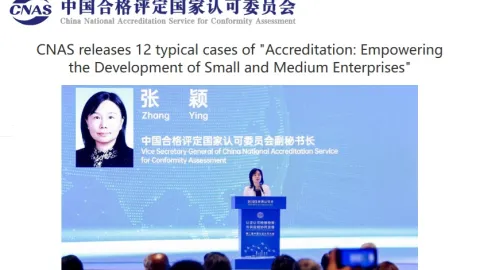
CNAS Showcases 12 Typical Cases of How Accreditation Empowers SMEs
The China National Accreditation Service for Conformity Assessment (CNAS) has highlighted 12 typical examples of how accreditation is helping small and medium-sized enterprises (SMEs) grow and innovate.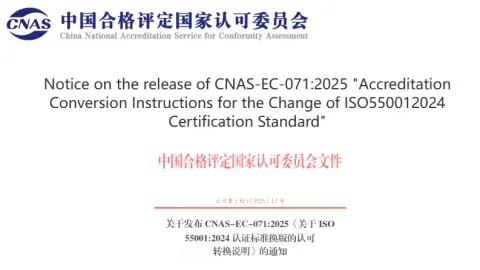
China Outlines Switch to Latest ISO 55001 for Asset Management Certification
The China National Accreditation Service for Conformity Assessment (CNAS) has issued transition requirements for moving to the updated ISO 55001 standard for asset management systems.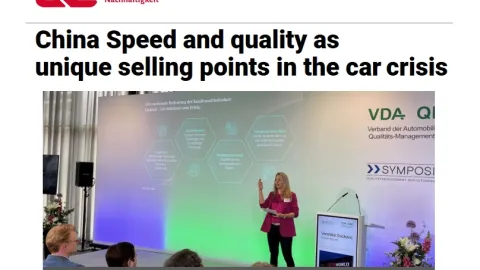
VDA QMC Symposium Explores China Speed and Auto Crisis Challenges
“China Speed” was a central theme at the recent symposium hosted by the Quality Management Center (VDA QMC) of the German Association of the Automotive Industry,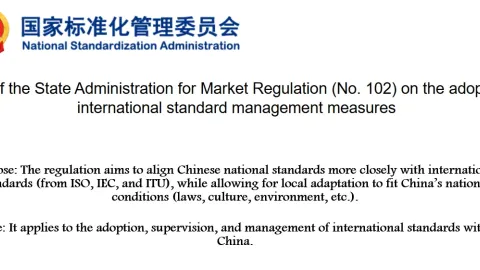
China Sets New Rules for Adopting International Standards with Focus on Relevance and Fundamentals
China has issued new rules for adopting international standards, effective June 1, 2025.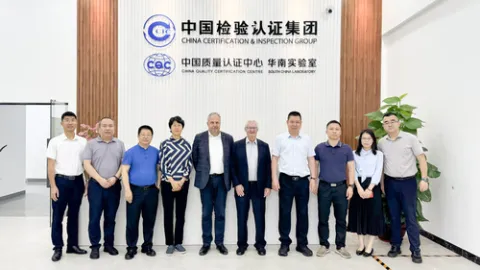
CQC South China Lab Gains IECEx Approval for Explosion Protection Testing
The China Quality Certification Center (CQC) South China Laboratory has passed the on-site assessment to become an officially recognized IECEx Testing Laboratory (ExTL),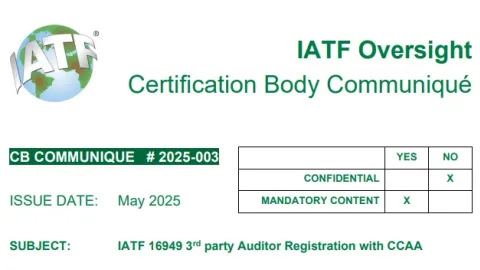
IATF Mandates New Online Registration With CCAA for IATF 16949 Auditors in Mainland China
The International Automotive Task Force (IATF) has released a new registration process for IATF 16949 third-party auditors working in mainland China,
China Aims to Strengthen Autonomous Driving and EV Standards in 2025
China will prioritize the development of national standards for autonomous driving and electric vehicle safety in 2025, according to a new document from the Ministry of Industry and Information Technology.
France Slips in Global Standards Rankings as China Climbs to Third, AFNOR Report Finds
France has dropped to fifth place in ISO secretariat rankings, while China has risen to third, signaling a major shift in global standardization influence, according to AFNOR’s 2025 International Barometer.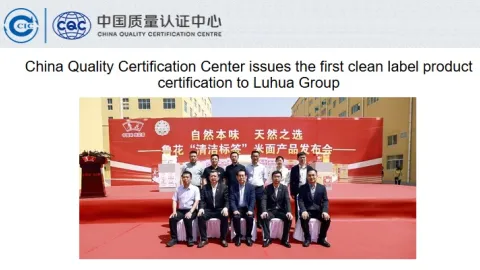
Luhua Group Receives First Clean Label Product Certification in China
Luhua Group has become the first company in China to earn Clean Label product certification from the China Quality Certification Centre (CQC).
CQC Issues First Anti-Counterfeit Certifications in China
The China Quality Certification Center (CQC) has issued its first anti-counterfeit label certifications to Guozhiyun Technology Group in Fujian and Zhongfang Gaoke Information Technology Service Center in Beijing.
China Seeks Feedback on 48 Proposed Standards Covering Carbon Footprints, MEMS, and More
China has launched a public consultation on 48 proposed national standards across diverse sectors, with comments open until May 30.Global News

ISO 10993-6 Standard for Implantation Testing Updated
The International Organization for Standardization (ISO) has published a revised edition of ISO 10993-6, expanding guidance for implantation studies used in the biological evaluation of medical devices.
All 12 Recognized Food Safety Program Owners Apply for GFSI Version 2024 Recognition
The Consumer Goods Forum's Global Food Safety Initiative (GFSI) has confirmed that all 12 previously recognized Certification Program Owners (CPOs) have applied for recognition against the GFSI Benchmarking Requirements Version 2024.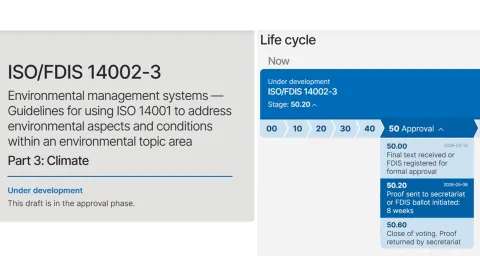
ISO 14002-3 Climate Guidance Advances to Final Draft Stage
ISO 14002-3, a guidance standard for managing climate-related issues within ISO 14001 environmental management systems, has advanced to the Final Draft International Standard (FDIS) stage.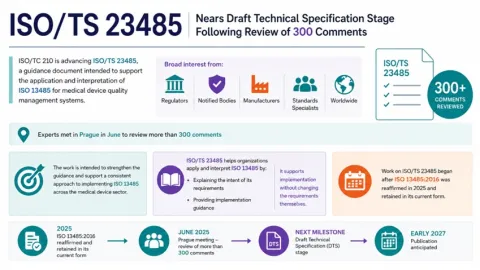
ISO/TS 23485 Nears Draft Technical Specification Stage Following Review of 300 Comments
The International Organization for Standardization's (ISO) Technical Committee 210 (ISO/TC 210) is advancing work on ISO/TS 23485,
Global ACI Explains Which IAF and ILAC Documents Remain in Force During Transition
The Global Accreditation Cooperation Incorporated (Global ACI) has published a cross-reference tableshowing the status of former International Accreditation Forum (IAF) and International Laboratory Accreditation Cooperation (ILAC) publications.
Standards Behind the FIFA World Cup 2026
As the FIFA World Cup 2026 gets underway across the United States, Canada and Mexico,
CEN and CENELEC Open Nominations for 2026 Standards+Innovation Awards
The 2026 Standards+Innovation Awards are now accepting nominations for individuals and projects that have contributed to standardization through research, innovation and education.
PEFC Launches Project Sourcing Certification for Construction Projects
The Programme for the Endorsement of Forest Certification (PEFC) has launched a new Project Sourcing certification program for the construction sector.
Development Begins on ISO 59001 Circular Economy Management Standard
The International Organization for Standardization (ISO) has begun development of ISO 59001, a future certifiable management system standard for the circular economy.
ISO 32212 Introduces Net Zero Transition Planning Framework for Finance
The International Organization for Standardization (ISO) has published ISO 32212:2026,
ISO 45010 Workplace Menstruation and Menopause Guidance Advances to Final Approval Stage
The International Organization for Standardization (ISO) has advanced ISO 45010, which provides guidance on menstruation and menopause in the workplace, has advanced to the Final Draft International Standard - FDIS stage.