Management Systems World
All on Quality and other Standards in one place since 2010. Now Worldwide.
News
Please note that you have to be a registered member with paid membership in order to see full articles.
RegisterSelected News
TÜV AUSTRIA Expands Railway Safety and Quality Services with Berlin Company
TÜV AUSTRIA has established TÜV AUSTRIA RAIL GMBH in Berlin, expanding its safety, testing and quality services for railway vehicles and infrastructure.
OECD Confirms Slovakia’s Good Laboratory Practice System Meets Requirements
The Organisation for Economic Co-operation and Development (OECD) has confirmed that Slovakia’s Good Laboratory Practice (GLP) monitoring system continues to meet its requirements, allowing qualifying study data from Slovak test facilities to remain internationally accepted.
Portugal Opens Nominations for 2026 Standardization Merit Award
The Portuguese Institute for Quality (IPQ) has opened nominations for its 2026 Standardization Merit Award, recognizing individuals who have made significant contributions to Portuguese standardization. Nominations close September 30.
ASQ Puerto Rico 2026 Quality Conference Invites Speaker Proposals
The American Society for Quality Puerto Rico Section (ASQ Puerto Rico) is inviting speaker proposals for its 2026 Quality Conference, scheduled for November 20.
Guizhou Redstar Becomes First in China’s Chemical Industry With Greenhouse Gas Management Certification
The China Quality Certification Centre (CQC) has awarded the first greenhouse gas management system certificate in China’s chemical industry to Guizhou Redstar Developing Co. Ltd., part of Qingdao Redstar Chemical Group.
FSC Responds to Concerns Over Romania’s Forest Certification
The Forest Stewardship Council (FSC) has published an FAQ following reports that raised concerns about Romania’s forests, addressing questions about protected forests, FSC certification and oversight in the country.
KATS Reveals Candidates for Two 2026 Standards and Quality Award Programs
Korean Agency for Technology and Standards (KATS) has revealed candidates for two 2026 award programs recognizing contributions to standards, quality management and ISO management system certification.
2026 Baldrige Award Enters Site Visit Stage with 13 Finalists
Thirteen U.S. organizations have reached the site visit stage of the 2026 Malcolm Baldrige National Quality Award, bringing the process closer to selecting this year’s recipients.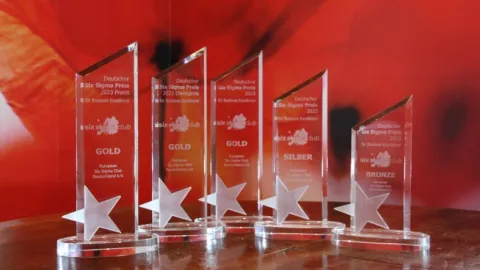
Winners Announced for the 2026 German Six Sigma Award
The European Six Sigma Club Germany (ESSC-D) has named the 2026 winners of its German Six Sigma Award for Business Excellence, recognizing university work and an industry project focused on process improvement.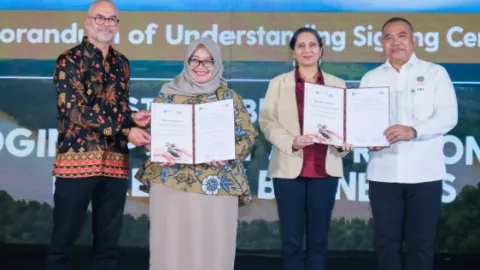
Indonesia to Combine National Forest Certification Audits With FSC
Indonesia’s Ministry of Forestry (MoF) and the Forest Stewardship Council (FSC) have agreed to combine audits under Indonesia’s national timber assurance system with FSC certification, allowing both sets of requirements to be assessed in a single audit.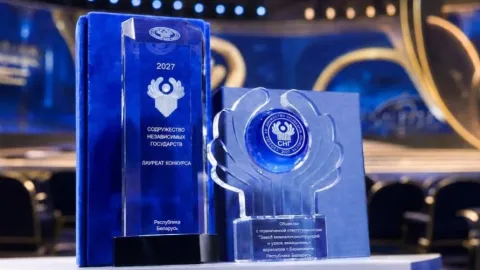
Armenia Invites Applications for 2027 CIS Quality Award
Armenia’s National Body for Standardization and Metrology (ARMSTANDARD) has invited organizations to apply for the 11th Commonwealth of Independent States (CIS) Quality Award, which will recognize achievements in product and service quality in 2027.
Bureau Veritas Withdraws From Nigeria’s SONCAP Scheme
Bureau Veritas has withdrawn from the Standards Organisation of Nigeria Conformity Assessment Programme (SONCAP), ending its role in the scheme effective August 6.Global News
DIN Introduces First Framework For AI Testing Tools
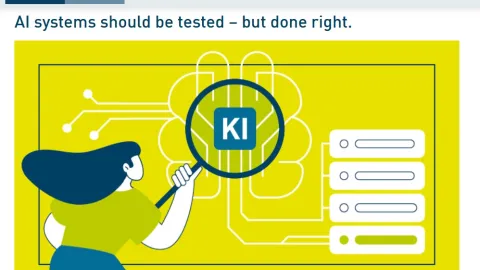
The German Institute for Standardization (DIN) has published DIN SPEC 92006, introducing the first unified framework for artificial intelligence (AI) testing tools and setting clear requirements for how these tools should be designed and used.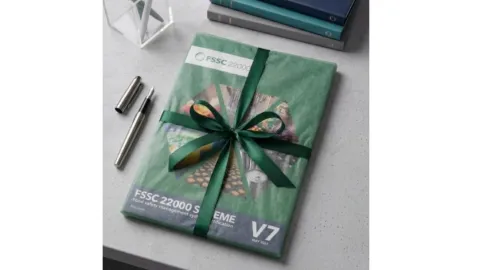
FSSC 22000 Version 7 Release Moved To May 2026
The Foundation for Food Safety Certification (FSSC) has delayed the launch of FSSC 22000 Version 7, with publication now expected in early May 2026.
FSC Launches Normative Newsfeed For Clearer Requirements Updates
The Forest Stewardship Council (FSC) has introduced a new Normative Newsfeed to make updates to its requirements easier to track and understand.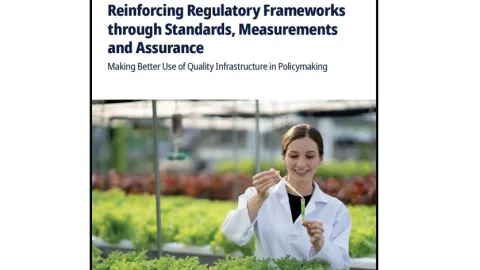
OECD Report Links Standards To More Effective Regulation
The Organisation for Economic Co-operation and Development (OECD) has released a report examining how governments can improve regulation by making better use of standards, measurement, and assurance systems, known as quality infrastructure (QI).
ISO 9000 Revision Reaches Final Draft Stage, Publication Expected In May 2026
The revision of ISO 9000, the international standard that defines the basic concepts and vocabulary of quality management, has reached the Final Draft International Standard (FDIS) stage, the final step before publication.
ISO and IEC Form JTC 5 Committee on Digital Product Passport Standards
A new international standards committee has been created to develop standards for digital product passports (DPPs), systems designed to share key product information across the entire lifecycle and improve transparency and circular economy practices.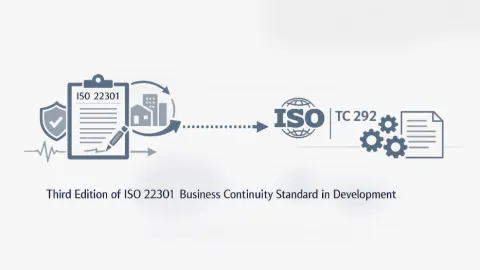
Third Edition of ISO 22301 Business Continuity Standard Enters Development
The next revision of ISO 22301, the international standard for business continuity management systems (BCMS), has moved into development.
Global Accreditation Cooperation Incorporated Launches Website
Global Accreditation Cooperation Incorporated has launched its new official website, providing a central online platform for the organization that became the single global body for international accreditation cooperation.
Cradle to Cradle Certified Version 5 Released With Stronger Focus On Measurable Product Requirements
The Cradle to Cradle Products Innovation Institute (C2CPII) has released Version 5 of the Cradle to Cradle Certified standard,
IEC 63372 Establishes Method For Measuring Carbon Footprint And Avoided Emissions In Electronics
The International Electrotechnical Commission (IEC) has published IEC 63372,
IFAN Launches Podcast Highlighting Perspectives Of Standards Users
The International Federation of Standards Users (IFAN), a global organization representing the interests of standards users, has launched a podcast aimed at sharing the experiences of organizations and professionals who use standards in their work.