
Management Systems World
All on Quality and other Standards in one place since 2010. Now Worldwide.
News Asia
Please note that you have to be a registered member with paid membership in order to see full articles.
RegisterSelected News

Vietnam Sets 2030 Plan To Strengthen International Integration in Standards, Metrology and Quality
Vietnam has approved a plan to boost international integration in standards, metrology and quality through 2030, aiming to help businesses compete globally and support higher-quality growth.
BIS Newsletter November Issue Highlights World Standards Day 2025
The November issue of Manak Samachar, the monthly newsletter from the Bureau of Indian Standards (BIS),
Korea Honors 487 Quality Leaders at 51st National Quality Management Conference
The Korea Agency for Technology and Standards (KATS) and the Korean Standards Association (KSA) held the 51st National Quality Management Conference at COEX in Seoul on November 19,
ETRI Proposes Two ISO Standards To Improve AI Safety and Trustworthiness
Korea’s Electronics and Telecommunications Research Institute (ETRI) has proposed two new AI standards to the International Organization for Standardization (ISO) and the International Electrotechnical Commission (IEC), through the Joint Technical Committee ISO/IEC JTC 1.
AIIA Pharmacology Lab Earns Triple ISO Certification from BIS
The Pharmacology Laboratory of the All India Institute of Ayurveda (AIIA) has received three certifications from the Bureau of Indian Standards (BIS):
Qatar Adopts ISO 37120 to Build a Smart, Sustainable and Resilient Doha Metropolis
Qatar has adopted the ISO 37120 city-data standard as the framework for developing the Doha Metropolis into a smart, sustainable and resilient urban region.
IEI Secures TFDA QMS Approval and ISO 13485 Certification
IEI Integration Corp, a Taiwan-based provider of medical and industrial computing systems,
MUC Consulting Earns ISO Certifications for Information Security and Anti-Bribery
MUC Consulting, a Jakarta-based tax and business advisory firm, has been certified to two international management system standards: ISO/IEC 27001 and ISO 37001.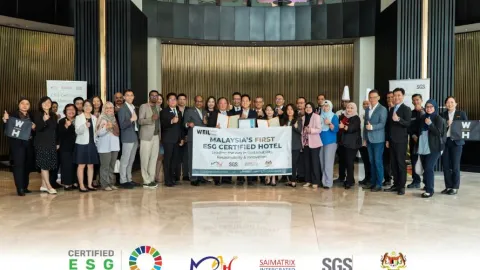
WEIL Hotel Becomes First to Earn Malaysia’s Hospitality ESG Certification
WEIL Hotel has become the first property to earn the ESG Certification for Malaysian Hotels and Resorts program.
Vietnam Seeks Comments On New Rules For National Quality Awards
Vietnam’s Ministry of Science and Technology (MST) is asking ministries, provinces, and business groups to comment on a draft circular that will replace the current regulation governing how the Vietnam National Quality Awards are organized and assessed.
Standards Watch Issue 23 Highlights Safer Sustainable Plastic Packaging
The 23rd edition of the Standards Watch video series explains how plastic packaging can be made safer and more sustainable.
Korea Forms National Council To Drive Automotive SDV Standards
Korea has formed a national council to advance software-defined vehicle (SDV) standards, a step meant to strengthen the country’s future position in the automotive sector.Global News
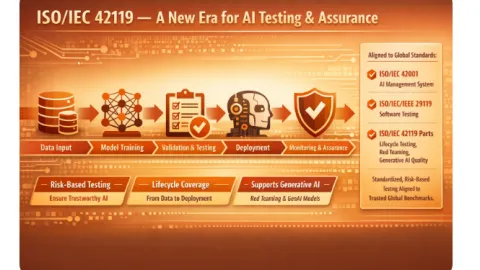
ISO 42119 Series Signals New Era for AI Testing and Assurance
The ISO/IEC 42119 series sets out a new international framework for testing and assuring artificial intelligence (AI) systems, with one document now published and several further parts under development.
ISO 14001 Revision Nears Publication After Final Draft Reaches Ballot Stage
The revision of ISO 14001, the international standard for environmental management systems, is nearing publication,
Food Safety Issue 10: BRCGS Opens Technical Working Group Applications
BRCGS has opened applications for a new Technical Working Group to support the development of Issue 10 of the Global Standard Food Safety.
ISO 15223-1 Amendment Changes Medical Device Labeling Requirements
An amendment to ISO 15223-1 changes how the authorized representative is shown on medical device labels, affecting manufacturers inside and outside the EU.
VDA 2 Yellow Volume Updates Quality Management in Automotive Production
The German automotive industry (VDA) has published the VDA 2 Yellow Volume, opening a public consultation on draft guidance for Production Process and Product Approval used across the global automotive supply chain, with feedback open until April 2, 2026.
ISO PAS 45007 Provides Guidance on Climate-Related OH&S Risks
ISO has published ISO/PAS 45007:2026, a new document that helps organizations address occupational health and safety risks linked to climate change and climate action.
BRCGS Opens Public Consultation for Global Standard Food Safety Issue 9
BRCGS has opened a public consultation on Global Standard Food Safety Issue 9, inviting stakeholders to comment on the current version of the standard as part of the revision process toward the next issue.
Global Accreditation Cooperation Incorporated Launched, Replacing IAF and ILAC
Global Accreditation Cooperation Incorporated officially began operations on January 1, 2026, establishing a single international accreditation body that
Global Method to Measure Low-Carbon Electricity Defined in PAS 247
A new specification published by the British Standards Institution (BSI), PAS 247, establishes a common method to measure electricity produced by fossil-fuel power plants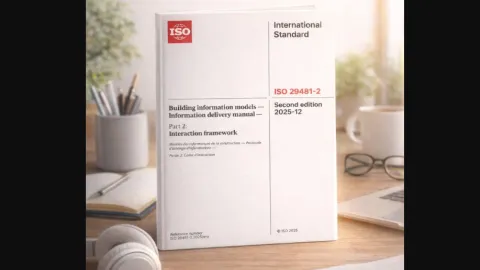
ISO 29481 Part Two Defines Practical Digital Communication for BIM
ISO 29481-2:2025 has been officially published, setting out how practical digital communication can be implemented in building information modeling (BIM) and infrastructure projects, as well as in other asset-related use cases across all life cycle stages.
ISO 22544 Sets a Common Vocabulary For Laboratory Design
The International Organization for Standardization (ISO) has published ISO 22544:2025, an International Standard that defines a shared vocabulary for laboratory design to improve clarity and consistency in how laboratories are planned, built, and used.