Management Systems World
All on Quality and other Standards in one place since 2010. Now Worldwide.
News South America
Please note that you have to be a registered member with paid membership in order to see full articles.
RegisterSelected News
ABNT Becomes First Brazilian Entity Accredited to Validate Carbon Projects
The Associação Brasileira de Normas Técnicas (ABNT) has become the first Brazilian organization accredited by Inmetro to validate greenhouse gas (GHG) projects.
Inmetro Prepares Launch of New Metris Journal, Invites Submissions on Quality Infrastructure
The National Institute of Metrology, Quality, and Technology (Inmetro) in Brazil is preparing to launch Metris, a new scientific journal dedicated to Quality Infrastructure (QI).
How INEN Label Certification System Strengthens Ecuador’s National Industry
The Ecuadorian Service for Standardization (INEN) operates a voluntary Label Certification System that supports national manufacturers of textiles, footwear, and leather goods in meeting Andean labeling regulations.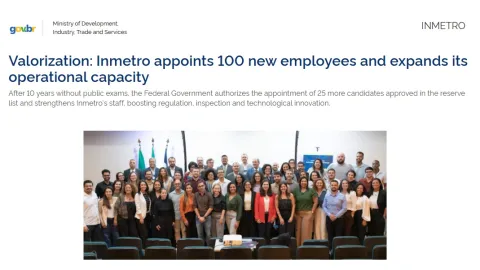
Workforce Expansion: Inmetro Welcomes 100 New Employees
The National Institute of Metrology, Quality and Technology (Inmetro) has officially welcomed 100 new employees after more than a decade without public recruitment.
Peru Hosts ISO/TC 176 Plenary and Quality Forum for Small Enterprises
Peru has become a global meeting point for quality management this week,
Lightwall Receives Brazil’s First Environmental Label for Construction System
Lightwall Brasil has become the first company in the country to receive an Environmental Label for a construction system from the Brazilian Association of Technical Standards (ABNT).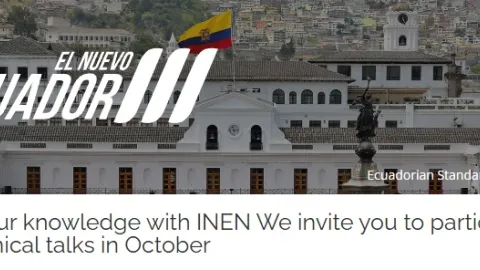
Ecuador’s INEN Launches October Program of Free Technical Training Sessions
The Servicio Ecuatoriano de Normalización (INEN) is inviting professionals, organizations, and the public to participate in a series of free virtual technical talks throughout October.
First São Paulo Quality Infrastructure Symposium Sets Agenda for Brazil’s Global Competitiveness
Leaders from Brazil’s standardization, metrology, and conformity assessment sectors gathered for the
Brazilian Standardization Body ABNT Celebrates 85th Anniversary
The Associação Brasileira de Normas Técnicas (ABNT) celebrated its 85th anniversary on September 30 with a ceremony at the Teatro do Sesi-SP in São Paulo.
Five New Standards to Strengthen Digital Security, Beverage Industry and Strategic Sectors in Peru
The National Institute of Quality (Inacal) has approved five new Peruvian Technical Standards (NTP) to
ABNT Launches ISO 7101 to Advance Quality in Health Organizations
The Associação Brasileira de Normas Técnicas (ABNT) has officially launched the Brazilian version of ISO 7101,
Inmetro Boosts Consumer Safety with Inmetro in the Palm of Your Hand Campaign
The Instituto Nacional de Metrologia, Qualidade e Tecnologia (Inmetro) has introduced the campaign Inmetro in the Palm of Your Hand (Inmetro na Palma da Mão).Global News
VDA Releases ISA 2027 Information Security Assessment Catalogue for TISAX
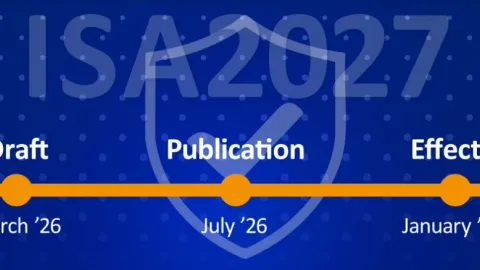
The German Association of the Automotive Industry (VDA) has published ISA 2027, the next version of the Information Security Assessment (ISA) catalogue used by TISAX, an information security assessment and exchange mechanism for the automotive industry.
Global Standards Updates Flagship GOTS Standard to Version 8.1
The Global Standards (GS) has updated the Global Organic Textile Standard (GOTS) to Version 8.1, its first revision since the major Version 8.0 release in March.
TÜV SÜD Acquires SustainCERT to Accelerate Digital Carbon Verification
Germany-based testing, inspection and certification company TÜV SÜD has acquired climate verification platform SustainCERT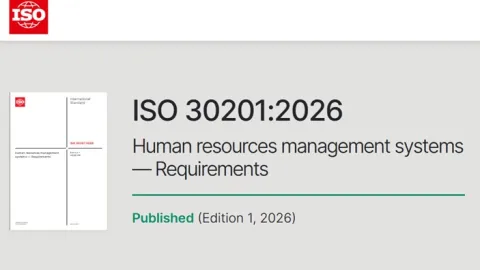
ISO 30201 Adds Human Resources to the ISO Management System Family
The International Organization for Standardization (ISO) has published ISO 30201:2026, the first international requirements standard for human resources management systems.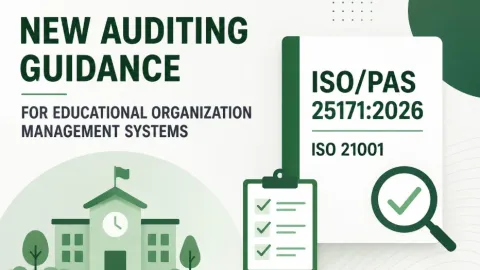
ISO/PAS 25171 Provides First International Auditing Guide for ISO 21001 Educational Management Systems
The International Organization for Standardization (ISO) has published ISO/PAS 25171:2026, the first international guidance for auditing educational organization management systems under ISO 21001:2025.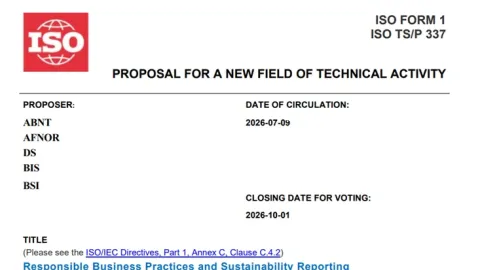
Proposal Calls for ISO Committee on Responsible Business Practices and Sustainability Reporting
An International Organization for Standardization (ISO) technical committee has been proposed to develop standards for responsible business practices and sustainability reporting.
CanadaGAP Version 11 Achieves GFSI Recognition Under 2024 Benchmark
The Global Food Safety Initiative (GFSI) has recognized CanadaGAP Food Safety Program Version 11.0 against its 2024 Benchmarking Requirements (BMRs), allowing
ISO 9001:2026 Receives Final Approval Ahead of September Publication
The International Organization for Standardization (ISO) has approved the final draft of ISO 9001:2026 with overwhelming support, clearing the way for publication of the revised quality management standard, which is expected in September 2026.
Codex Defines When 'May Contain' Allergen Labels Are Justified
New international guidance adopted by the Codex Alimentarius Commission aims to make 'may contain' allergen labels more consistent and trustworthy.
ISO 14025:2026 Brings First Major Update to Environmental Product Declarations in 20 Years
The International Organization for Standardization (ISO) has published ISO 14025:2026, the first major revision of the international standard for Environmental Product Declarations (EPDs) since 2006.
ISO/IEC 27000 Updated With Clearer Guidance for Information Security Standards
ISO and IEC have updated ISO/IEC 27000, the guide to the ISO/IEC 27000 family of information security standards.