Management Systems World
All on Quality and other Standards in one place since 2010. Now Worldwide.
News South America
Please note that you have to be a registered member with paid membership in order to see full articles.
RegisterSelected News
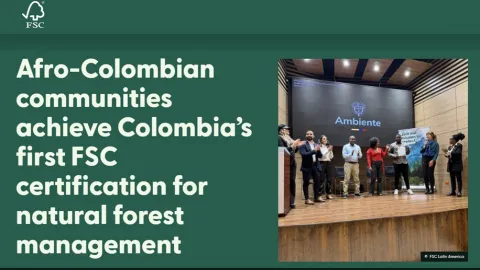
ASOFODEMA Becomes First in Colombia With FSC Certification for Natural Forest Management
The Sustainable Forestry Association for Community Development of Medio Atrato (ASOFODEMA), representing Afro-Colombian communities in Colombia’s Medio Atrato region,
ABNT Completes Development of Sustainability Standard for Products and Services
The Brazilian Association of Technical Standards (ABNT) has completed the development of ABNT NBR 20250,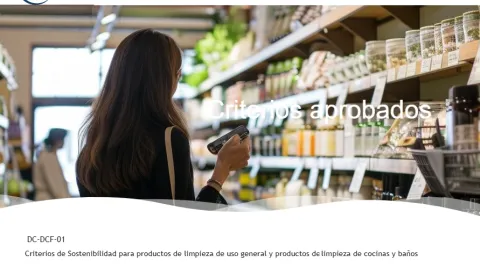
Environmental Alliance of the Americas Approves Eco-Label Criteria for Cleaning and Paper Products
The Environmental Alliance of the Americas (Alianza Ambiental de América) has approved two sets of regional sustainability criteria under a shared eco-labeling program covering Latin America and the Caribbean.
Brazilian Football Confederation Renews ISO 9001 Quality Management Certification
The Brazilian Football Confederation (CBF) has renewed its ISO 9001 quality management system certification following an assessment conducted by the Brazilian Association of Technical Standards (ABNT),
IRAM-V Seal as a Guarantee of Animal-Free Products in Argentina
The IRAM-V Seal is a certification that guarantees products marketed as vegan or plant-based are free from components of animal origin, giving consumers in Argentina a clear and independent reference beyond self-declared claims.
INEN Honors 179 Companies With National Quality Seal
The Ecuadorian Service for Standardization INEN honored 179 companies during its 2025 Quality Seal ceremony, recognizing products that meet Ecuador’s official requirements for ongoing compliance with national and international requirements.
Brazil Certifies First City in the World for Urban ESG Indicators
São José dos Campos, located in the state of São Paulo, has become the first city in the world to earn an urban ESG certification, awarded by the Brazilian Association of Technical Standards (ABNT) at its Platinum tier.
IRAM Brings Together Global Partners to Celebrate 90 Years of Standards Work
The Argentine Institute of Standardization and Certification (IRAM) marked its 90-year milestone by gathering more than 200 representatives from
INEN and UASB Invite Public to Join International Quality Congresses
The Ecuadorian Standardization Service (INEN) and the Andean University Simón Bolívar (UASB) are inviting participants to the XVI International Quality Congress and the VII Integrated Quality Congress,
Inacal Accredits 39 Public Conformity Assessment Bodies to Improve State Service Quality
Peru’s National Quality Institute (Inacal) has accredited 39 public-sector conformity-assessment bodies to strengthen the quality, safety and reliability of state services nationwide.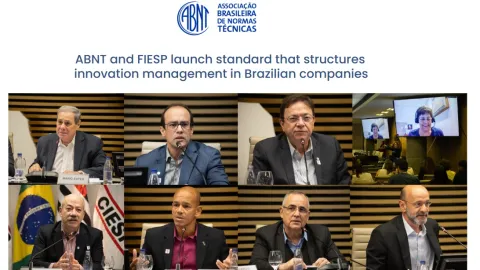
Brazil Adopts ISO 56001 to Strengthen Innovation Management Systems
The Brazilian Association of Technical Standards (ABNT) and the Federation of Industries of the State of São Paulo (FIESP) launched the ABNT NBR ISO 56001 Innovation Management System standard during a ceremony in São Paulo.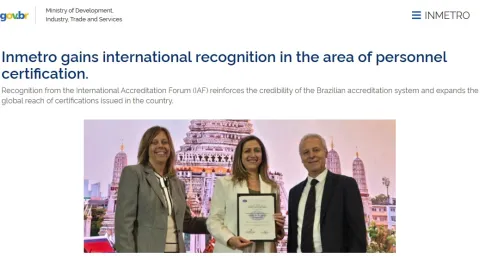
Inmetro Gains IAF Recognition under ISO 17024 for Personnel Certification
The National Institute of Metrology, Quality, and Technology (Inmetro) has been accepted as a signatory to the International Accreditation Forum (IAF) Multilateral Recognition Arrangement (MLA) for personnel certification under ISO/IEC 17024.Global News
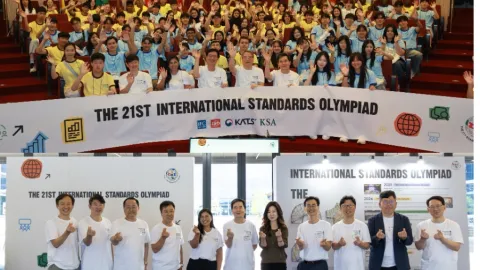
21st International Standards Olympiad Held in Korea
The 21st International Standards Olympiad brought together 105 middle-and high-school students from 11 countries in the Republic of Korea for a three-day competition and hands-on experience with international standardization.
ISO Environmental Management Committee Seeks Global Input for 2027-30 Plan
The International Organization for Standardization (ISO) Technical Committee 207 (ISO/TC 207), Environmental management, has launched a global consultation to help set its priorities for 2027-30.
DIS Ballot for ISO 30401 Knowledge Management Revision Closes September 17
ISO 30401, the international standard for knowledge management systems, is currently at the Draft International Standard (DIS) stage, with voting on the proposed second edition due to close September 17, 2026.
IFS Publishes PPWR White Paper and Launches Self-Assessment as EU Rules Take Effect
International Featured Standards (IFS) has published a new PPWR white paper and launched a self-assessment tool as the first requirements of the European Union’s Packaging and Packaging Waste Regulation (PPWR) took effect on August 12, 2026.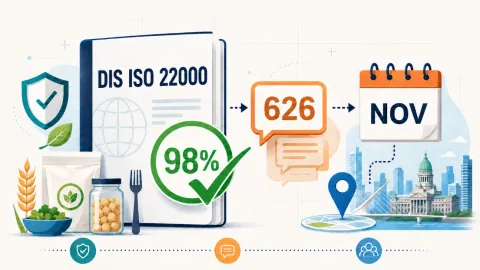
ISO 22000 Draft Approved With 98% Support, Comments Review Set for November
The revision of ISO 22000, the international standard for food safety management systems, has cleared its Draft International Standard (DIS) ballot with 98% positive votes.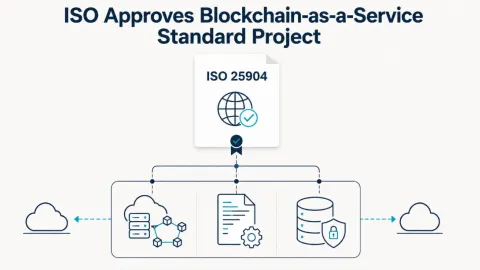
ISO Approves Blockchain-as-a-Service Standard Project
The International Organization for Standardization (ISO) has approved ISO 25904, a new standard project to establish a common technical framework and functional requirements for Blockchain-as-a-Service (BaaS) platforms.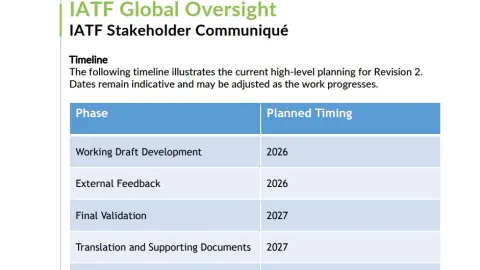
IATF 16949 Second Edition Expected in Mid-2027 With Five Priorities Set
IATF 16949 is expected to reach its second edition in mid-2027, with five priorities set for the revision.
GHG Protocol Aligns Scope 2 and AMI Development for Future Joint ISO Standard
The Greenhouse Gas Protocol (GHG Protocol) the results of its public consultation on the update to its Scope 2 Guidance and released preliminary feedback on the development of its Actions and Market Instruments (AMI) standard.
Risk Management Guidance for AI-Powered Medical Devices: First Edition of ISO/TS 24971-2 Released
ISO has released the first edition of ISO/TS 24971-2:2026, providing guidance on applying the ISO 14971 risk management process to machine learning-enabled medical devices (MLMDs).
Revised ISO 19008 Expands Cost Coding System to Lower Carbon Energy
ISO 19008 has been revised to extend its common system for organizing and comparing cost data to lower carbon energy as well as oil and gas.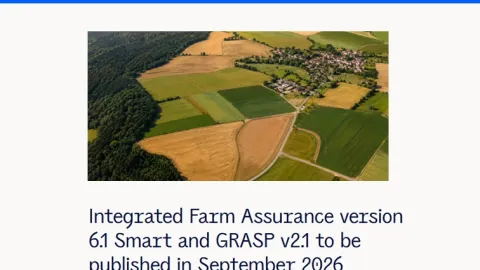
GLOBALG.A.P. Farm Assurance and Social Practice Standards Set for September Update
Agraya has announced that it will publish GLOBALG.A.P. Integrated Farm Assurance (IFA) v6.1 Smart and GLOBALG.A.P. Risk Assessment on Social Practice (GRASP) v2.1 on September 1, 2026.