Management Systems World
All on Quality and other Standards in one place since 2010. Now Worldwide.
News Namibia
Please note that you have to be a registered member with paid membership in order to see full articles.
RegisterSelected News

Head of Quality Assurance Role Opens at Namibia's Standards Body
The Namibian Standards Institution (NSI) is recruiting a Head of Quality Assurance, Strategy and Projects to lead its quality management systems, accreditation programs, corporate strategy, and major organizational projects.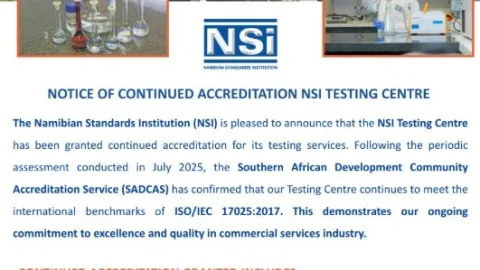
Namibian Standards Institution Testing Centre Retains Accreditation Under ISO 17025
The Namibian Standards Institution (NSI) has confirmed that its Testing Centre has retained accreditation for its laboratory services following a recent assessment, reaffirming compliance with ISO/IEC 17025:2017.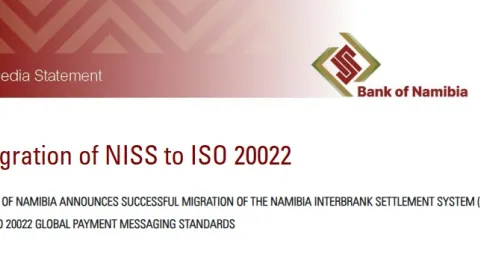
Bank of Namibia Upgrades National Payment System to ISO 20022
The Bank of Namibia has successfully transitioned its Namibia Interbank Settlement System (NISS) to the ISO 20022 global payment messaging standard, effective May 12, 2025.Global News

FSC Delays Revised Chain of Custody Standards by at Least Six Months
FSC has postponed publication and entry into effect of its revised Chain of Custody standards by at least six months, changing the timetable for certified supply chains and certification bodies.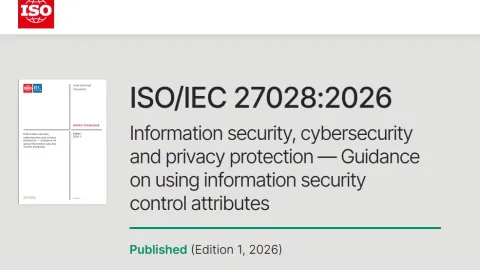
ISO/IEC 27028:2026 Published to Guide Use of Security Control Attributes
ISO has published ISO/IEC 27028:2026, providing guidance on using the information security control attributes specified in ISO/IEC 27002. The first edition reached publication stage 60.60 on November 11, 2026.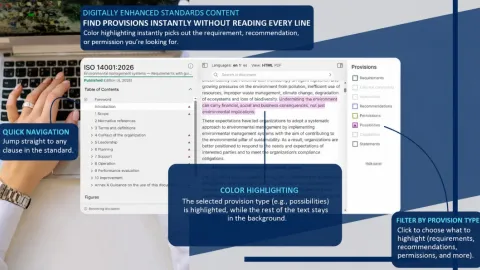
ISO Digitally Enhanced Standards Add Navigation Without Changing Requirements
ISO’s digitally enhanced content gives users a structured online view of selected standards alongside their purchased publication files. An ISBIH explanation dated November 25, 2026 highlights the practical implications for standards users.
IAQG Announces Time-Limited Advancement Route for Aerospace Auditors
IAQG has published a time-limited route for eligible active Level 2 aerospace auditors seeking Level 1 authentication, using experience criteria derived from 9104/3:2020.
ASC Revises Farm Standard and Certification Assurance Requirements
ASC has issued Farm Standard V1.1 alongside revised certification and group-assurance requirements, with two separate implementation dates that users need to distinguish.
ISCC Consults on Biodiesel Audit Verification and Waste-Feedstock Guidance
ISCC has two open consultations addressing audit verification and the treatment of food-related waste feedstocks, with different closing dates.
FSSC 22000 Version 7 Achieves GFSI Recognition Under 2024 Requirements
FSSC 22000 Version 7 has achieved recognition against the GFSI Benchmarking Requirements Version 2024, Foundation FSSC announced on November 11, 2026.
Ford Restores Earlier PFMEA and Control Plan Approval Rules for SCCAF Programs
Ford has restored the PFMEA and Control Plan approval requirements that applied before its June 2026 update for programs using the Special Characteristics Communication and Agreement Form (SCCAF).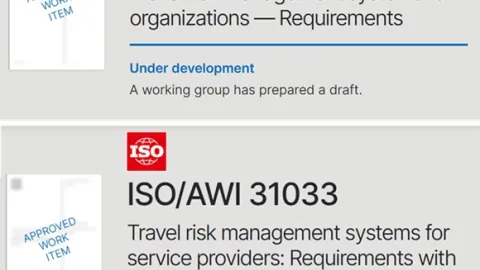
ISO Approves Two Travel Risk Management System Projects
ISO has approved two projects to develop travel risk management system requirements: ISO/AWI 31032 for organizations and ISO/AWI 31033 for travel service providers.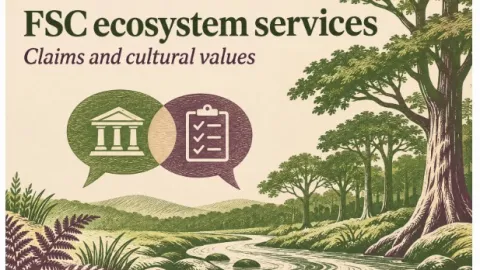
FSC Consults on Cultural Ecosystem Services and Updates Transitional Claims Rules
FSC has opened consultation on proposed changes to its Ecosystem Services Procedure, while separately introducing a transitional mechanism for claims from existing projects.
ISCC PLUS Consults on Fuel-Use Excluded Attribution Add-on
ISCC has opened consultation on an ISCC PLUS add-on for fuel-use excluded attribution, a mass-balance option governing allocation of sustainability attributes across certified supply chains.