Management Systems World
All on Quality and other Standards in one place since 2010. Now Worldwide.
News Europe
Please note that you have to be a registered member with paid membership in order to see full articles.
RegisterSelected News
Work-Family Balance Guidelines Enter Public Consultation in Italy
Italy’s national standards body UNI has opened the public consultation for a new reference practice that aims to help organizations support parents and improve the balance between family and work life.
PKN Launches Survey To Shape Future SMART Standards
Poland’s national standards body, PKN, has opened a short survey to collect user views on the planned shift toward SMART Standards, which aim to make standards easier to use through digital and machine-readable formats.
GORDIC GINIS Filing Service Earns First eSSL Certification in Czechia
The GINIS electronic filing service from GORDIC has become the first system in Czechia to earn eSSL certification.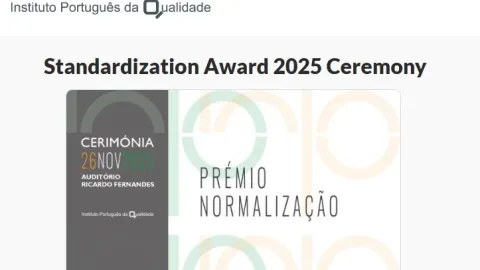
2025 Standardization Awards Recognize Key Contributions in Portugal
The Portuguese Institute for Quality (IPQ) held the 2025 Standardization Awards ceremony on November 26 at the Ricardo Fernandes Auditorium to recognize technical committees and experts who strengthen Portugal’s national standardization system.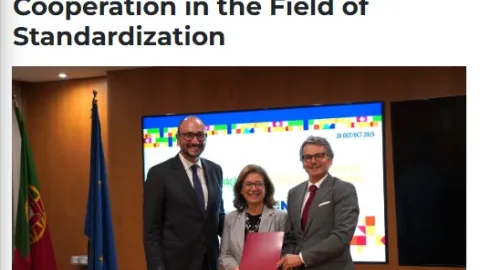
First Iberian Standardization Meeting Highlights Digital Product Passport
The first Iberian Standardization Meeting, organized by the Portuguese Institute for Quality (IPQ) and the Spanish Association for Standardization (UNE), was held to strengthen cooperation between the two countries.
Accredia Opens Accreditation for IFS Wholesale and Cash & Carry Version 3
Italy’s national accreditation body, Accredia, has opened accreditation for certification under the IFS Wholesale and Cash & Carry version 3 standard,
Serbia Updates Accreditation Rules and Adopts Five-Year Cycle Amid Digital Shift
The Accreditation Body of Serbia (ATS) has introduced major changes as of December 1, 2025, driven by a wider digital shift that modernizes the accreditation system.
German Industry Groups Present Broad Reform Plan for National Accreditation
A wide alliance of German industry associations, laboratory organizations, and sectoral trade bodies has presented a future strategy to improve the national accreditation system, calling for simpler procedures, clearer responsibilities, and faster decisions.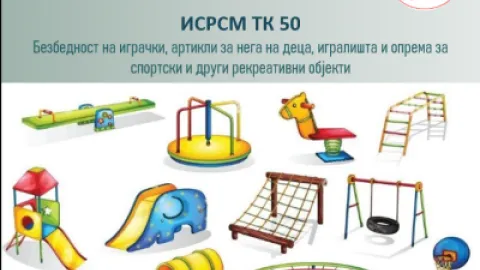
ISRSM Forming Committee on Toy and Child Safety, Invites Participation
The Institute for Standardization of the Republic of North Macedonia (ISRSM) has begun the process to establish a new technical committee, ISRSM TC 50,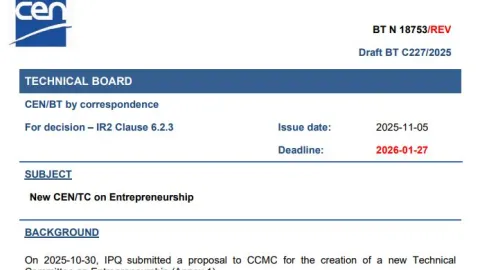
Proposed CEN Technical Committee on Entrepreneurship to Advance Startup Standards
The Portuguese Institute for Quality (IPQ) has submitted a proposal to create a new Technical Committee (TC) on Entrepreneurship within CEN.
Italy Introduces Single Certification for Fashion To Boost Supply Chain Transparency
Italy’s annual bill for small and medium enterprises proposes a voluntary single certification of conformity for the fashion supply chain,
AFNOR Concludes Review Round for ISO 22000 Revision
The review of the revision of ISO 22000 has concluded at AFNOR after a week of discussions.Global News
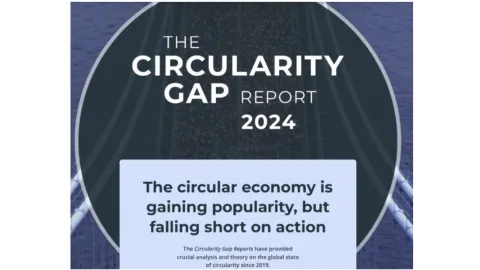
ISO 59000 Series Backed as Tool to Replace Linear Model With Circular Economy
The sixth Circularity Gap Report from 2024 finds that only 7.2% of the global economy is circular, leaving 92.8% of resources locked in a linear system of extraction, use, and waste.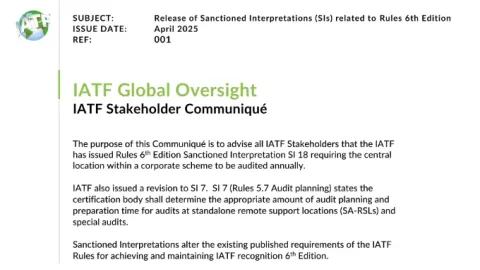
IATF Confirms Official Interpretations to Rules 6th Edition Through New Communiqué
The International Automotive Task Force (IATF) has released Stakeholder Communiqué SC-2025-001 to announce two new official interpretations to its Rules 6th Edition.
Tracking Revisions of ISO 9001, 14001, and 45001—The Most Widely Used ISO Management Standards
The three most widely used ISO management system standards—ISO 9001, ISO 14001, and ISO 45001—are all in the process of being revised.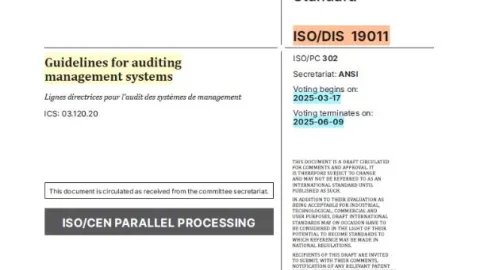
ISO 19011 Revision Adds Climate and Tech Focus to Management System Audits
The ISO 19011 standard, which outlines how to audit management systems, is being revised and is currently at the Draft International Standard (DIS) stage.
Regenagri Certification Helps Illycaffè Elevate Brazilian Coffee to Award-Winning Status
Illycaffè’s regenerative farming practices are reshaping the global coffee industry—bringing both environmental and quality gains.
Stellantis Unifies Supplier Scoring Guide for IATF 16949 Compliance
Stellantis has released an updated version of its Scorecard Quick Reference Guide for IATF 16949:2016, effective April 2025.
How Standards Make Chocolate Safe, Sustainable, and Delicious
As chocolate bunnies and eggs lined shelves this Easter, European and international standards were quietly working behind the scenes to ensure these sweet treats were safe, fair, and properly labeled.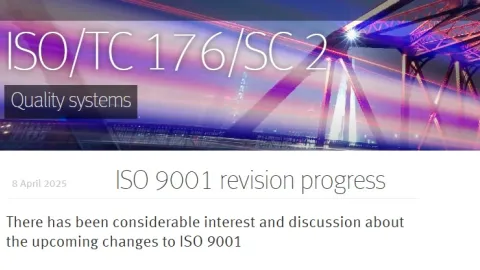
Work continues on the ISO 9001 audit in Paris, addressing all feedback collected
Over 50 experts from more than 40 countries met in Paris from March 31 to April 4 to advance the revision of ISO 9001, the world’s most widely used quality management systems standard.
Chennai to Host FSSC Summit Spotlighting Social Management Standards
Foundation FSSC will host its upcoming summit in Chennai, India on April 25, 2025, under the theme "Building Global Trust with Social Management System Standards."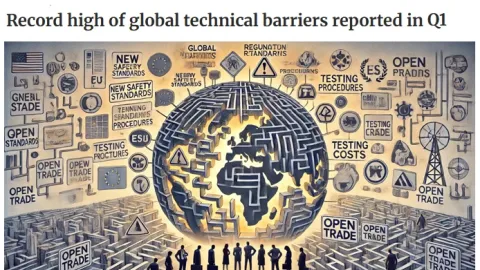
Record Surge in Technical Regulations Strains Global Trade
A record 1,334 technical regulations were reported by World Trade Organization (WTO) member countries in the first quarter of 2025—the highest ever for a single quarter.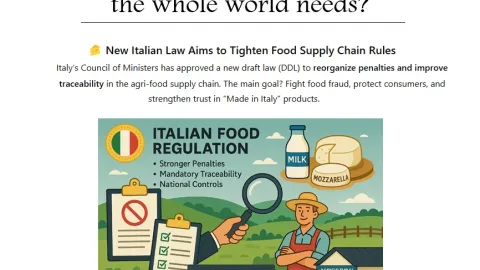
Italy’s Recipe Against Food Fraud: Supply Chain Crackdown with Tougher Sanctions and Even Wiretaps
Italy has approved a new bill to strengthen its fight against food fraud through tighter controls, expanded inspections, and even the use of undercover investigations and wiretaps.